18 Flower Bed Ideas With Rocks for a Polished and Natural Look
Looking to upgrade your yard without spending every weekend weeding and mulching? Flower bed ideas with rocks might be exactly what you need. Combining natural stone elements with your favorite blooms creates stunning outdoor spaces that are beautiful, practical, and surprisingly low maintenance for busy families.
Simple River Rock Borders
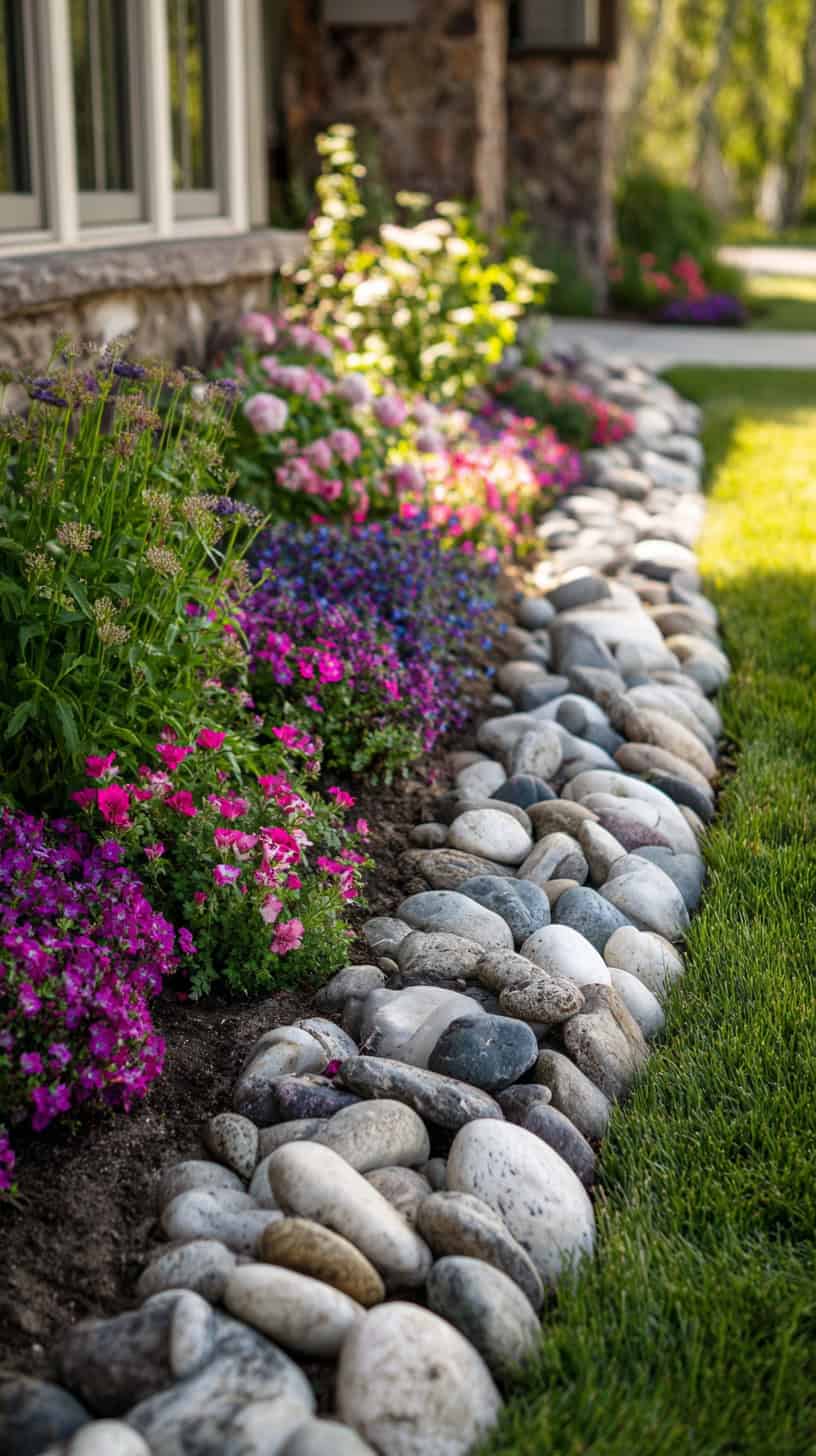
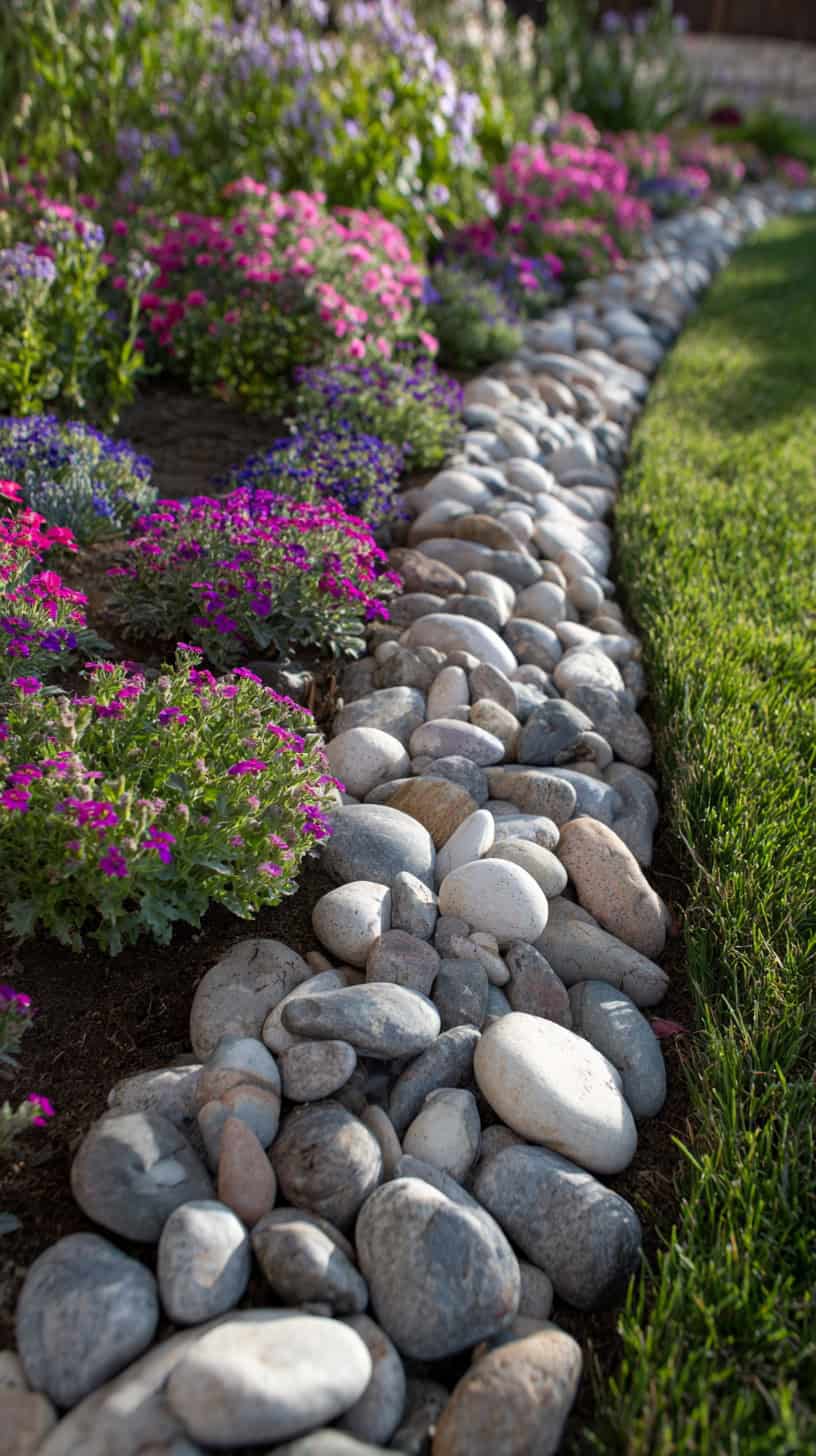
River rocks create the perfect frame for any flower bed, and I love how easy they are to install. These smooth, rounded stones naturally define garden edges while keeping grass from creeping into your flower beds. You can find them at most garden centers in various sizes and colors, from white to charcoal gray. Landscaping with rocks around house perimeters instantly boosts curb appeal without demanding constant upkeep. Simply dig a shallow trench along your bed edge, lay down landscape fabric to prevent weeds, and arrange your river rocks in a single or double layer. The best part is that kids can help place the stones, making this a fun family project. This timeless look works with any home style and pairs beautifully with perennials, annuals, or shrubs for year-round interest.
Curved Front Yard Edges
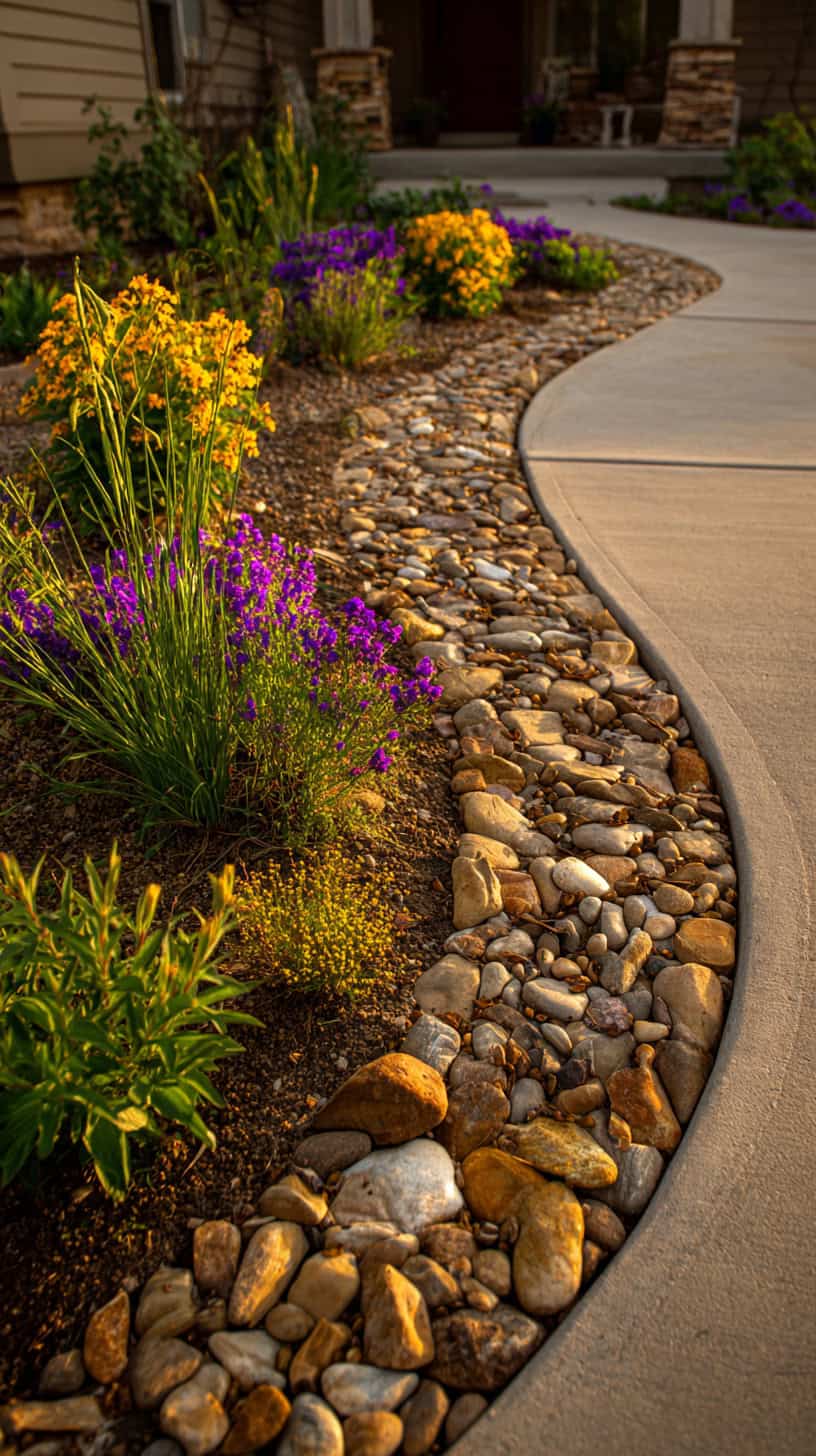
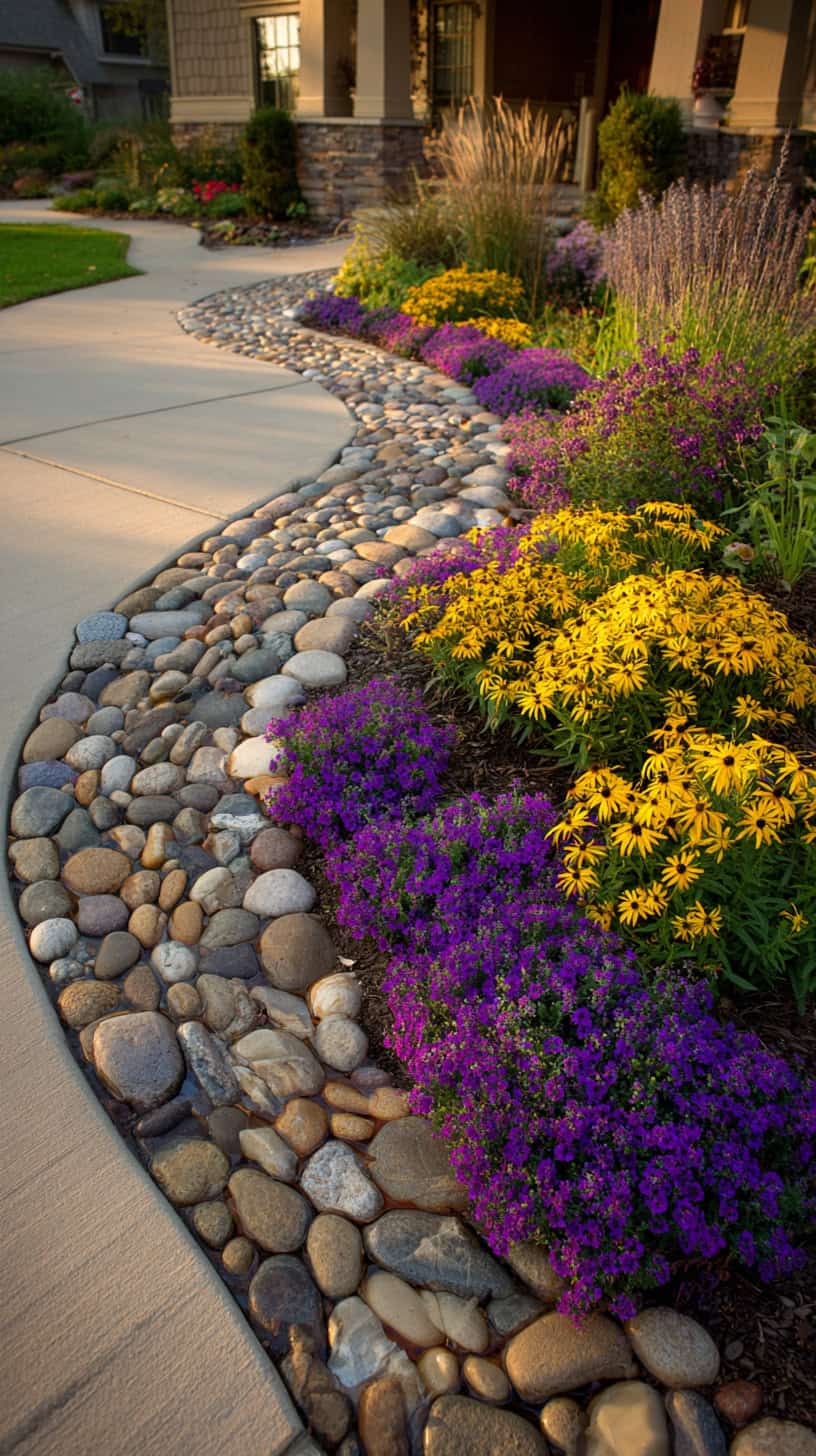
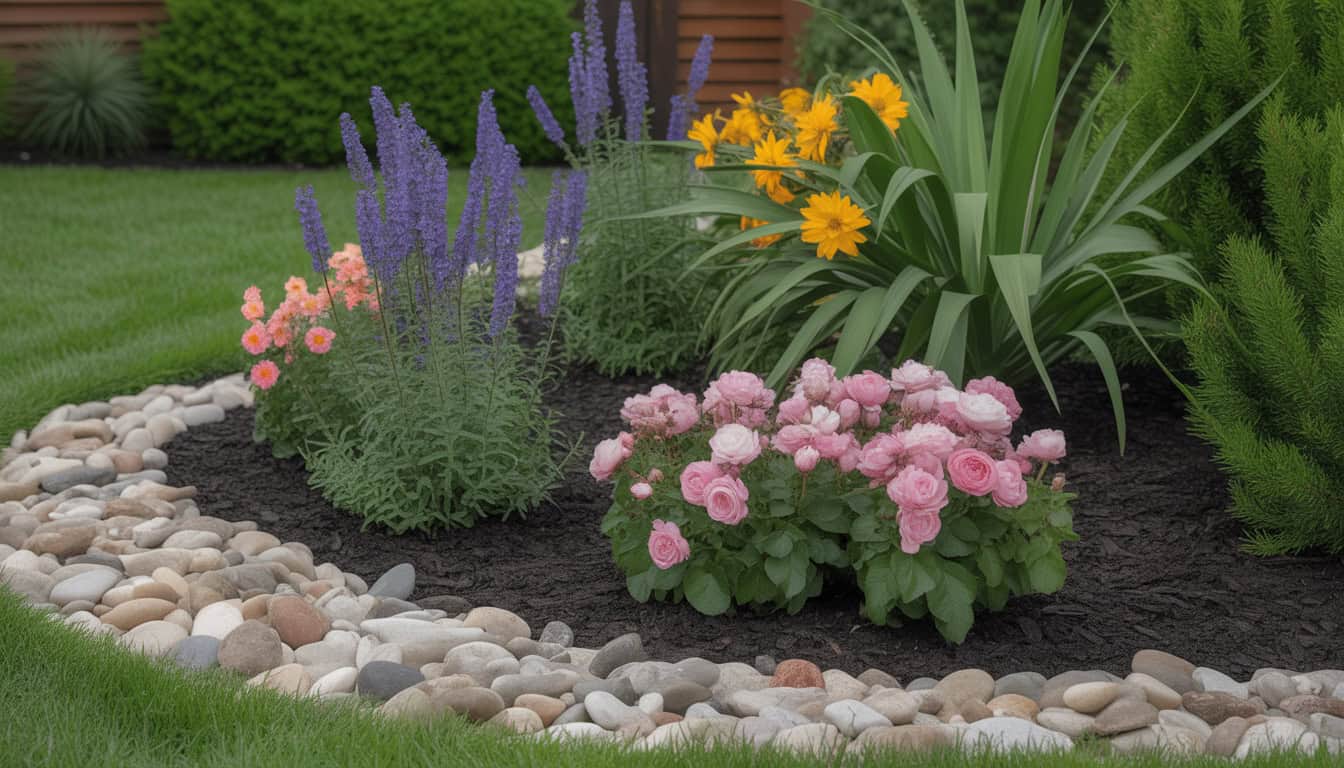
Gentle curves transform ordinary flower beds into eye-catching focal points that draw visitors right to your front door. Front yard landscaping ideas with rocks gain extra charm when you follow the natural contours of your property instead of sticking to straight lines. Use smaller decorative stones to outline flowing, organic shapes that guide the eye through your garden design. These curved edges soften the hard angles of driveways and walkways while creating visual movement in your landscape. I always recommend laying out a garden hose first to preview your curves before committing to the design. Once you’re happy with the shape, edge it with spades and fill with your chosen rock type. Plant colorful flowers inside these curved borders for a welcoming, polished look that neighbors will admire all season long.
Slope Erosion Rock Walls
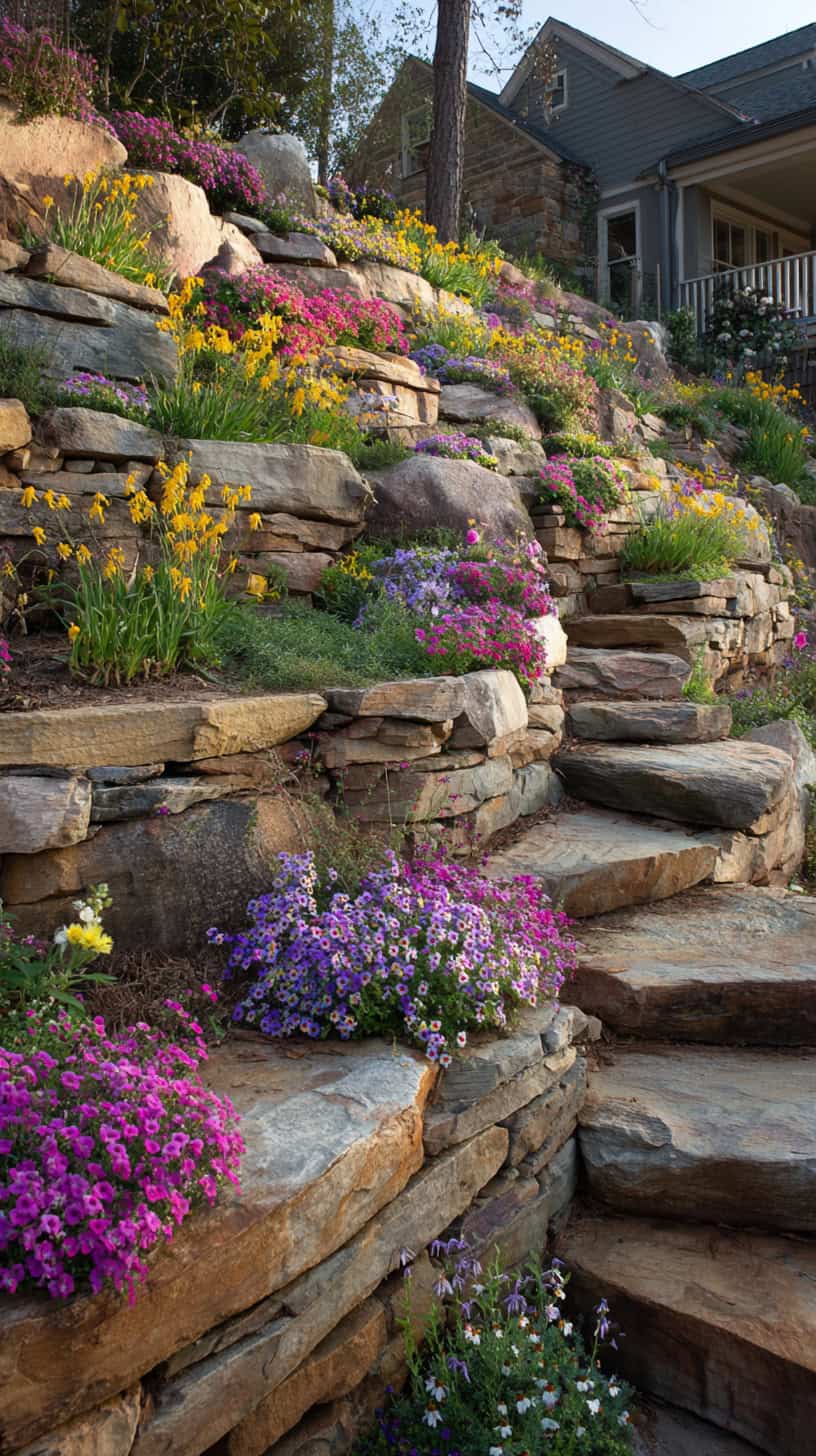
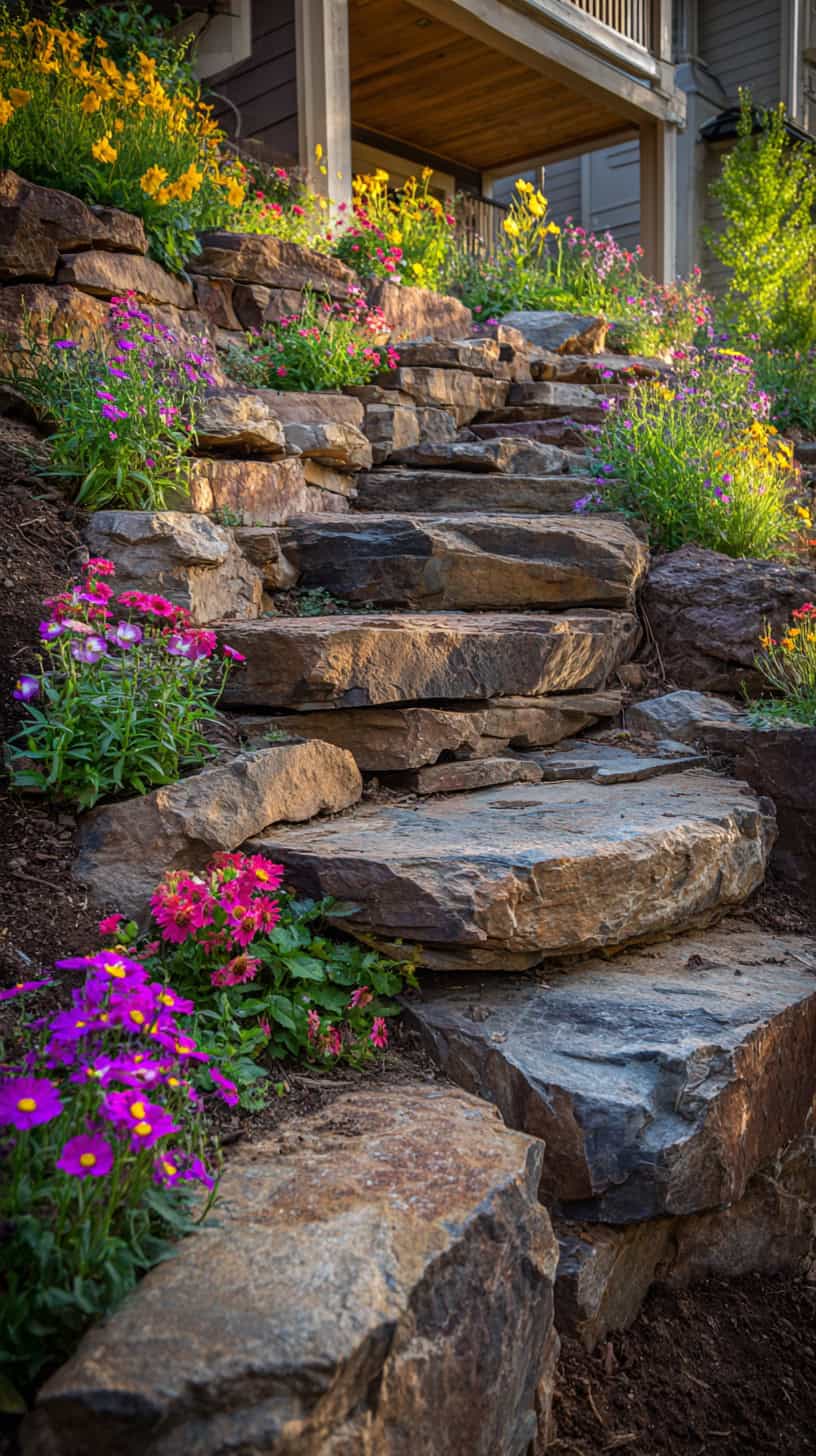
Sloped yards present unique challenges, but stacked stone walls turn problems into stunning features while preventing soil erosion. These functional rock beds around house foundations or hillsides hold soil in place during heavy rains and create level planting areas for flowers that would otherwise struggle on inclines. Larger flat rocks work best for building these retaining structures, and you can stack them dry or use mortar for extra stability. The terraced effect creates multiple flower bed levels, adding dimension and drama to otherwise tricky landscapes. Plant cascading flowers like petunias or creeping phlox along the top edges to soften the stone and add bursts of color. This solution combines beauty with purpose, protecting your property while showcasing your favorite blooms in a truly impressive display.
Gravel Dry Creek Beds
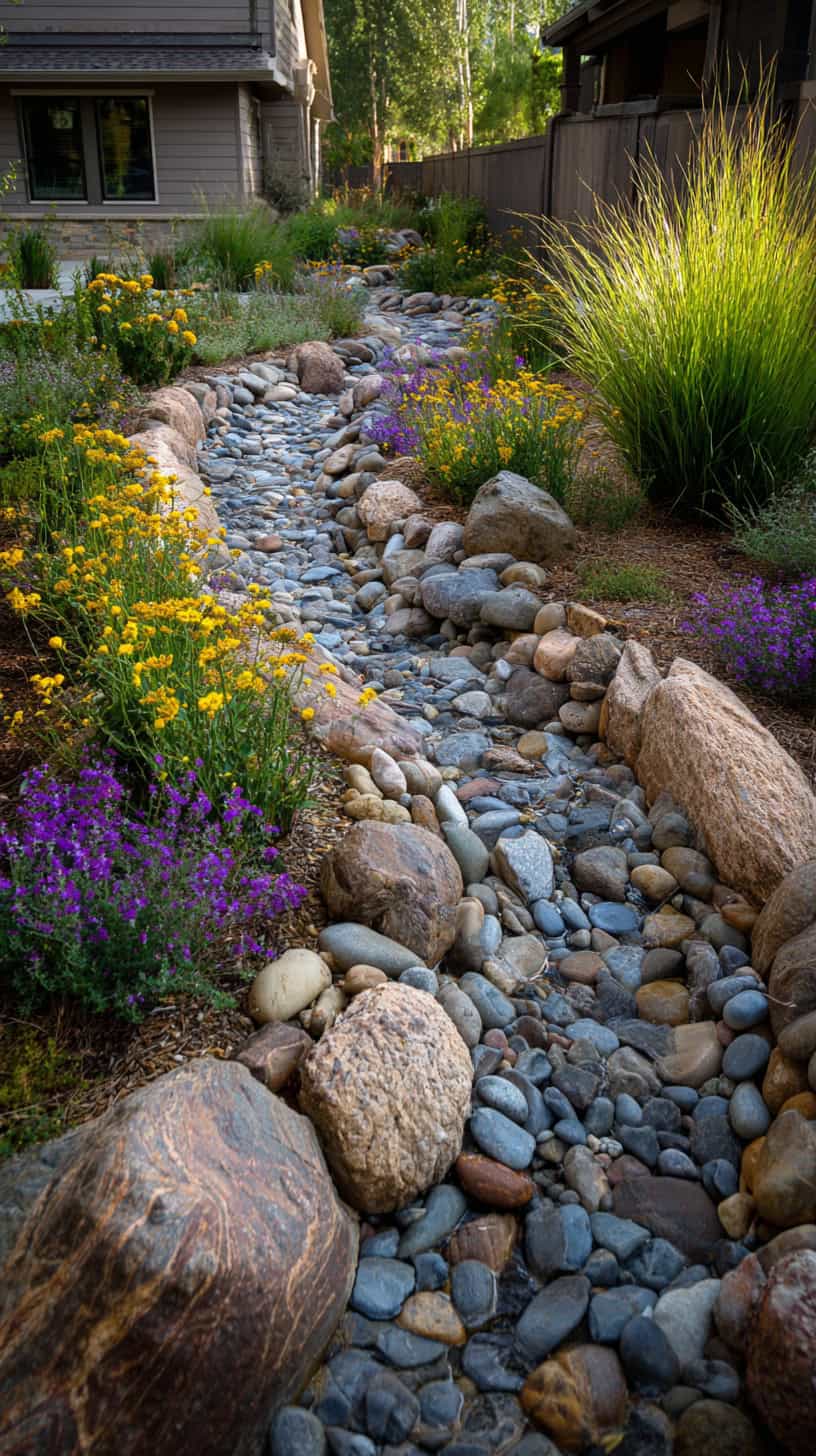
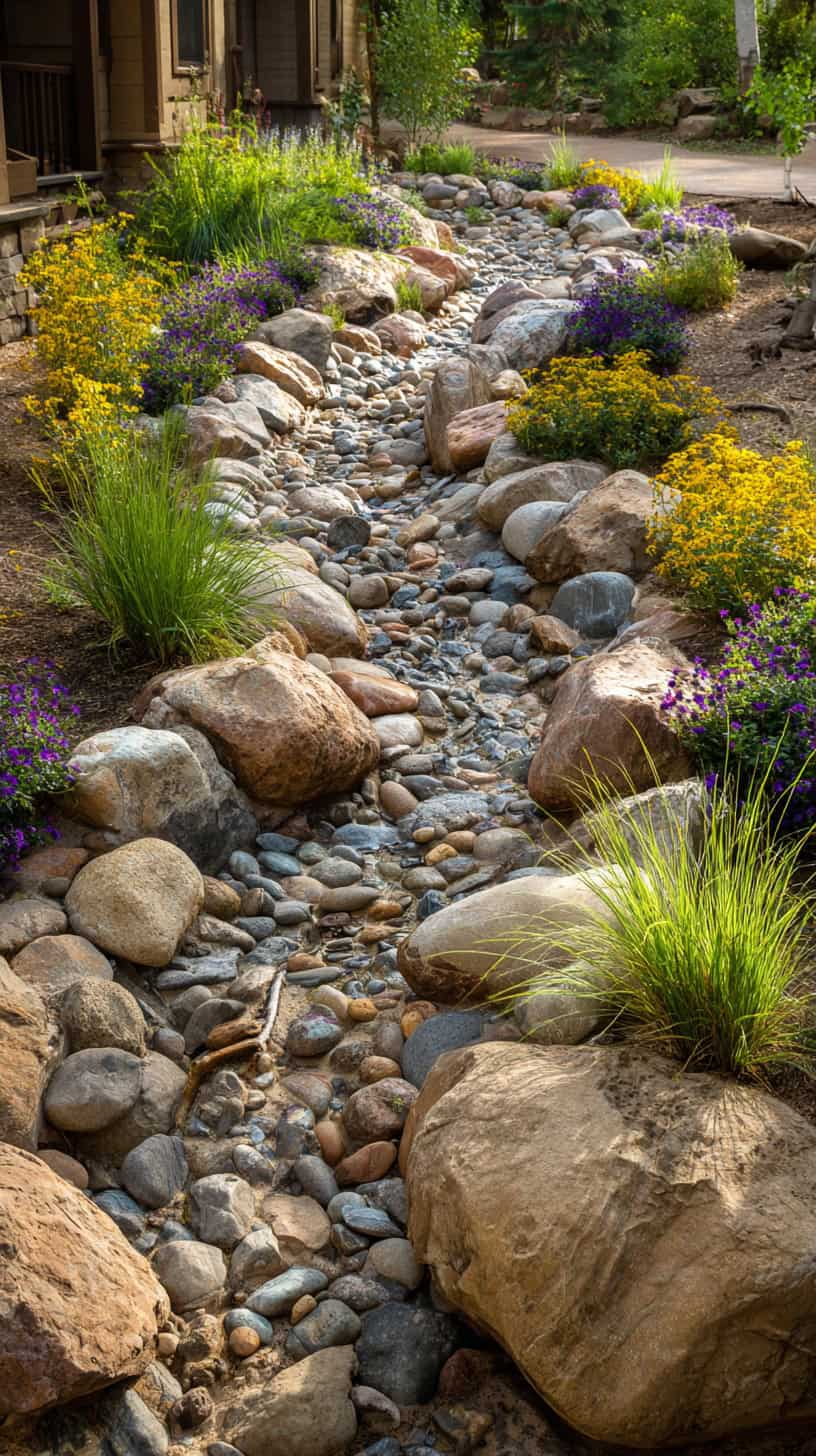
Creating a dry creek bed with gravel and river stones adds natural charm while solving drainage issues in low-lying areas of your yard. These outdoor rock garden ideas mimic natural stream beds, complete with larger boulders positioned along the edges and smaller gravel filling the center. I’m always amazed at how realistic these look when properly designed with gentle curves and varying stone sizes. Plant moisture-loving flowers and ornamental grasses along the banks to enhance the natural creek appearance. During rainstorms, water flows through the stone channel, preventing erosion and puddling while creating a beautiful water feature effect. This landscaping technique works beautifully in both front and back yards, transforming problem drainage spots into stunning focal points that look intentionally designed rather than like an afterthought covering up yard issues.
Boulder Focal Point Beds
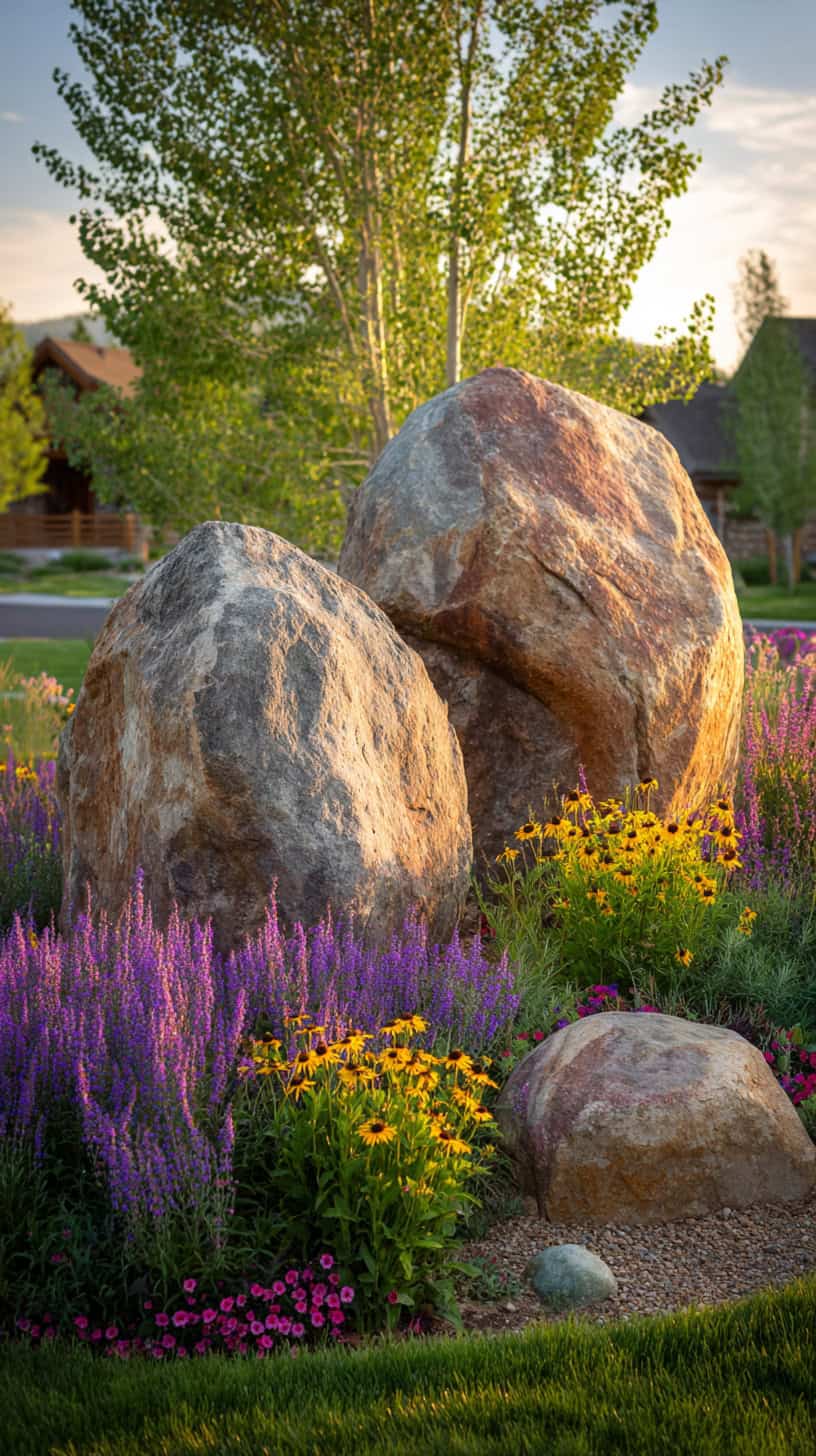
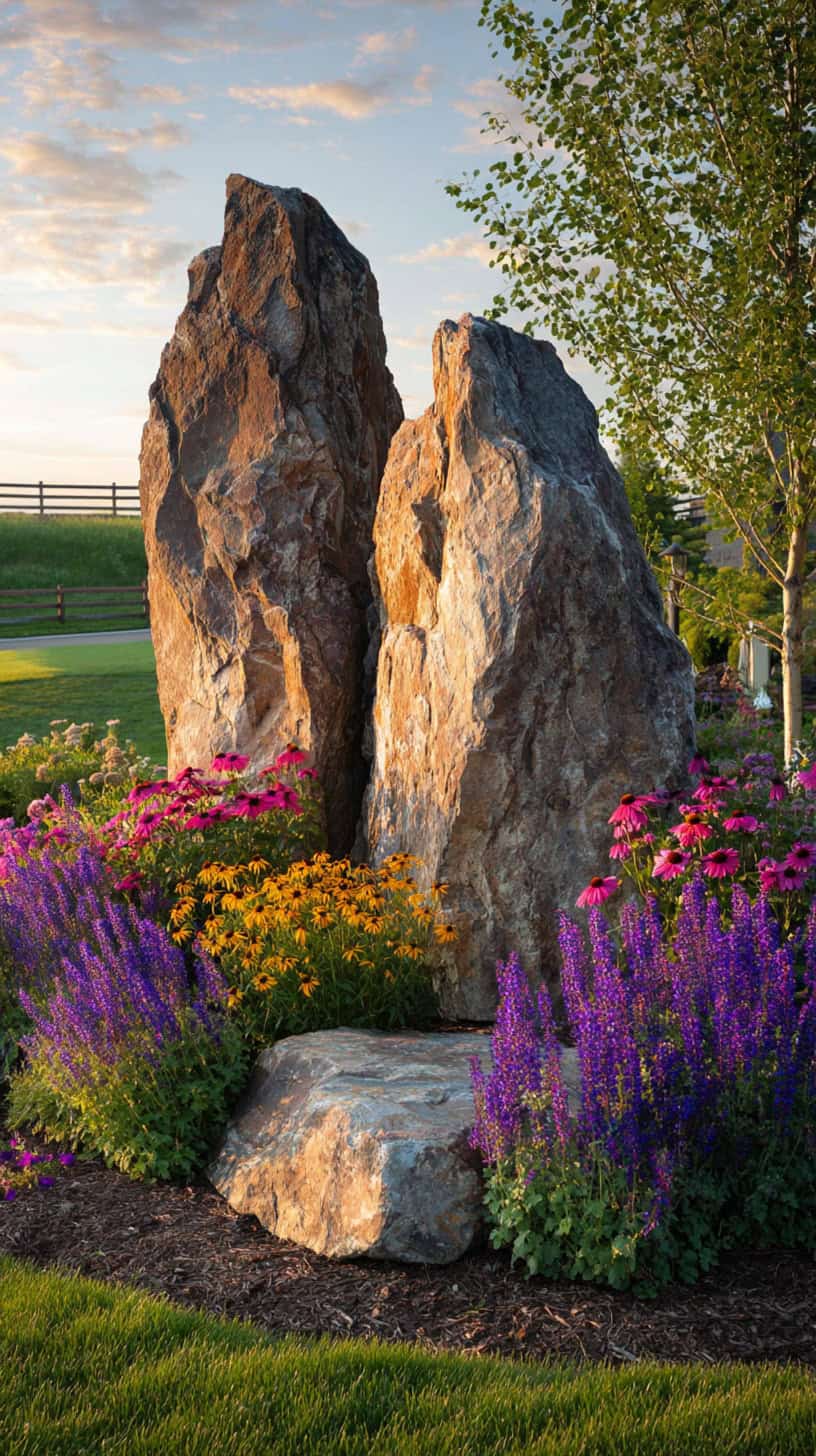
Large boulders create instant drama and serve as natural anchors for surrounding flower plantings in your landscape design. These statement rocks draw the eye and provide permanent structure that looks gorgeous even in winter when flowers have faded. Position one spectacular boulder or cluster several together, then surround them with colorful blooms that complement the stone’s natural hues. Rock garden design ideas often incorporate these larger elements to add height variation and visual weight to flat areas. The contrast between massive stone and delicate flowers creates stunning impact that photographs beautifully. Choose boulders with interesting shapes, colors, or textures that reflect your regional landscape for the most authentic look. Plant low-growing flowers like sedums or creeping thyme between and around the rocks for a naturalistic effect that requires minimal maintenance once established.
Entryway Stone Seat Walls
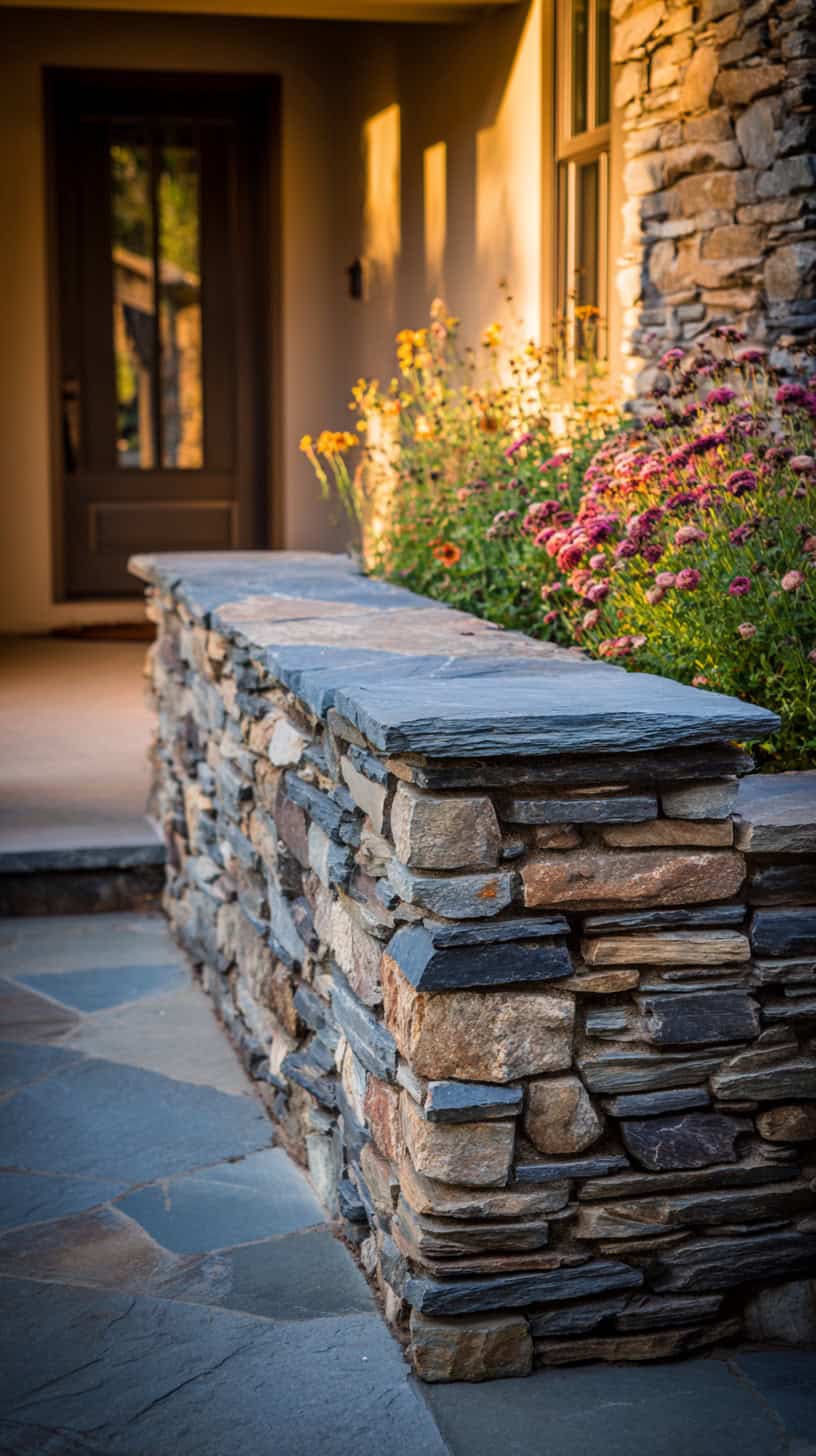
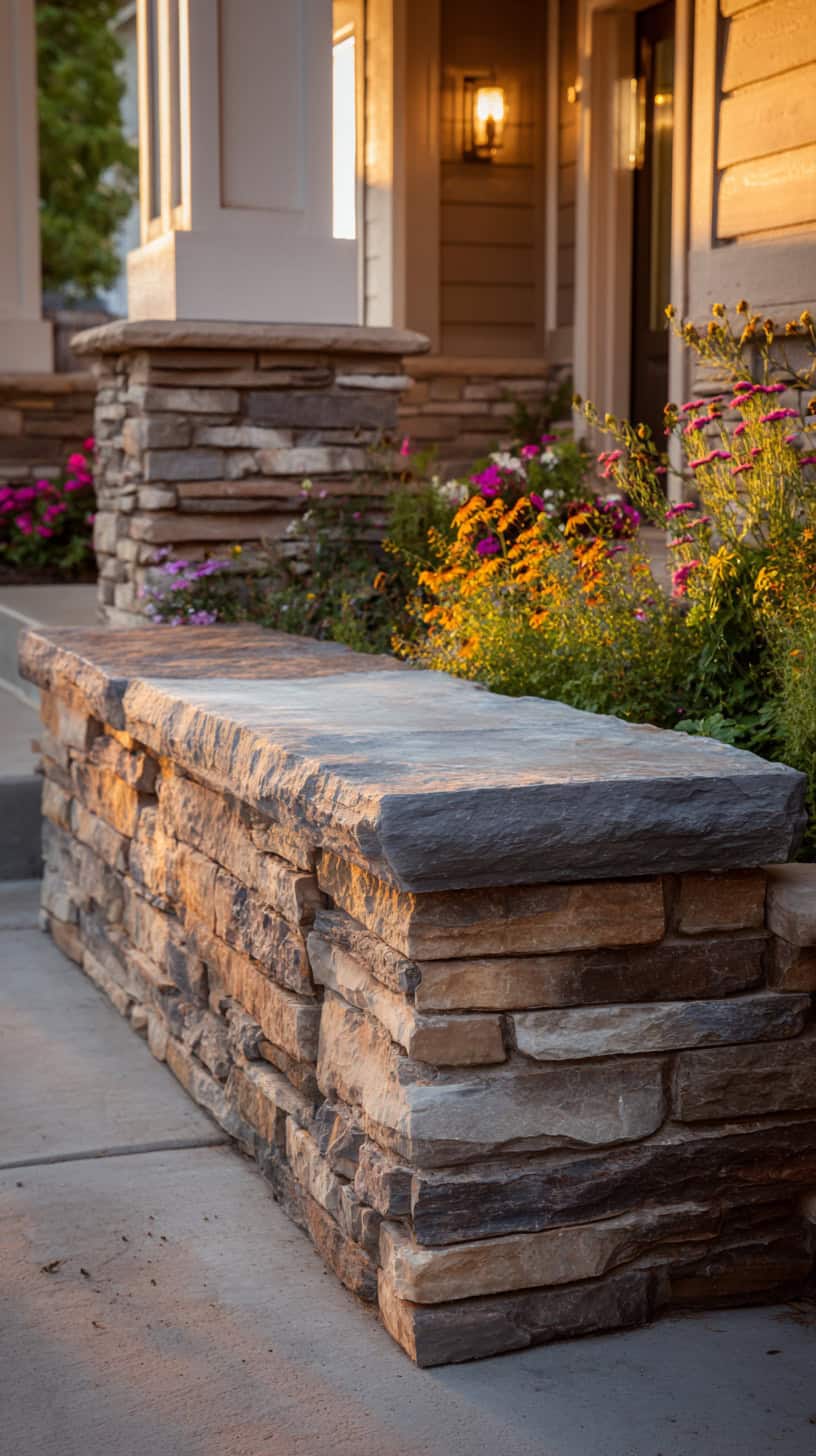
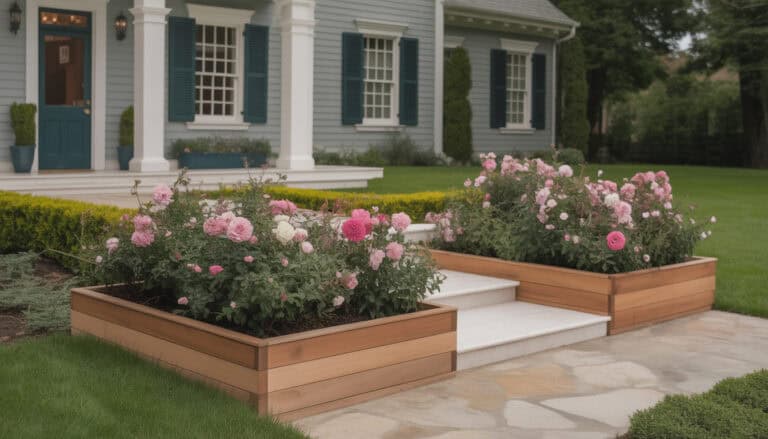
Combining function with beauty, low stone walls near your entryway create built-in seating while defining flower bed boundaries. These structured rock beds around house entrances make perfect spots to rest while taking off muddy boots or waiting for kids to gather backpacks. Stack flat stones to knee height, creating sturdy walls that double as perches and planting bed borders. Top the wall with capstones for a finished, comfortable seating surface that stays cool even on hot days. Behind these seat walls, plant fragrant flowers like lavender, roses, or jasmine so visitors enjoy lovely scents while they sit. This landscaping with rocks approach adds architectural interest to your home’s entrance while providing practical function. The stone retains heat during cool evenings, extending outdoor enjoyment and creating an inviting atmosphere that welcomes guests before they even reach your door.
Porch Side Rock Gardens
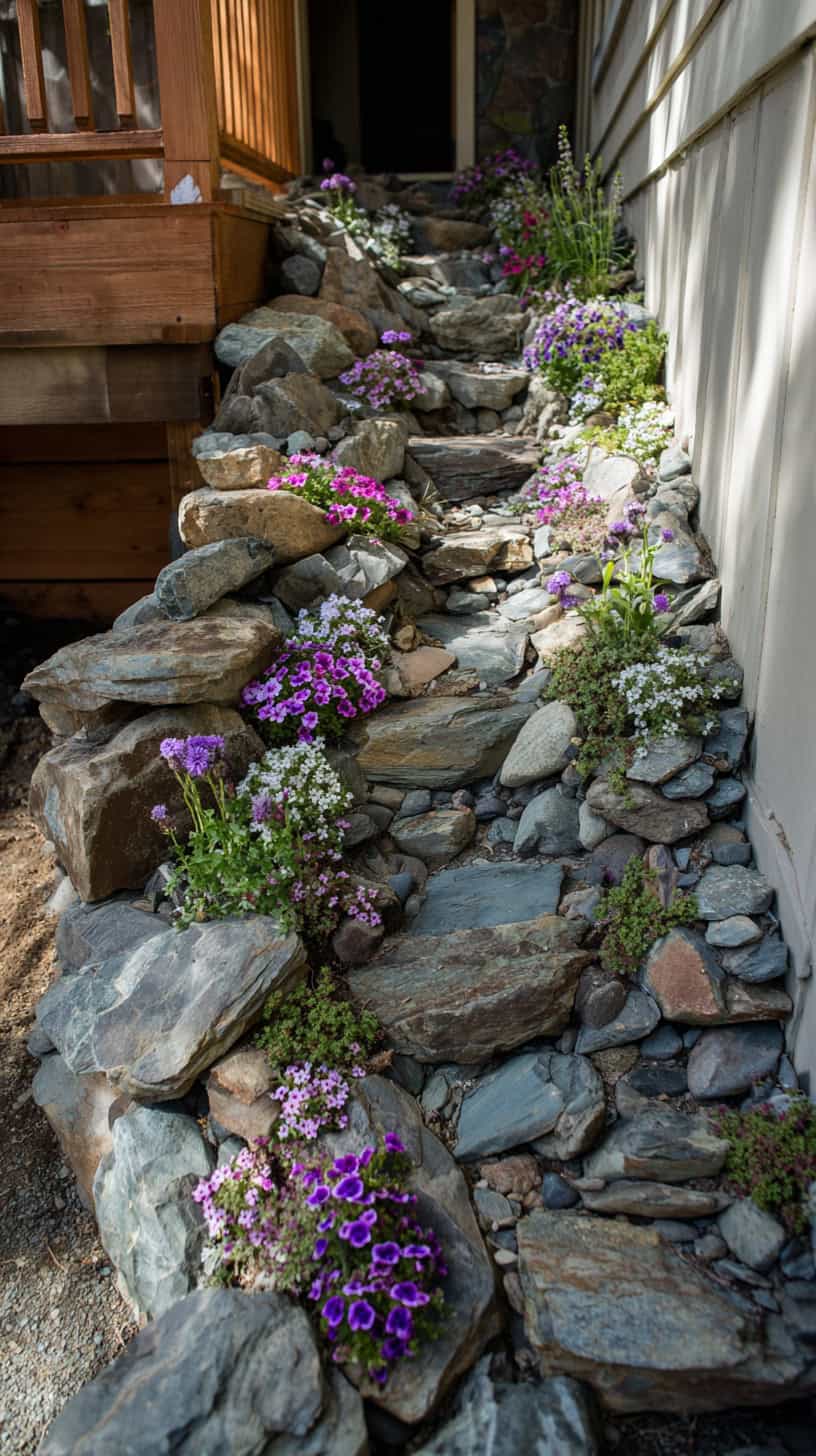
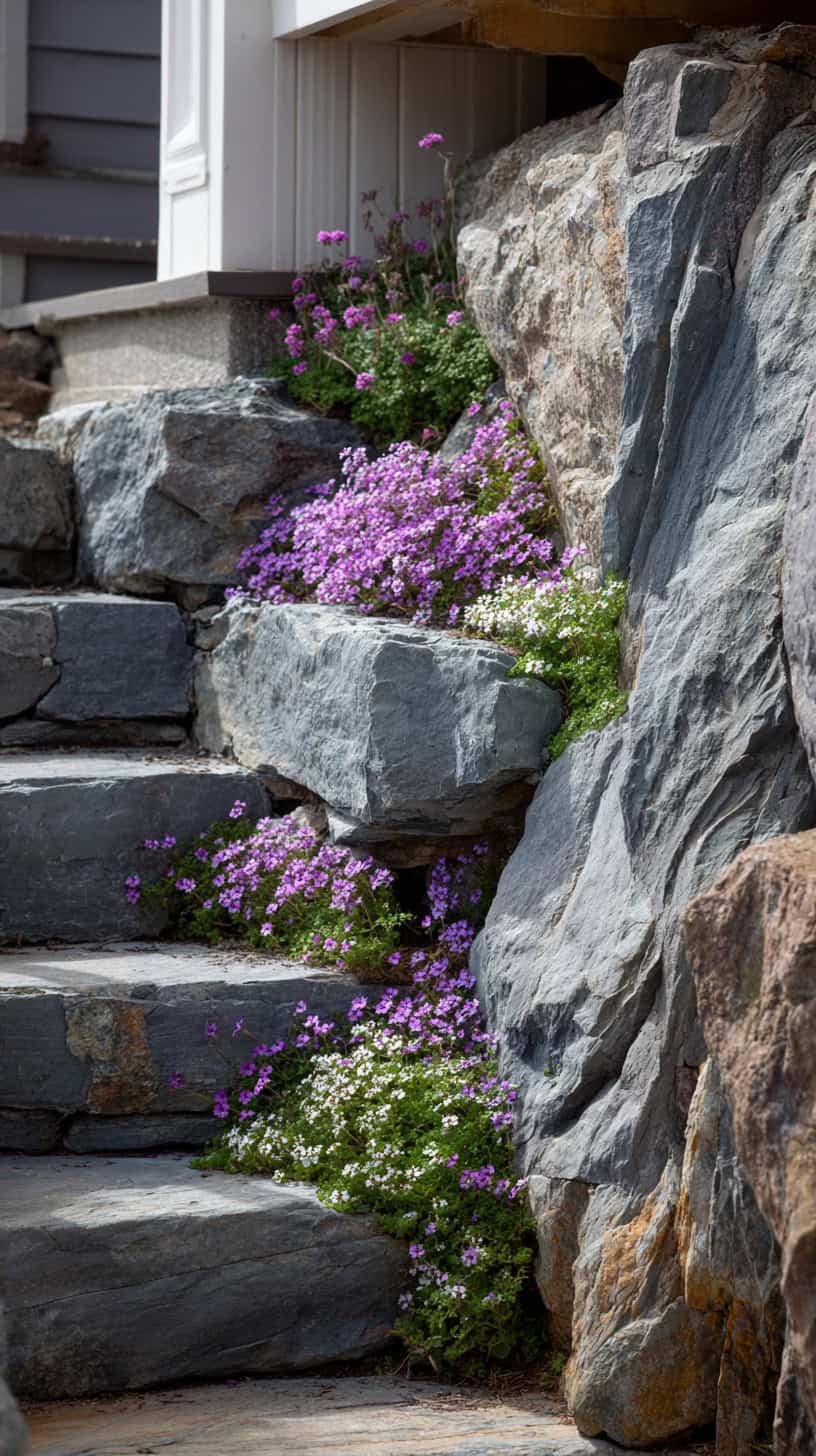
The narrow spaces alongside porches and stairs often get neglected, but they’re perfect for compact rock gardens bursting with color and texture. These tight spots benefit from simple rock landscaping ideas that prevent soil erosion while showcasing petite flowers and groundcovers. Layer different sized stones to create depth, then tuck small flowering plants into the crevices and gaps between rocks. This vertical approach maximizes limited space and creates living artwork right outside your door. I love using this technique with spring bulbs that pop up through the rocks each year, followed by summer annuals for continuous color. The rocks help retain moisture around plant roots while keeping soil from washing onto walkways during storms. Alpine plants, succulents, and compact perennials thrive in these conditions, rewarding you with blooms and foliage that soften hard porch edges beautifully.
Patterned Patio Accents
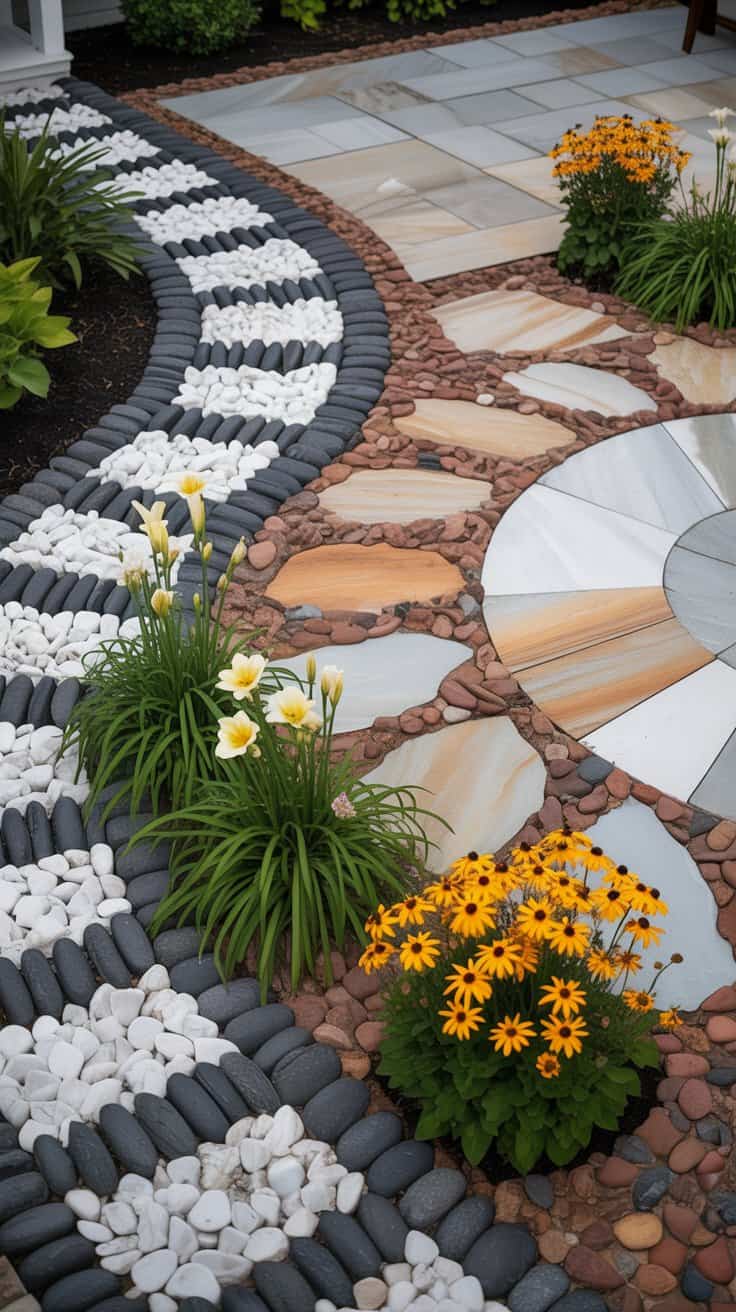
Geometric rock patterns surrounding patio edges create sophisticated transitions between hardscaping and softscaping in your outdoor living areas. Arrange different colored stones in stripes, checkerboards, or radiating designs that complement your patio material and home style. These flower beds in front of house with rocks gain extra personality when you play with pattern and repetition using contrasting stone colors. White marble chips alternating with dark river rock creates bold visual impact, while earth-toned stones arranged in flowing patterns feel more organic and relaxed. Plant low-maintenance flowers like daylilies or black-eyed Susans in spaces between pattern sections for pops of seasonal color. This design approach feels intentional and artistic rather than random, elevating your outdoor space into something truly special that reflects your personal style and attention to detail.
River Rock Pathways
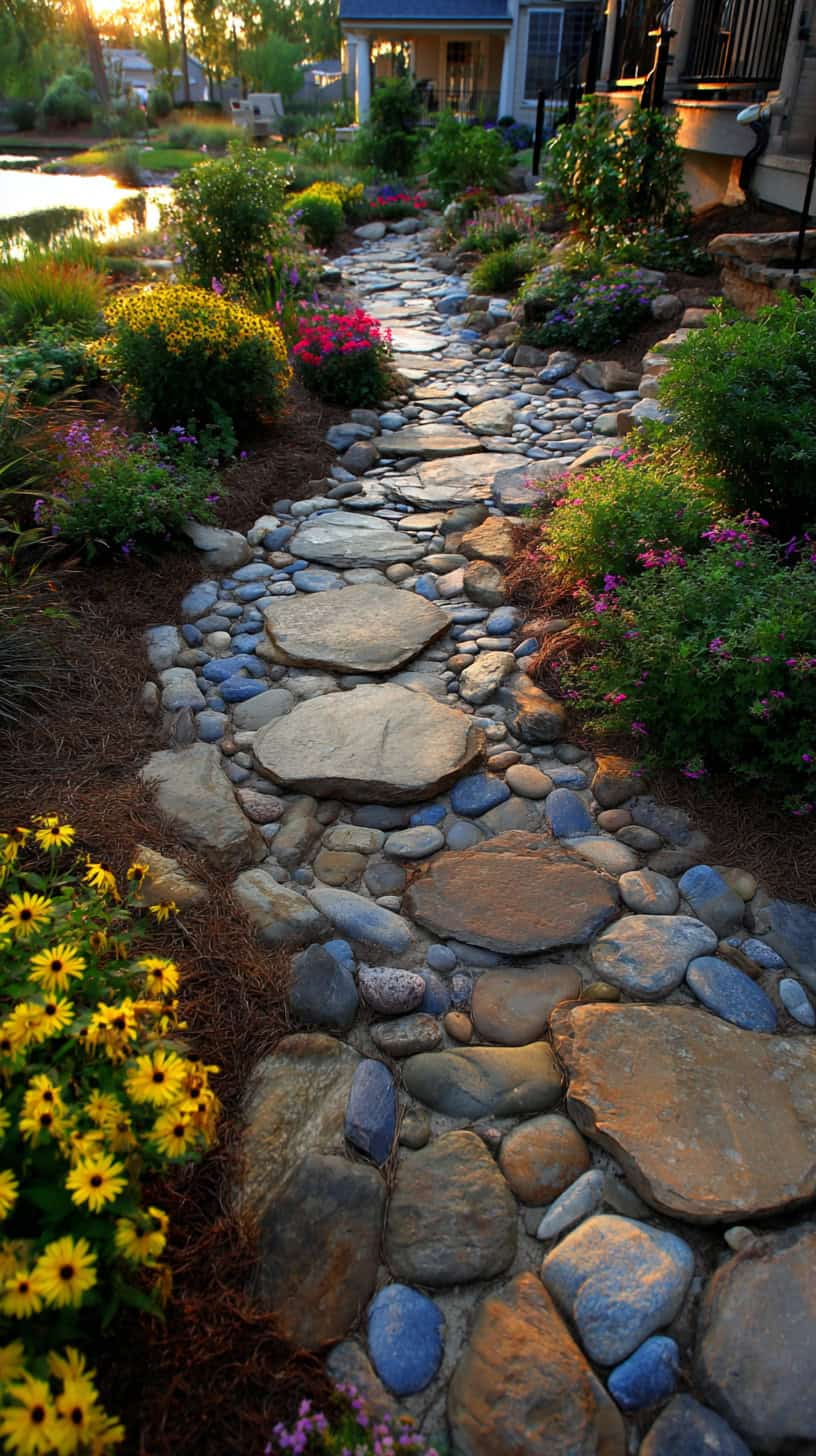
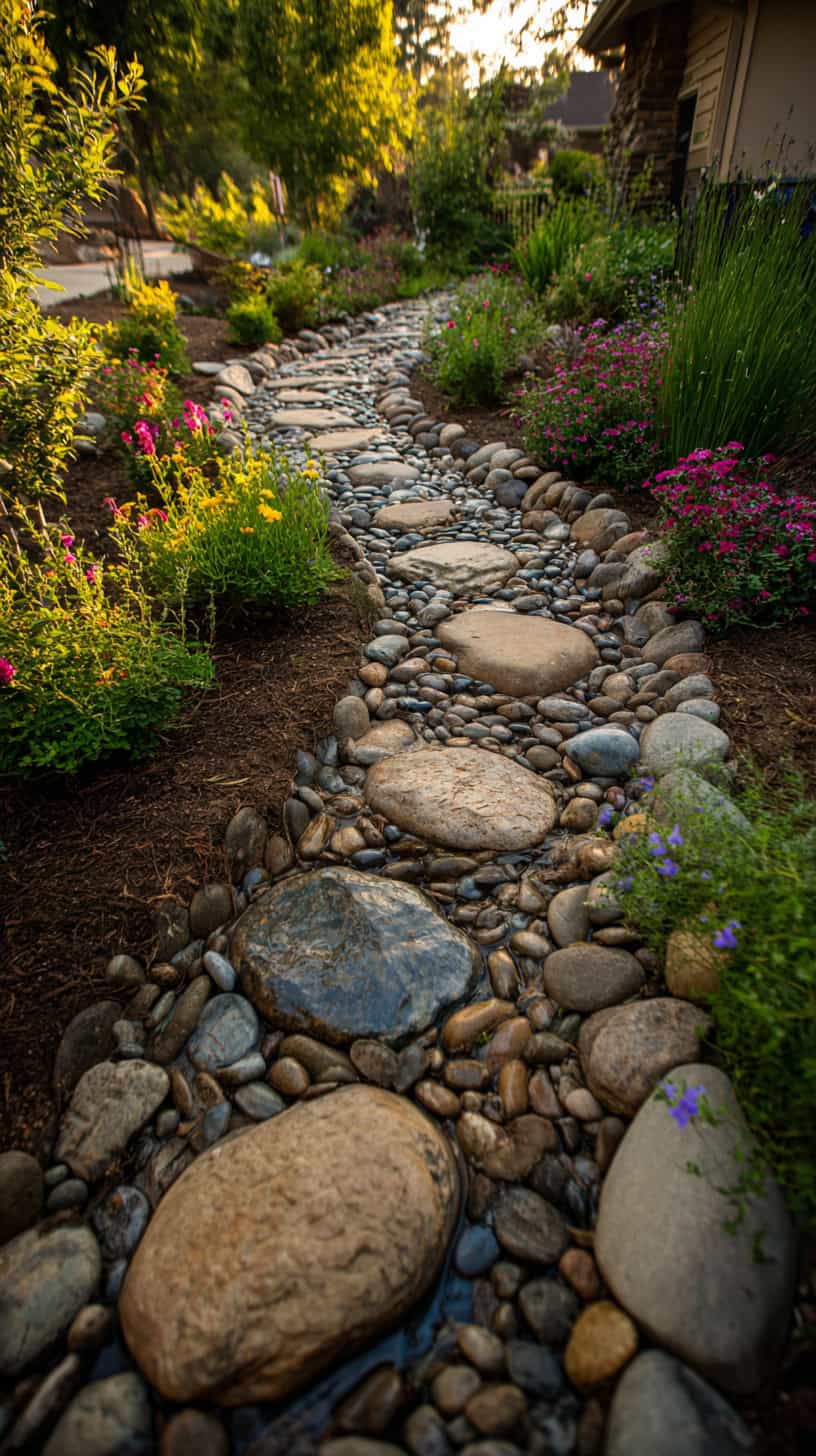
Smooth river rock pathways winding through flower beds invite exploration while protecting plants from foot traffic in high-use areas. These practical paths keep shoes clean and mud-free while connecting different garden zones with natural beauty. Create meandering walkways using larger stepping stones surrounded by smaller river rocks, or fill entire path areas with uniform-sized stones for a cohesive look. Gravel flower bed ideas incorporate these pathways seamlessly, allowing easy access for watering, deadheading, and enjoying blooms up close. Edge the paths with slightly larger stones or bricks to keep rocks contained and separate from planting areas. Plant fragrant flowers like sweet alyssum or creeping thyme along path edges so every garden stroll releases lovely scents. These pathways reduce lawn area while adding functional beauty that encourages family members to actually spend time in the garden rather than just viewing it from afar.
Succulent Rock Corners
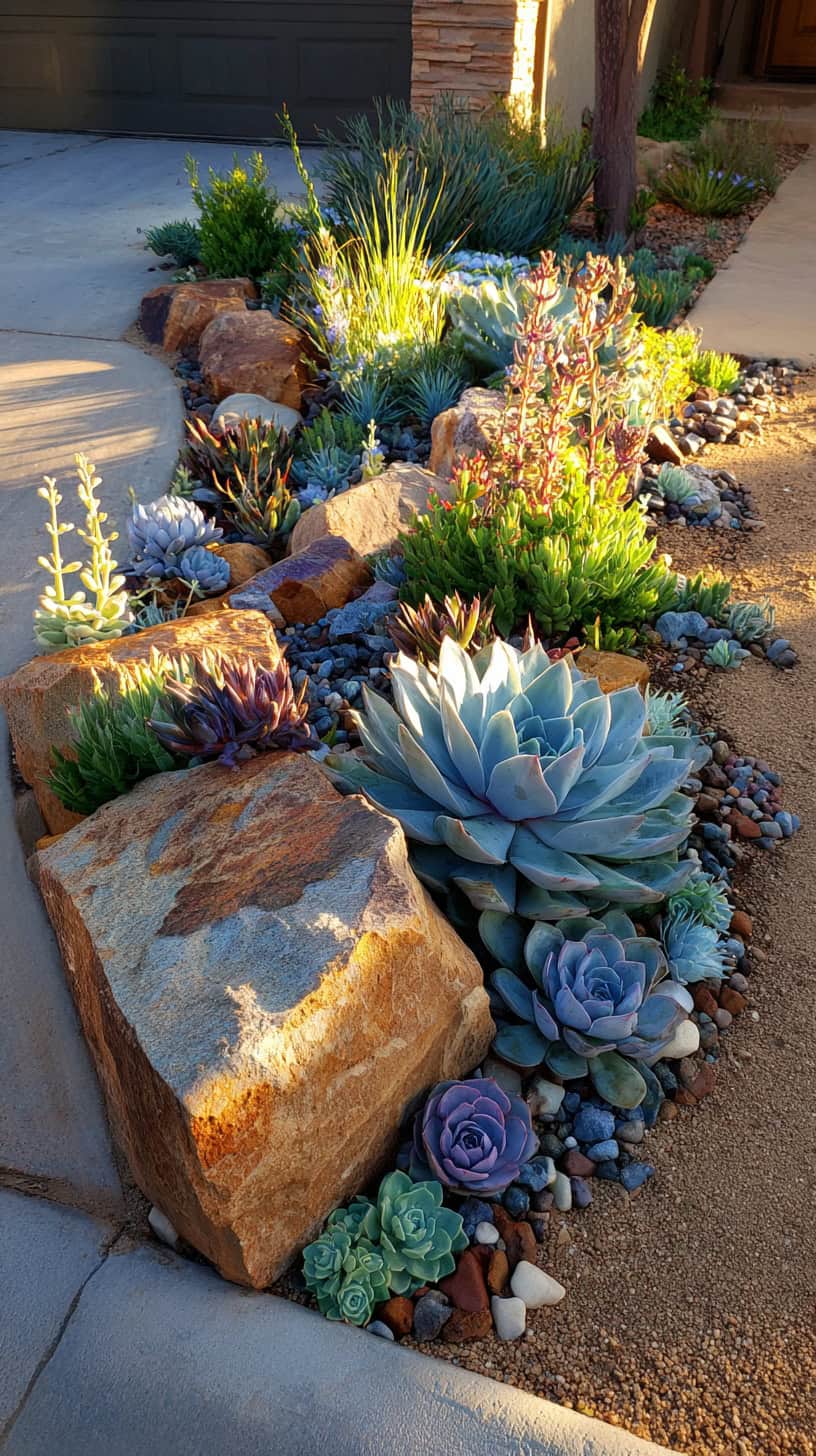
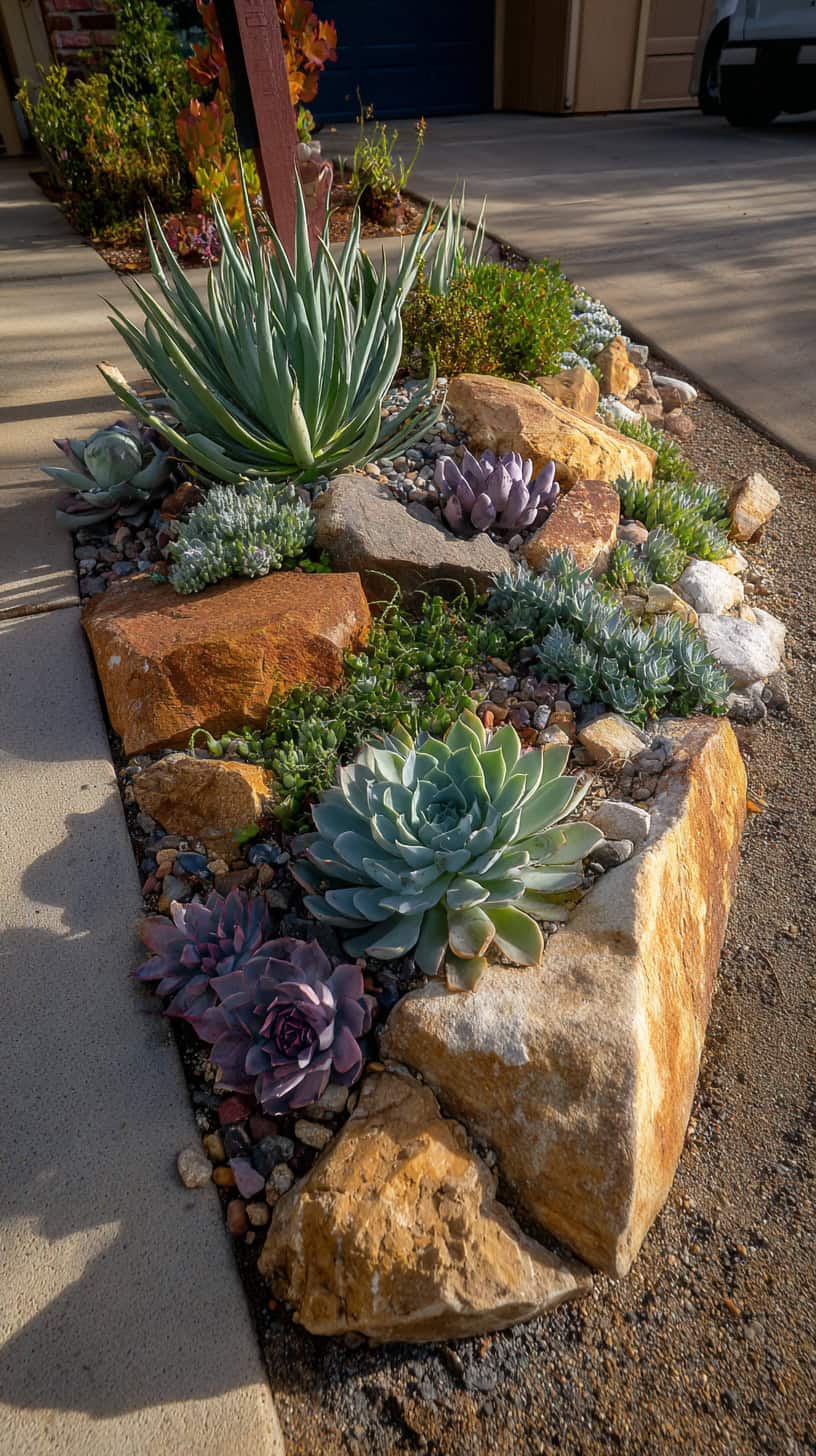
Transform forgotten corner spaces into stunning displays by pairing drought-tolerant succulents with decorative rocks in layers and clusters. These low-water gardens thrive in spots that challenge traditional flowers, making them perfect for hot, dry corners near driveways or foundations. Mix succulent varieties with different colors, textures, and heights, then nestle them among complementary rocks and gravel. I’m always impressed by how architectural these gardens look with minimal effort or water requirements. Use larger rocks as backdrop anchors and fill between plants with pea gravel or crushed stone that echoes succulent hues. This landscaping with rocks and flower beds combination creates year-round interest since succulents maintain their color and form through all seasons. Kids love helping arrange the stones and choose colorful succulent varieties, making this an engaging family project that teaches about water-wise gardening.
Cascading Flower Edges
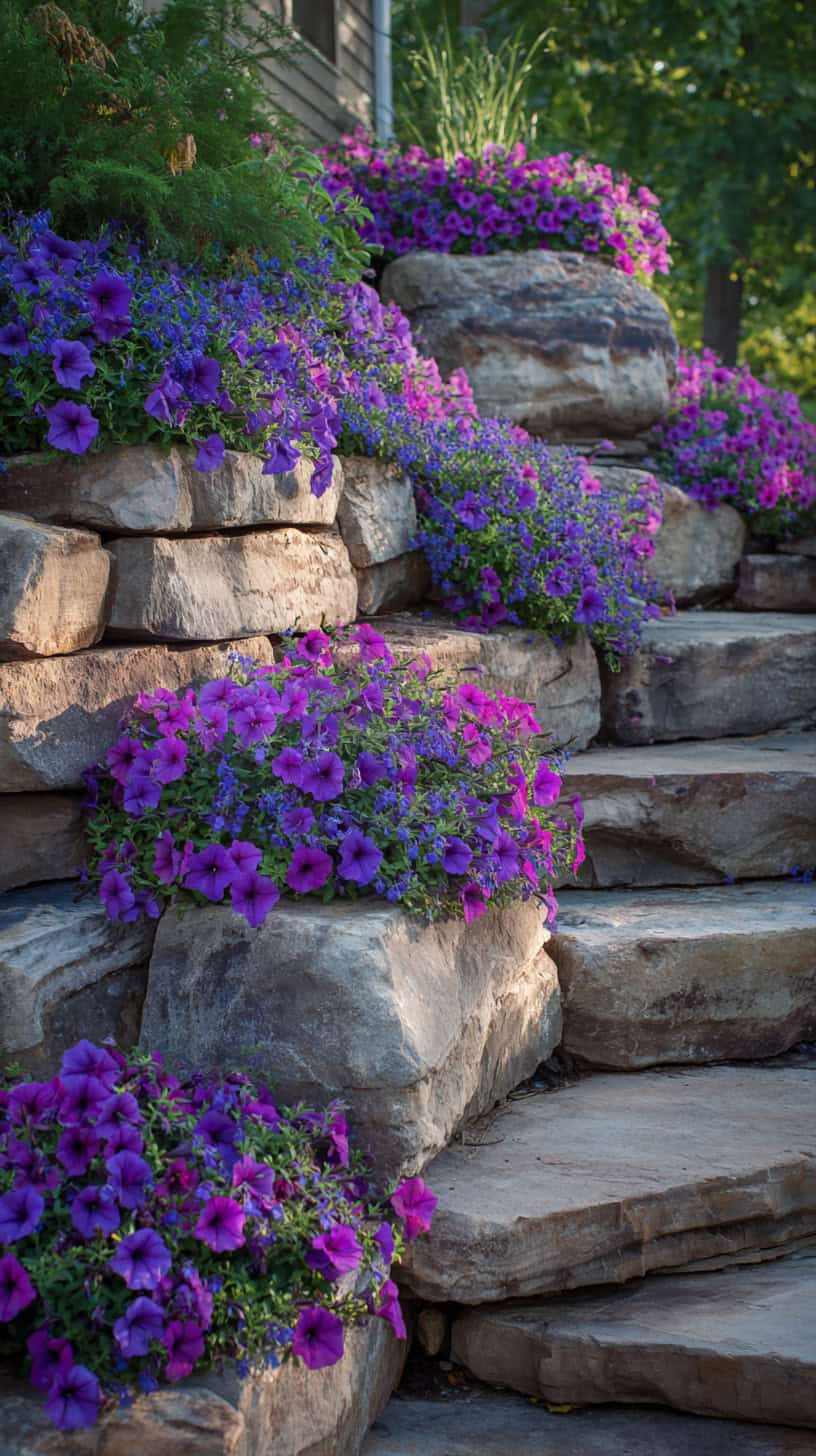
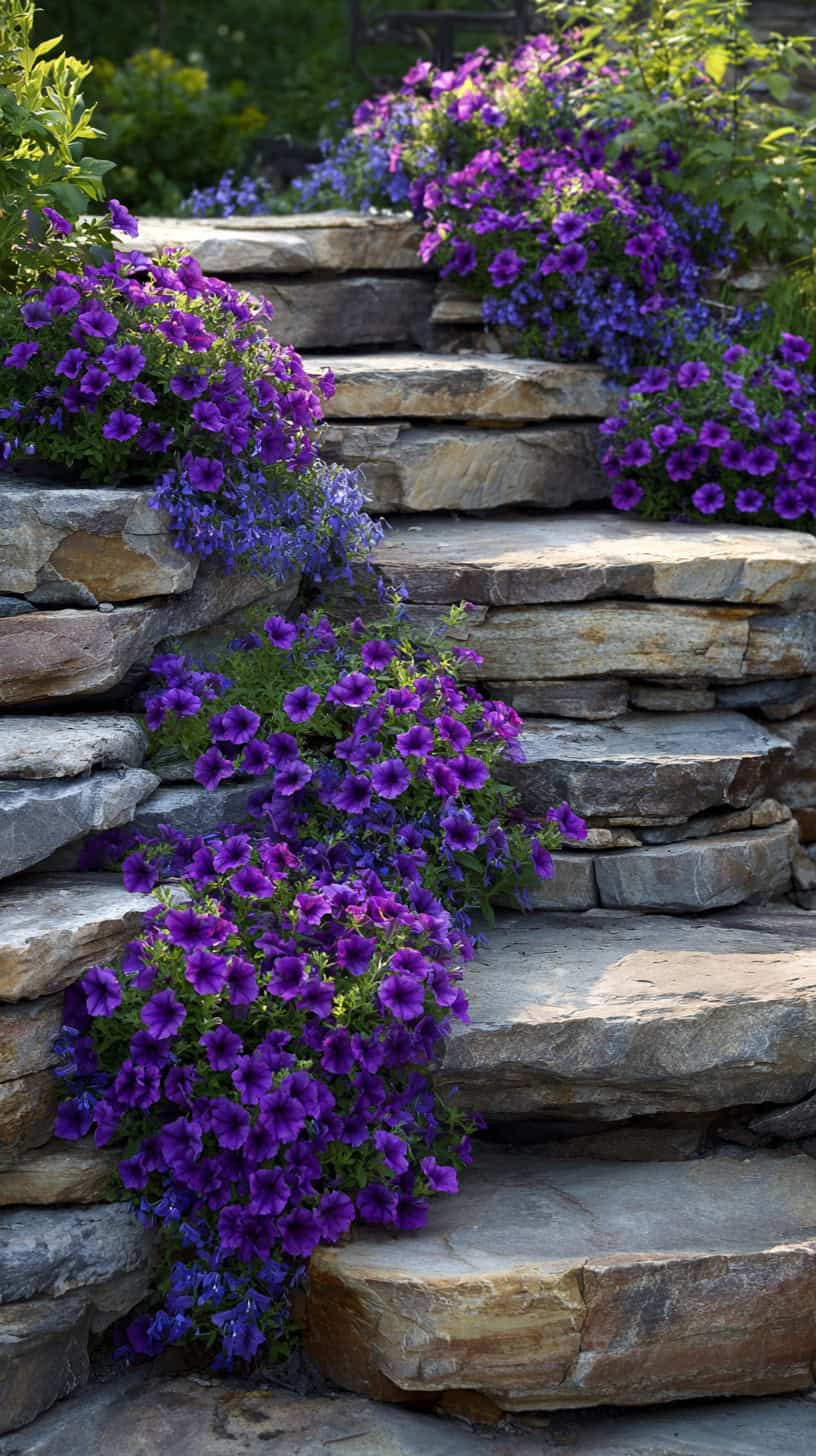
Staggered rock levels create waterfall effects when planted with trailing flowers that spill over stone edges in colorful cascades. This dynamic approach to flower beds with rocks instead of mulch adds movement and drama while showcasing blooms from multiple viewing angles. Stack flat stones to create two or three tiers, then plant trailing varieties like petunias, lobelia, or million bells along the upper levels. As flowers grow, they cascade down over rocks in flowing curtains of color that hide hard stone edges beautifully. The rocks provide structure and prevent soil erosion while highlighting the flowers’ natural growth habits. This technique works wonderfully along sloped yards, raised beds, or anywhere you want to add vertical interest without building tall structures. The combination feels romantic and cottage-garden inspired while remaining surprisingly practical and easy to maintain throughout the growing season.
Pea Gravel Mulch Swap
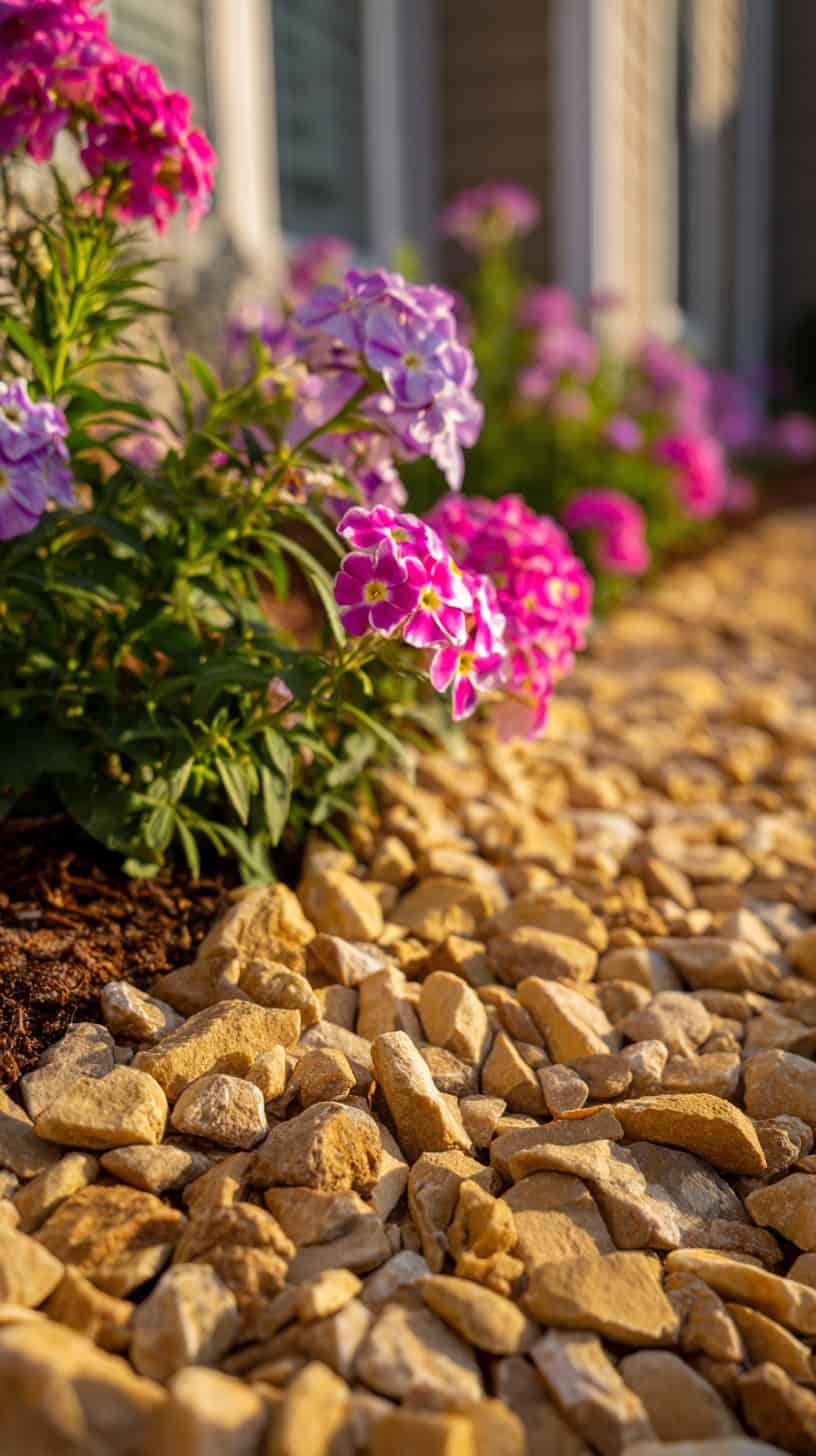
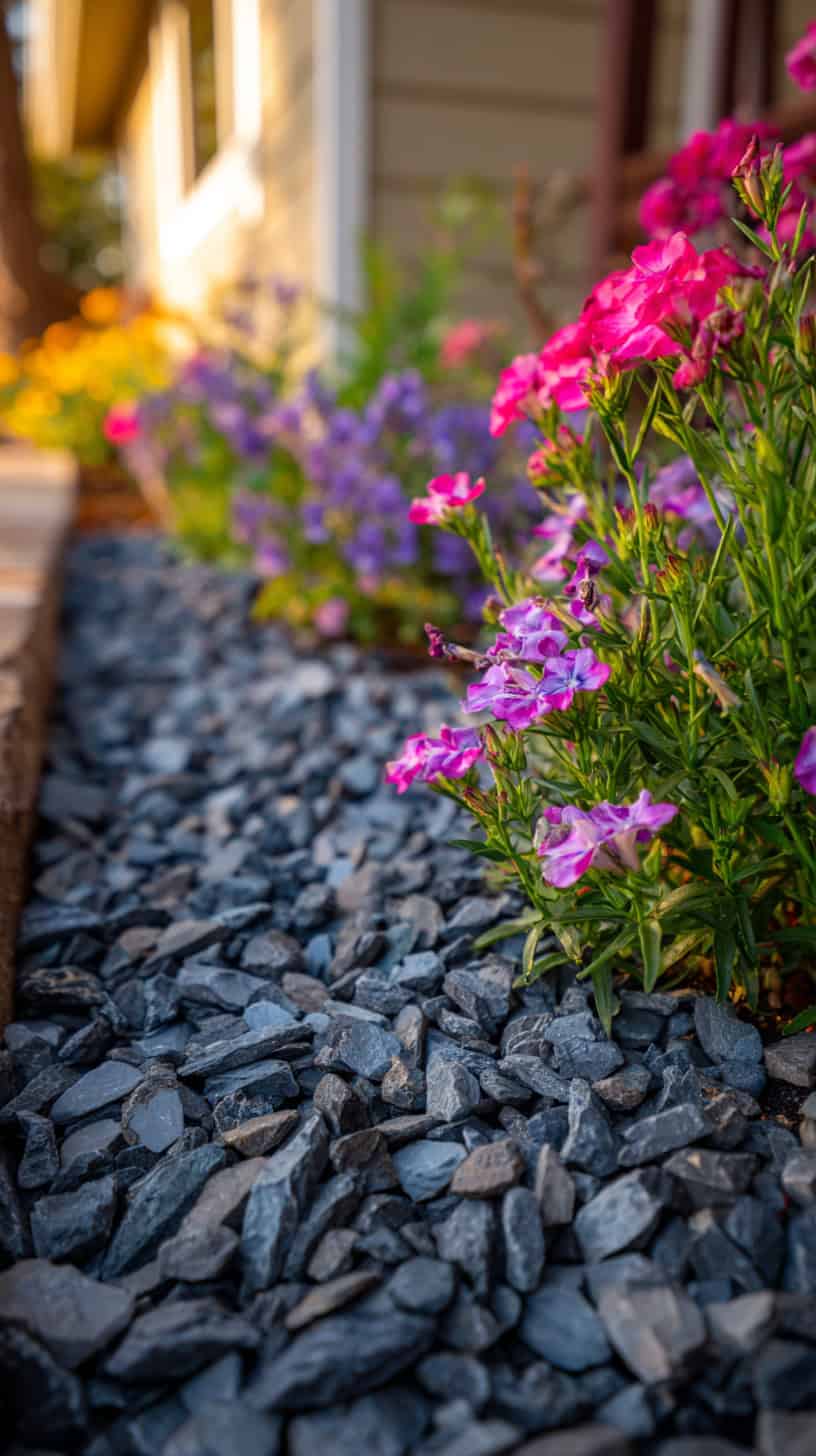
Replacing traditional wood mulch with pea gravel gives flower beds a fresh, modern look while solving common mulch problems like decomposition and weed growth. This simple swap transforms ordinary beds into low-maintenance showcases that stay neat year-round without refreshing or replenishing. Pea gravel’s small, uniform stones settle nicely around plant stems and create clean, polished backgrounds that make flower colors pop brilliantly. Unlike mulch that floats away during heavy rains, gravel stays put while allowing excellent drainage and air circulation around plant roots. I appreciate that gravel doesn’t attract termites or provide hiding spots for garden pests that love wood mulch. Choose gravel colors that complement your home’s exterior and existing landscape elements for cohesive design. This outdoor rock garden idea reduces long-term maintenance costs and effort while giving beds a contemporary aesthetic that works with any architectural style or planting scheme.
Layered Stone Retainers
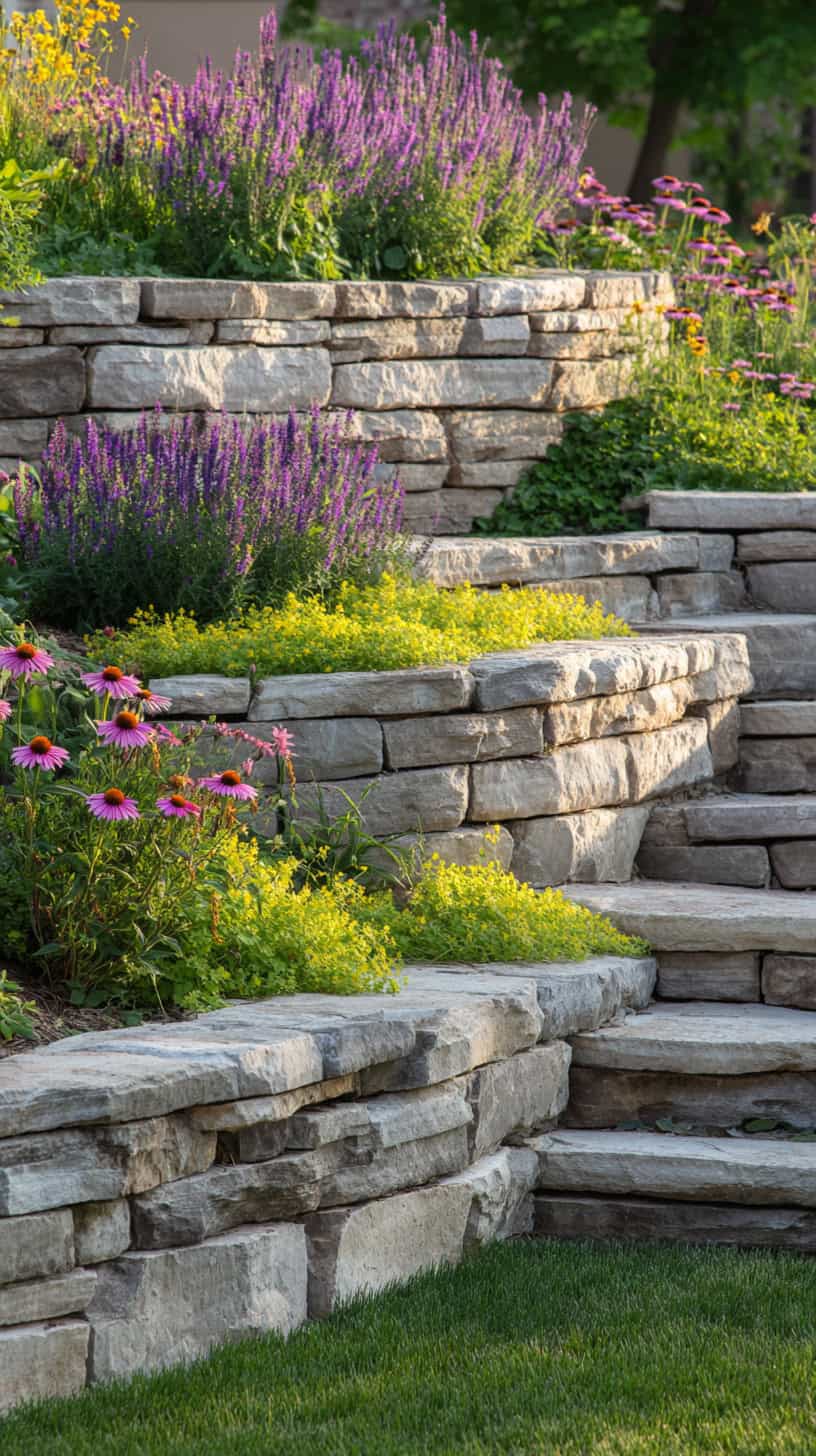
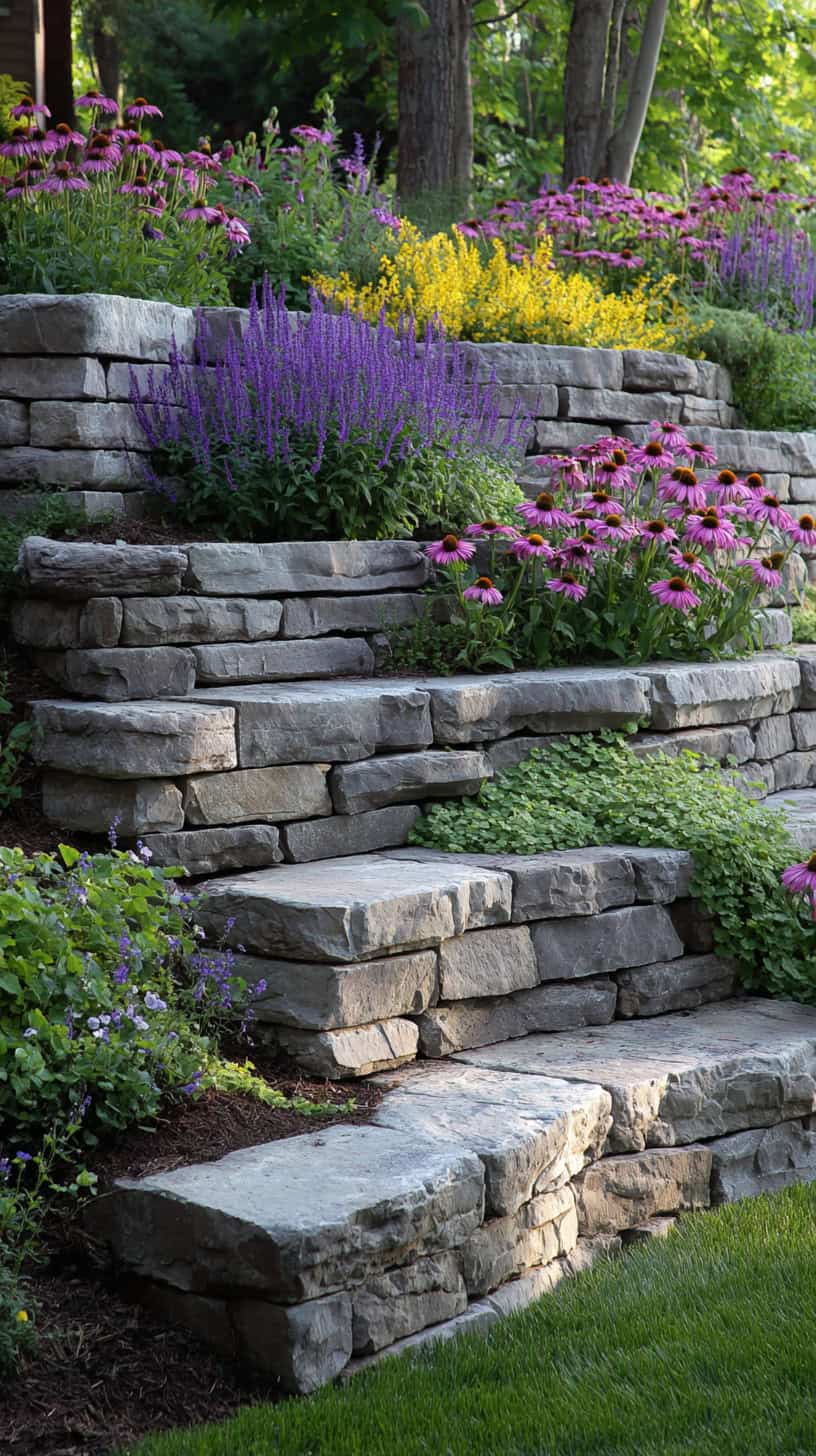
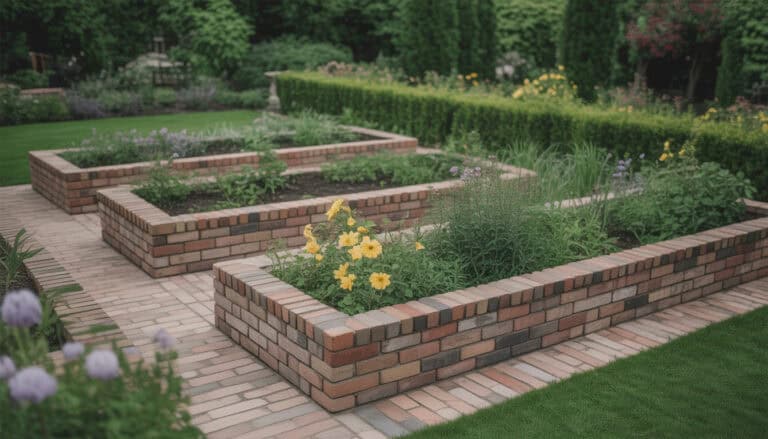
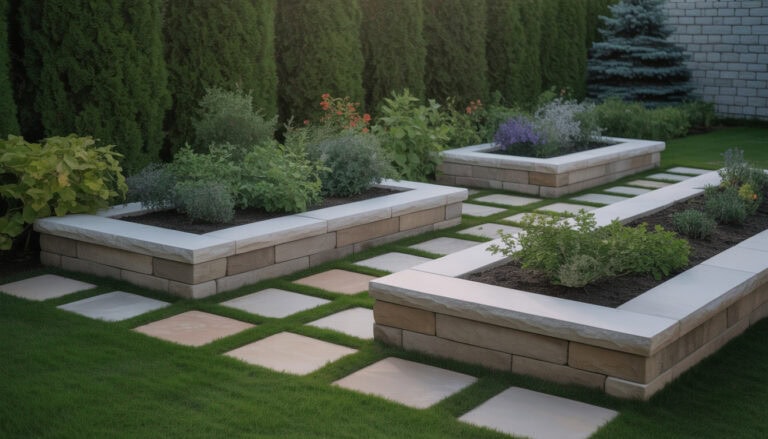
Building flower beds with multiple stone layers creates depth and sophistication while providing perfect growing conditions for diverse plant varieties. These raised designs solve poor soil problems by allowing you to fill beds with ideal planting mix above problematic ground. Stack stones in graduating tiers, with each level stepping back slightly to create stable, terraced planting zones. The layered approach lets you group plants with similar water and sun needs while creating visual interest through height variation. Use the lowest tier for shade-loving plants, middle sections for part-sun varieties, and top levels for sun-worshippers that soak up maximum light. Rock garden design ideas incorporating these retaining structures work beautifully in challenging yards with slopes or drainage issues. The permanent stone framework provides year-round structure even when plants die back, maintaining garden beauty through every season while making planting, weeding, and harvesting incredibly easy.
Front Walkway Dividers
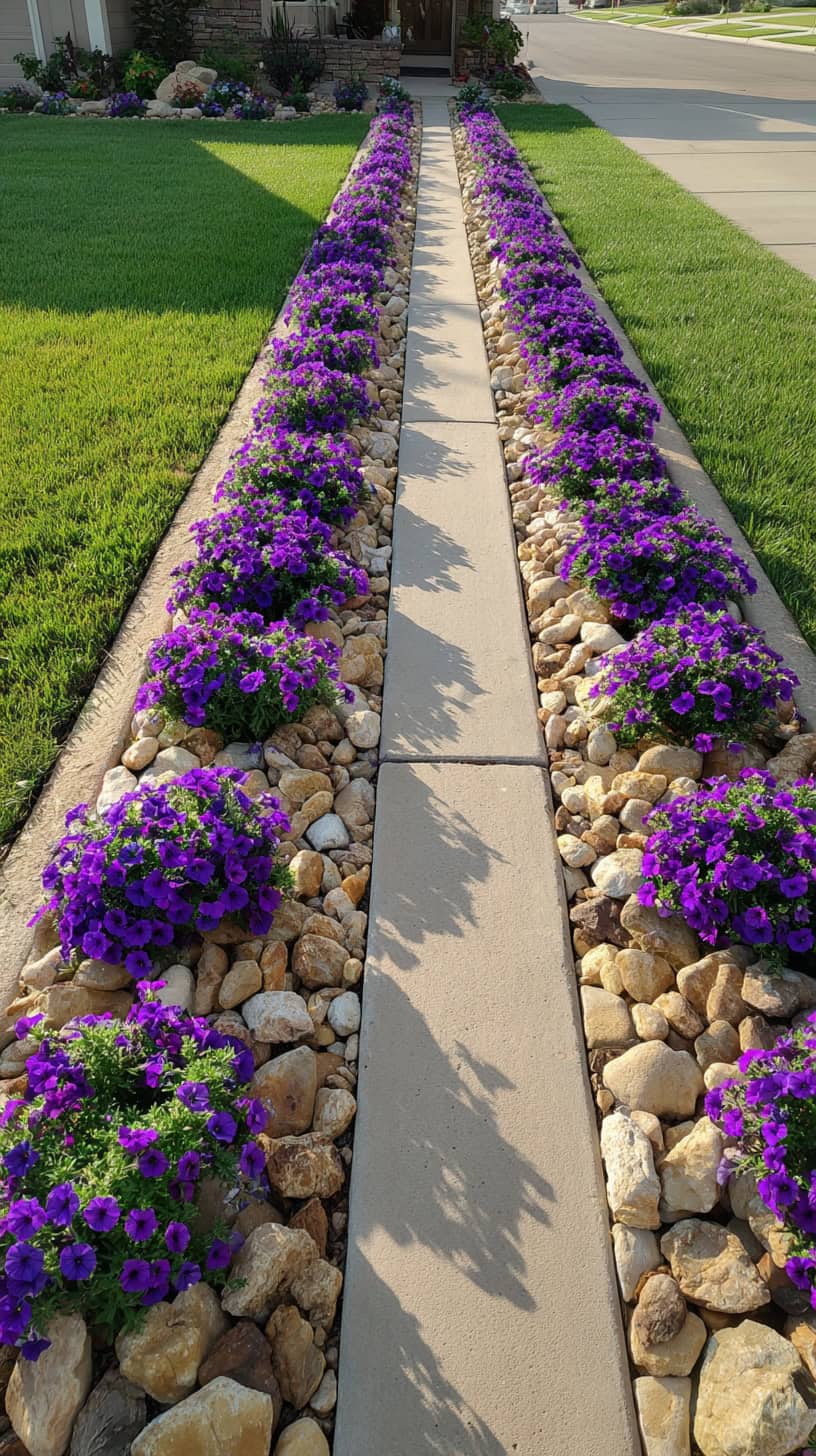
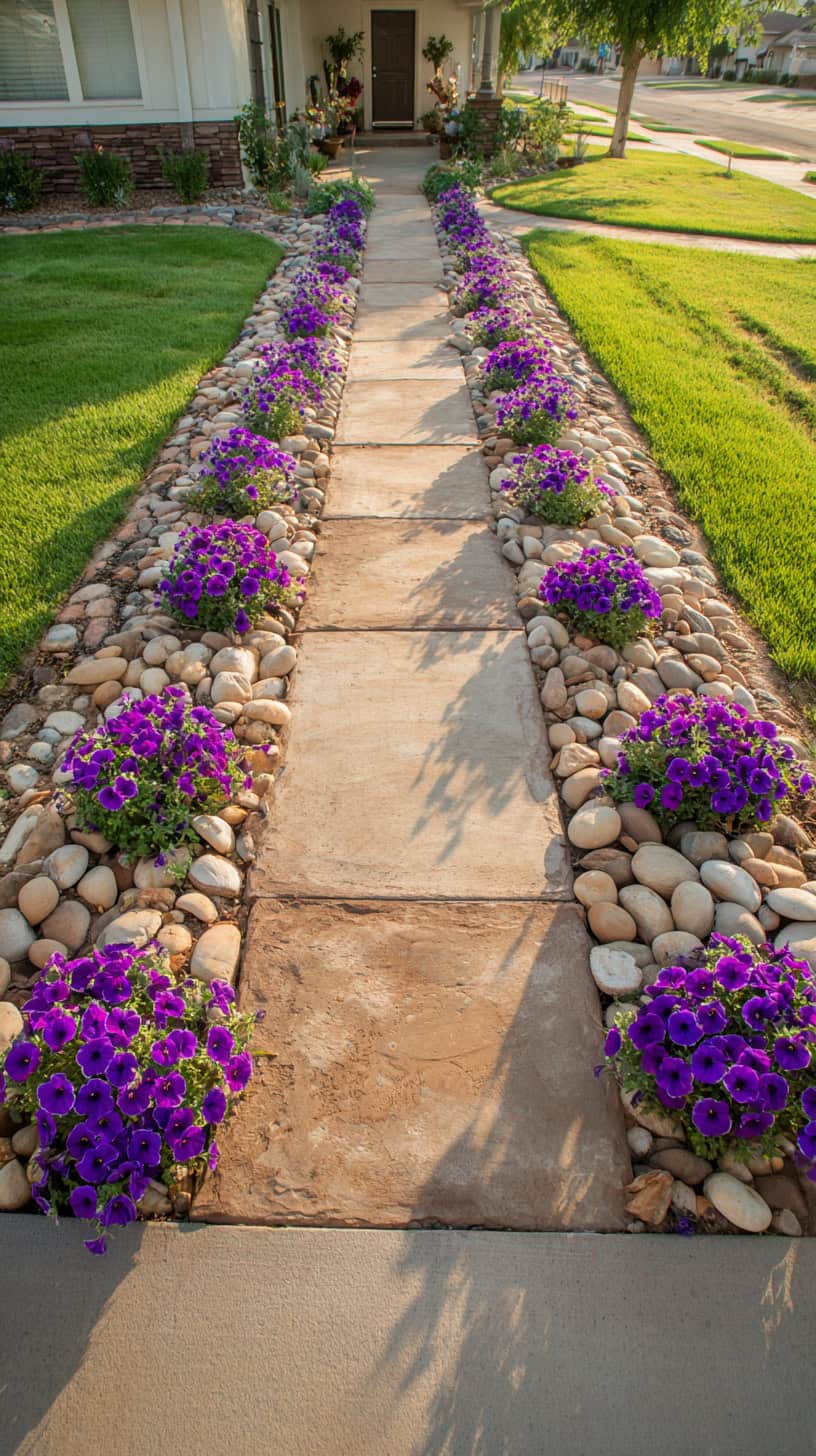
Rock-filled strips flanking your front walkway create beautiful transitions that separate paved areas from lawn while showcasing colorful flower displays. These narrow beds prevent grass from encroaching on sidewalks while adding welcoming color that guides visitors to your door. Simple rock landscaping ideas like this maximize impact in small spaces without requiring extensive gardening skills or time. Fill the strips with decorative rock as a base layer, then plant uniform flower varieties for formal appeal or mix different blooms for cottage garden charm. Solar lights tucked among the rocks and flowers illuminate pathways beautifully at night while highlighting your plantings. The rocks retain moisture and heat, helping flowers thrive while reducing watering needs significantly. This straightforward design approach instantly upgrades curb appeal and makes your entrance feel purposefully designed rather than like an afterthought, impressing guests before they reach your front door.
Whimsical Cactus Clusters
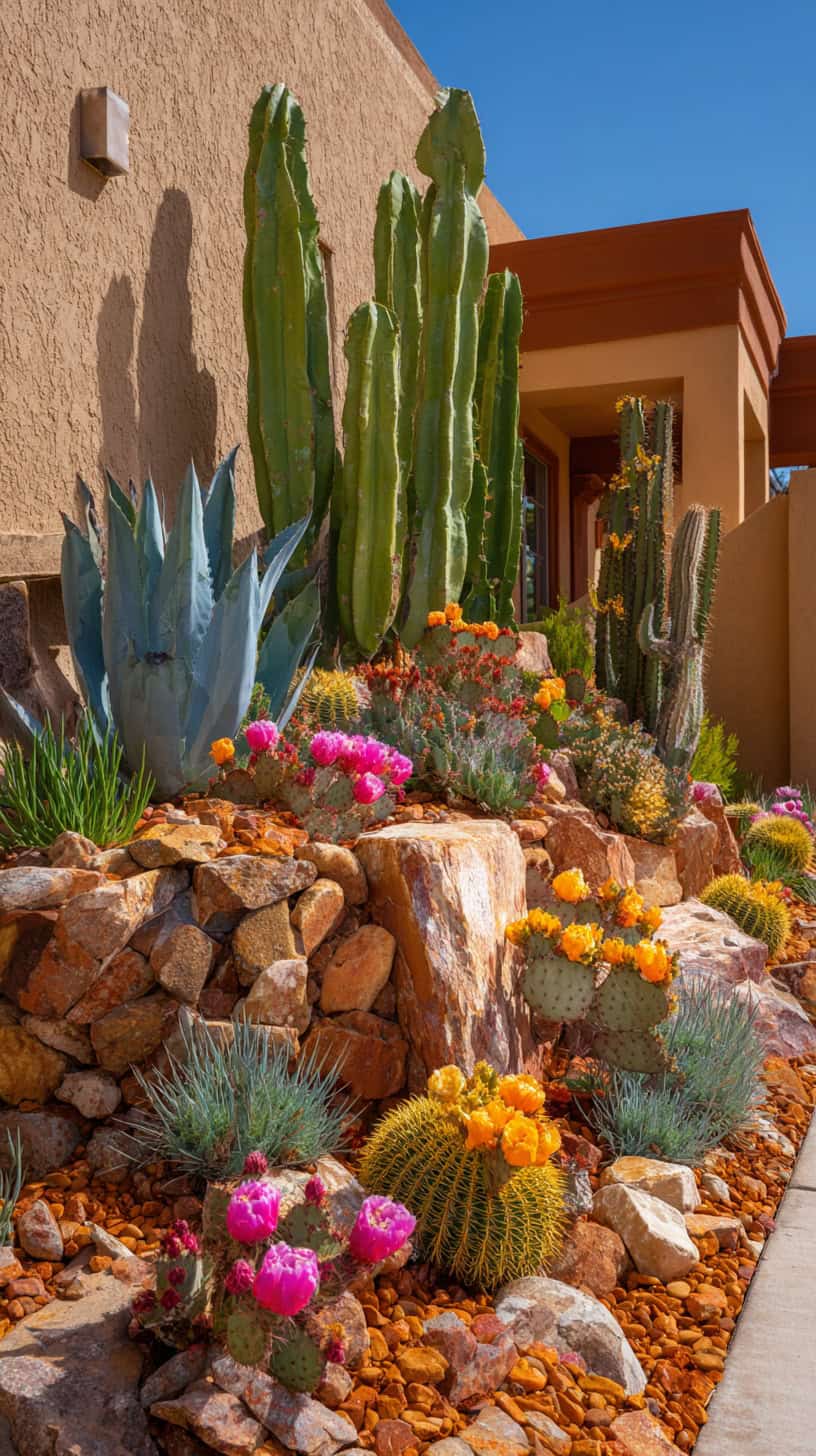
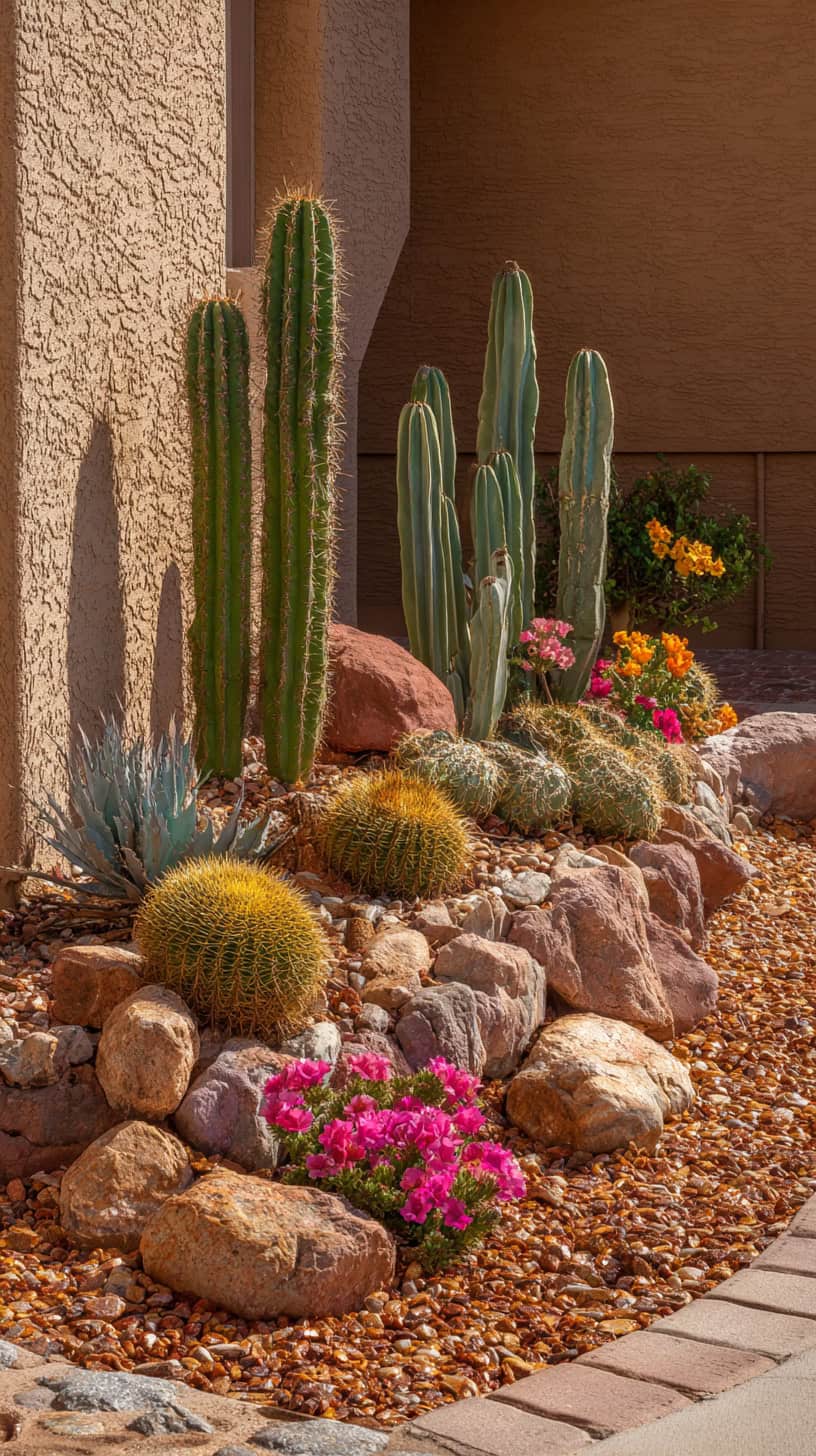
Desert-loving cacti nestled among decorative rocks create striking, sculptural gardens that celebrate bold shapes and unexpected textures in creative ways. These ultra-low-maintenance flower beds in front of house with rocks thrive in hot, sunny spots where traditional flowers struggle or demand constant attention. Mix various cactus heights, shapes, and bloom colors, then surround them with sand-colored gravel or colorful crushed stone that complements their unique forms. I love how these gardens feel like miniature desert landscapes, transporting viewers to faraway places right in suburban yards. Add larger boulders as accent pieces and use smaller decorative rocks to create dry riverbeds or pathways through cactus groupings. Despite their prickly reputation, many cacti produce stunning, vibrant flowers that surprise visitors with their delicate beauty. Kids find these gardens fascinating, though supervision ensures safe viewing distances from spines while teaching about diverse plant adaptations and water conservation.
Low Maintenance Rock Fill
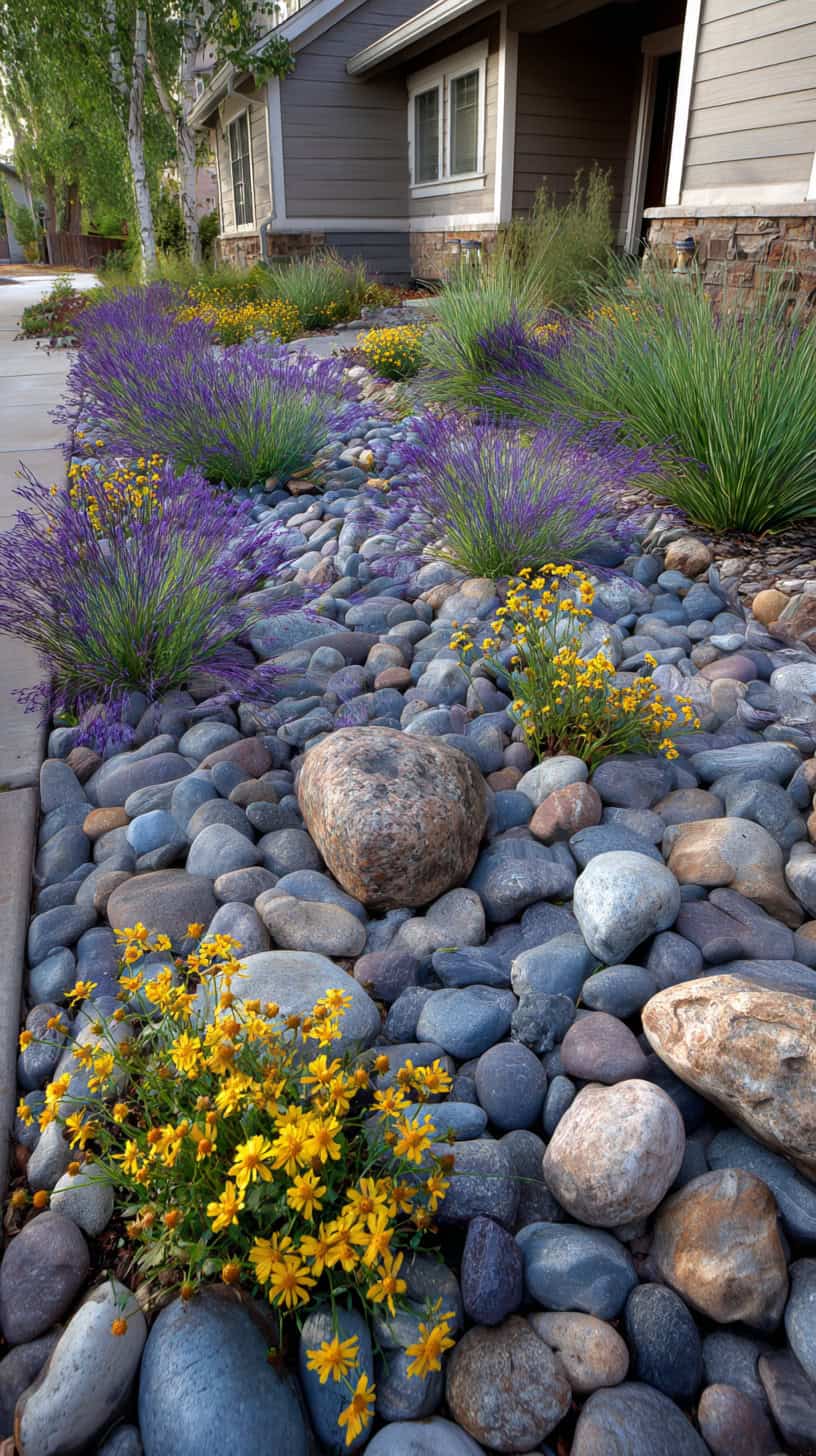
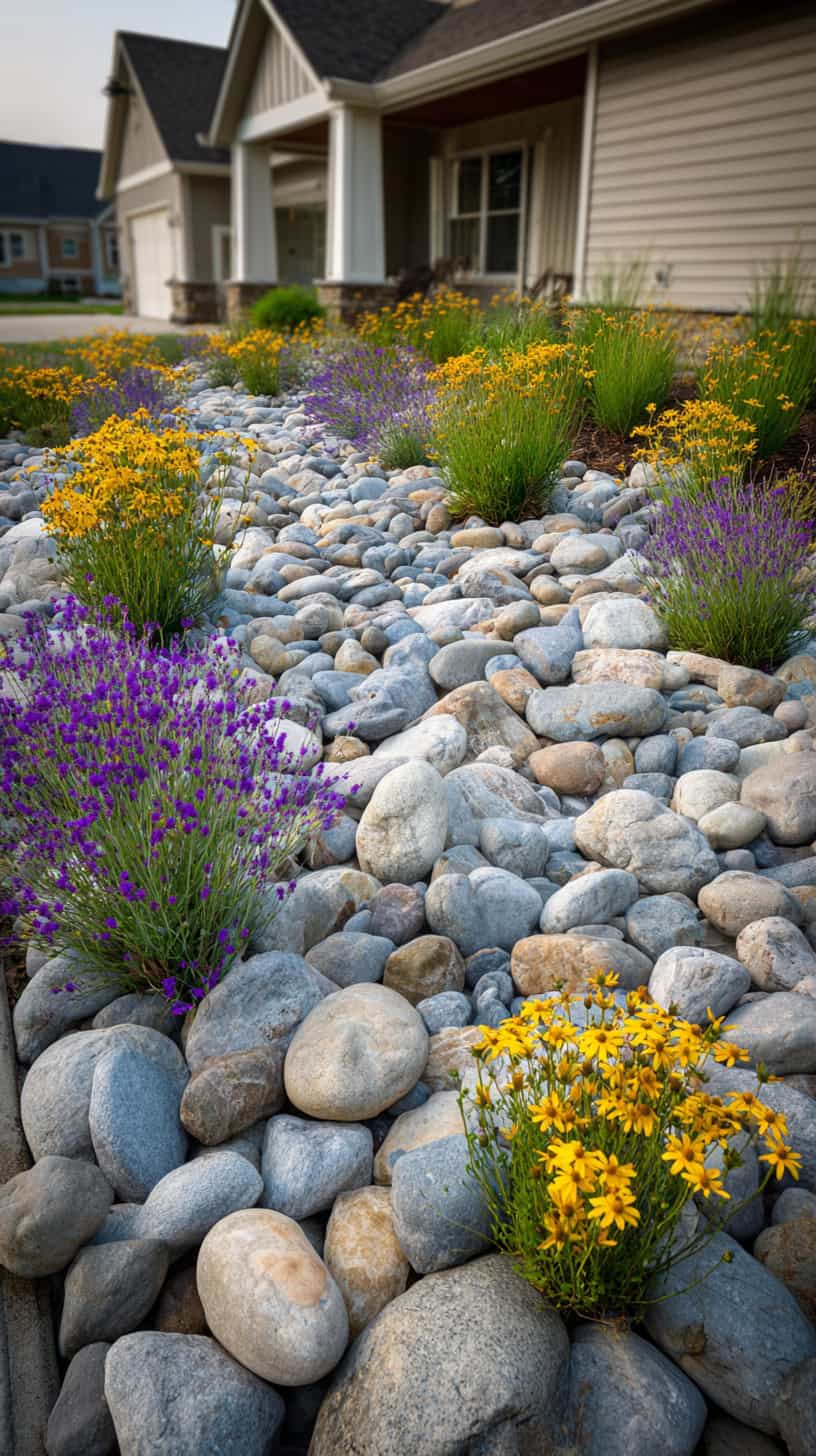
Maximizing rock coverage and minimizing plant quantities creates gorgeous beds that require almost zero upkeep while delivering consistent beauty year-round. This practical approach to landscaping with rocks flower beds prioritizes convenience without sacrificing style or curb appeal. Cover most of your bed area with attractive rocks, then strategically place hardy perennials or ornamental grasses in scattered clusters throughout. The rocks suppress weeds naturally while the limited plants provide just enough color and softness to keep the design from feeling stark. Choose drought-tolerant varieties that thrive on neglect, like Russian sage, coneflowers, or ornamental onions that return reliably each year. This design philosophy suits busy families perfectly, delivering beautiful results without demanding weekend-consuming maintenance marathons. The permanent rock infrastructure means your beds always look intentional and tidy, even during seasons when plants rest or between bloom cycles, maintaining property value and neighborhood appeal effortlessly.
Shade Garden Stone Fits
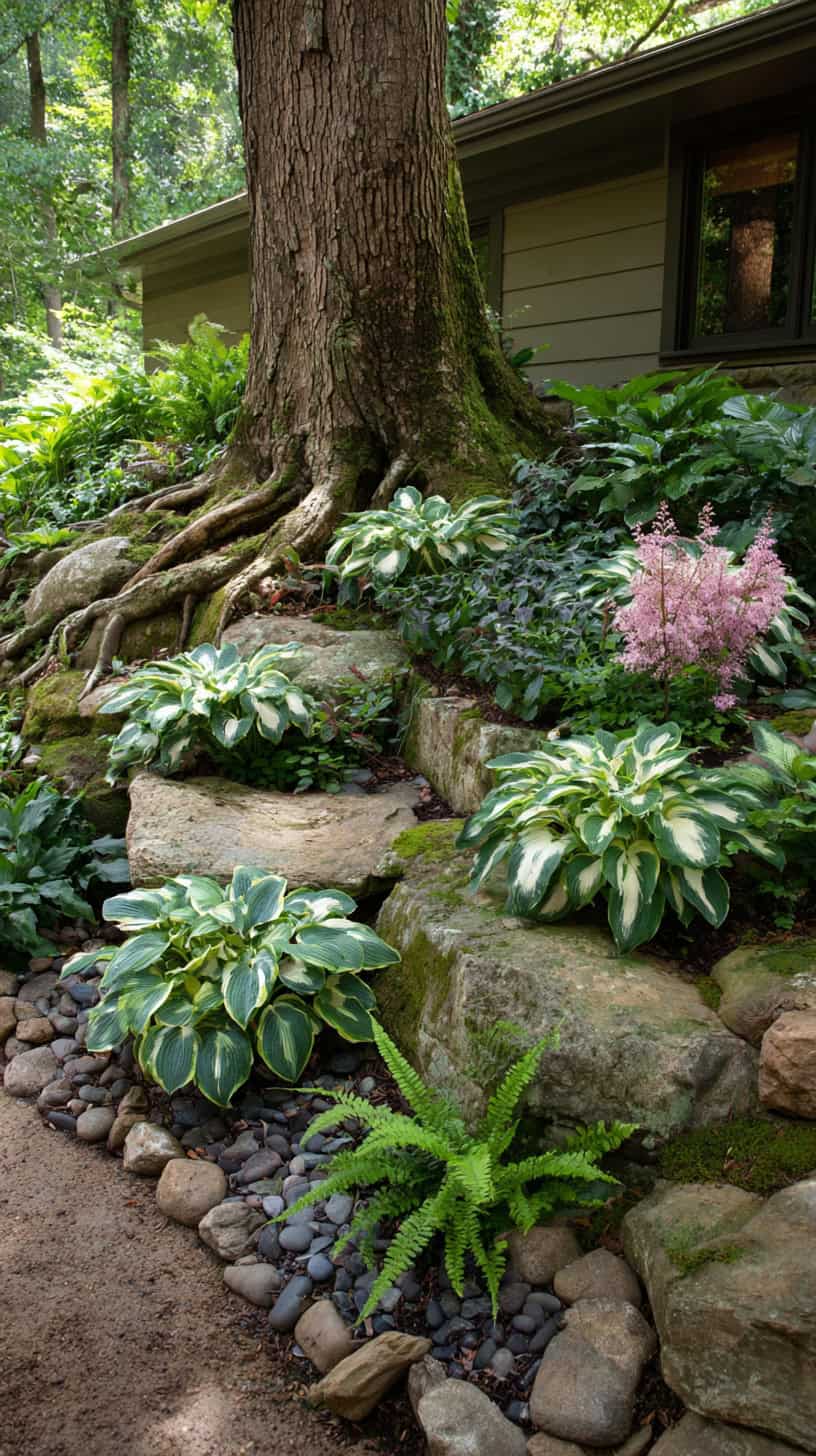
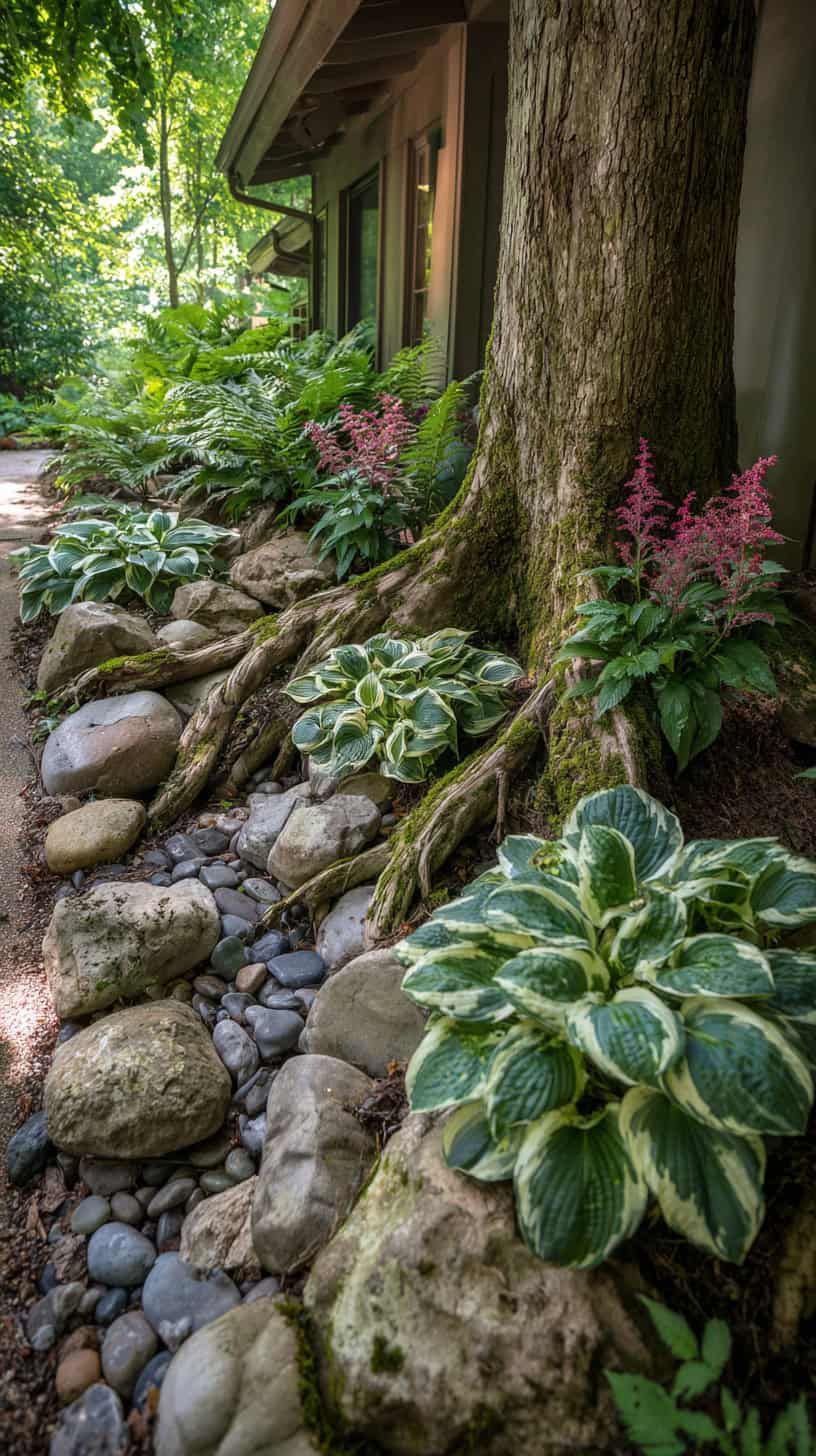
Shaded areas under trees or along north-facing walls become enchanting retreats when you combine shade-loving flowers with complementary rocks and stones. These challenging spots often suffer from exposed tree roots and poor soil, but outdoor rock garden ideas transform them into lush, peaceful spaces. Use rocks to create level planting pockets between roots where shade perennials like hostas, ferns, and astilbes can flourish beautifully. The stone mulch retains moisture in these typically dry areas while preventing soil compaction around sensitive tree roots. Lighter-colored rocks brighten dim spaces, reflecting available light onto foliage and flowers that might otherwise fade into shadows. Create winding stone pathways through shade gardens, encouraging family members to explore these cooler spots during hot summer days. The combination of textured rocks and shade-tolerant plants feels naturally woodland-inspired, creating serene garden rooms that offer respite from sun and heat while showcasing plants that never get their moment in sunny beds.
Rectangular Modern Beds
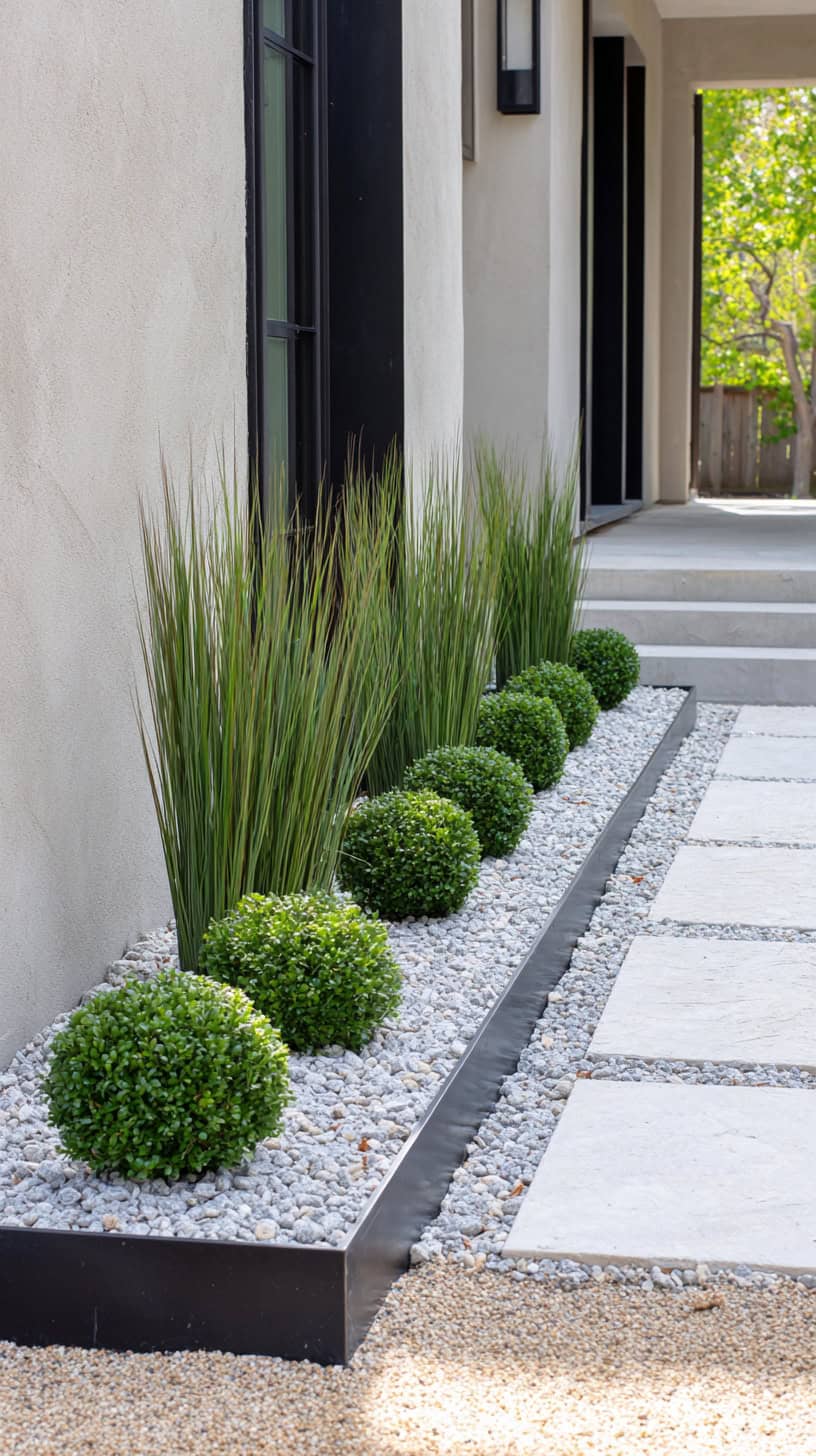
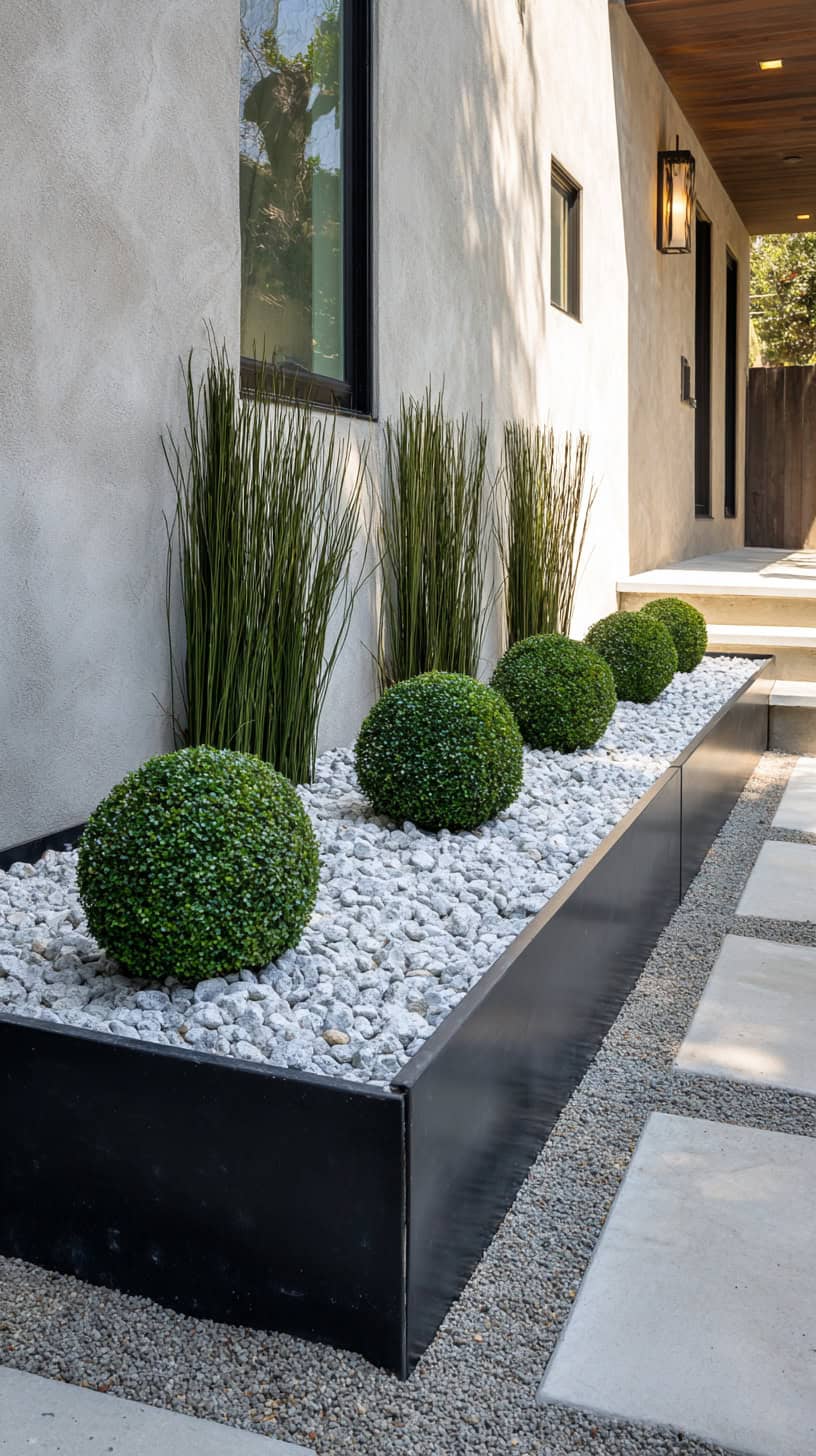
Clean-lined rectangular beds filled with uniform rocks and architectural plants create contemporary landscapes that complement modern home styles beautifully. These geometric flower beds with rocks instead of mulch feel intentionally designed and sophisticated, elevating your property’s overall aesthetic dramatically. Use metal or stone edging to create crisp, straight boundaries, then fill beds with single-color gravel for minimalist impact. Plant in organized rows or blocks rather than random clusters, choosing varieties with strong forms like ornamental grasses, agave, or boxwood spheres. The repetition and geometry feel calming and orderly, appealing to design-minded homeowners who appreciate contemporary aesthetics. This approach works wonderfully for front yards where clean, professional appearance matters most. The structured beds require minimal maintenance since the organized design makes weeding and upkeep straightforward. Modern landscaping with rocks around house foundations creates cohesive outdoor spaces that feel like natural extensions of interior design rather than separate afterthoughts.
This post may contain affiliate links. Read the full disclosure here.