Forest Garden Ideas for a Layered and Naturally Beautiful Landscape
I never thought I’d be the type of parent who’d let the backyard grow a little wild, but here we are! A forest garden transforms your outdoor space into a magical, layered sanctuary where kids can explore, plants can thrive, and you can finally relax without constantly weeding.
Why I Love Forest Garden Ideas for Our Family Chaos

Let me be honest. Our family needed a backyard that could keep up with three kids, two dogs, and my not-so-green thumb. That’s when I discovered forest garden ideas, and trust me, it changed everything.
A forest garden works with nature instead of fighting it. You’re creating layers of plants that support each other, which means less maintenance and more time for actually enjoying your secret garden backyard. The kids love having a wooded backyard landscape where they can hunt for berries, build fairy houses, and pretend they’re in an enchanted garden backyard.
What makes woodland garden ideas so perfect for families is the low-maintenance aspect. Once established, these gardens practically take care of themselves. The plants protect each other from pests, the leaf litter feeds the soil, and you’re not spending every Saturday fighting with a lawn mower. I love that my kids can pick fresh berries while I’m sipping coffee on the porch.
The wildlife factor is huge too. We’ve spotted more birds, butterflies, and beneficial insects than ever before. Our backyard forest garden has become this living classroom where the kids learn about ecosystems without even realizing it. It’s education disguised as adventure, which is my favorite kind.
Forest Garden Basics: Super Easy Layers for Woodland Garden Ideas
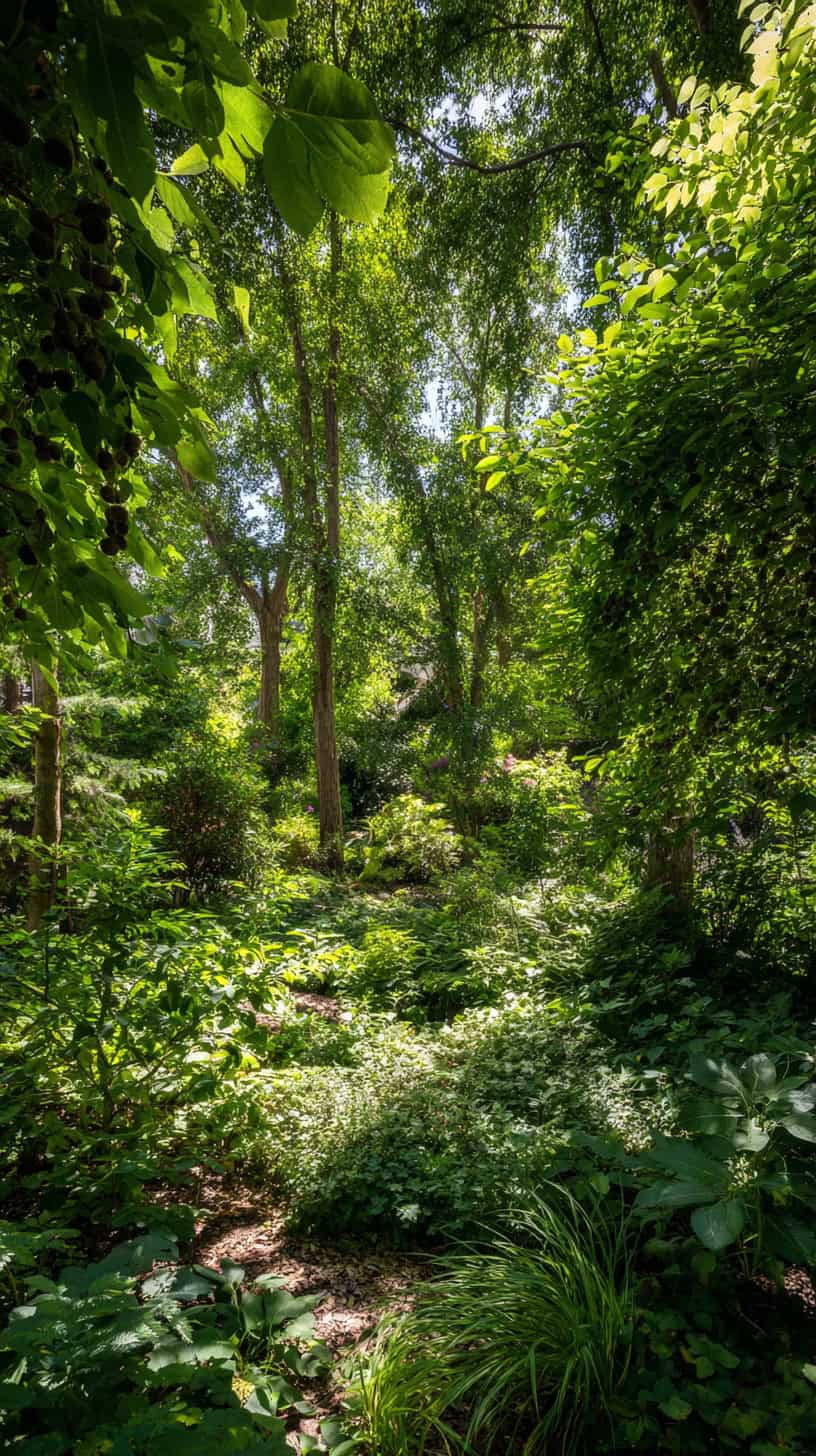
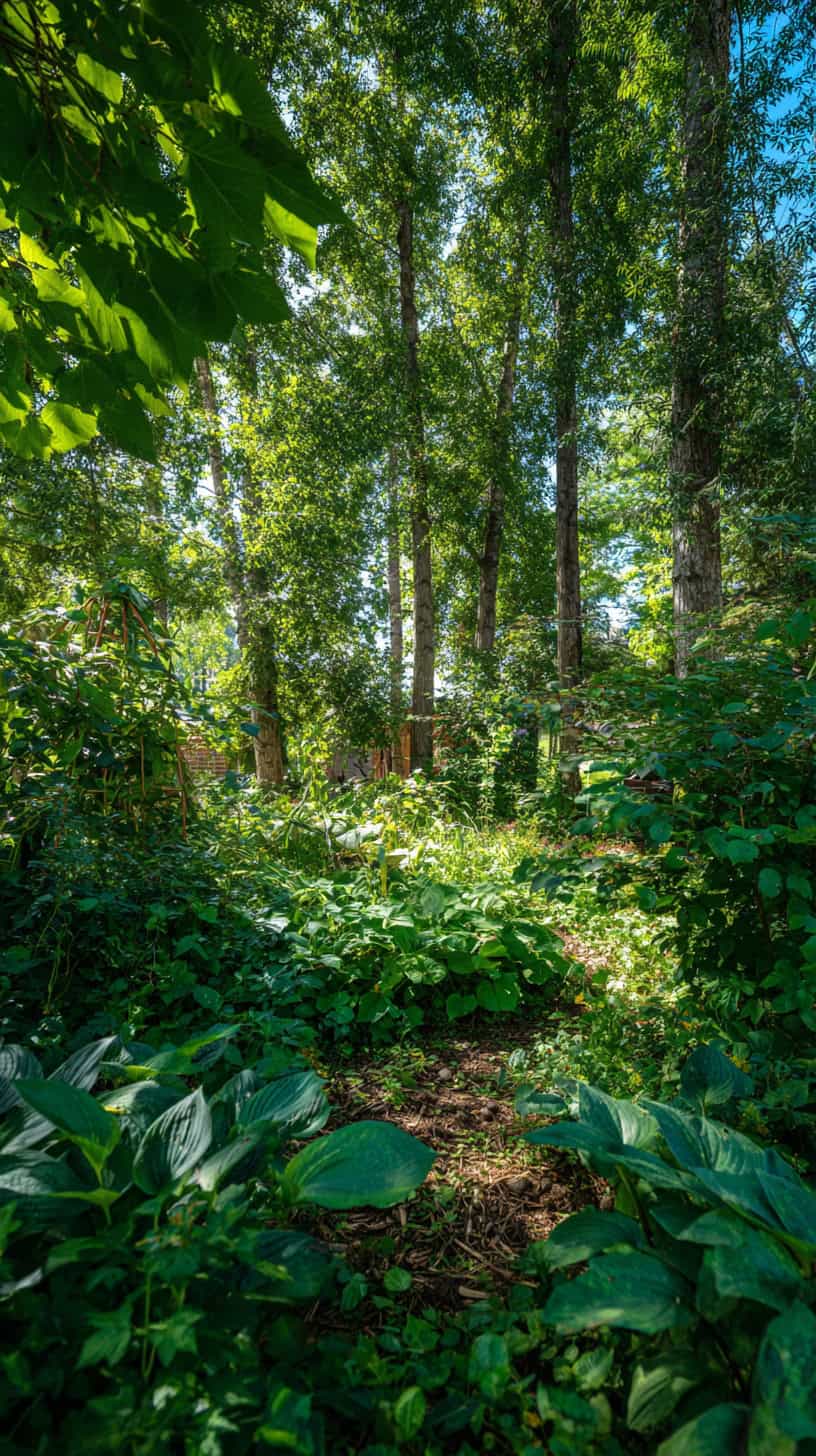
The beauty of forest garden design is in the layers. Think of how a natural forest works, then recreate that magic in your own space. It sounds fancy, but it’s actually simple and fun.
Here’s how the layers break down:
- Canopy Layer: These are your tall trees. If you have existing trees, you’re already ahead! If not, consider planting fruit or nut trees that will provide shade and food.
- Understory Layer: Smaller trees like dwarf fruit varieties or serviceberries fit perfectly here. They love the dappled shade from bigger trees.
- Shrub Layer: Berries belong here! Blueberries, currants, and raspberries thrive in this middle zone.
- Herbaceous Layer: Your perennial herbs and vegetables live here. Think comfrey, mint, and shade-loving greens.
- Ground Cover Layer: Low-growing plants like wild strawberries, creeping thyme, or sweet woodruff carpet the soil.
- Root Layer: Underground crops like garlic, ginger, or Jerusalem artichokes work beneath the surface.
- Vertical Layer: Climbing plants like grapes, kiwi, or pole beans use vertical space beautifully.
You don’t need to install all seven layers at once. Start with what you have and build gradually. We began with just ground covers and shrubs, then added more layers as we got comfortable. The best part is watching how plants naturally fill in gaps and create their own balanced system.
When planning your naturalistic garden, observe your space first. Where does water collect? Which areas get full sun versus shade? Work with what you have instead of forcing plants into wrong spots. Nature is incredibly forgiving when you let it lead the way.
Top Plants for Your Secret Garden Backyard Adventure
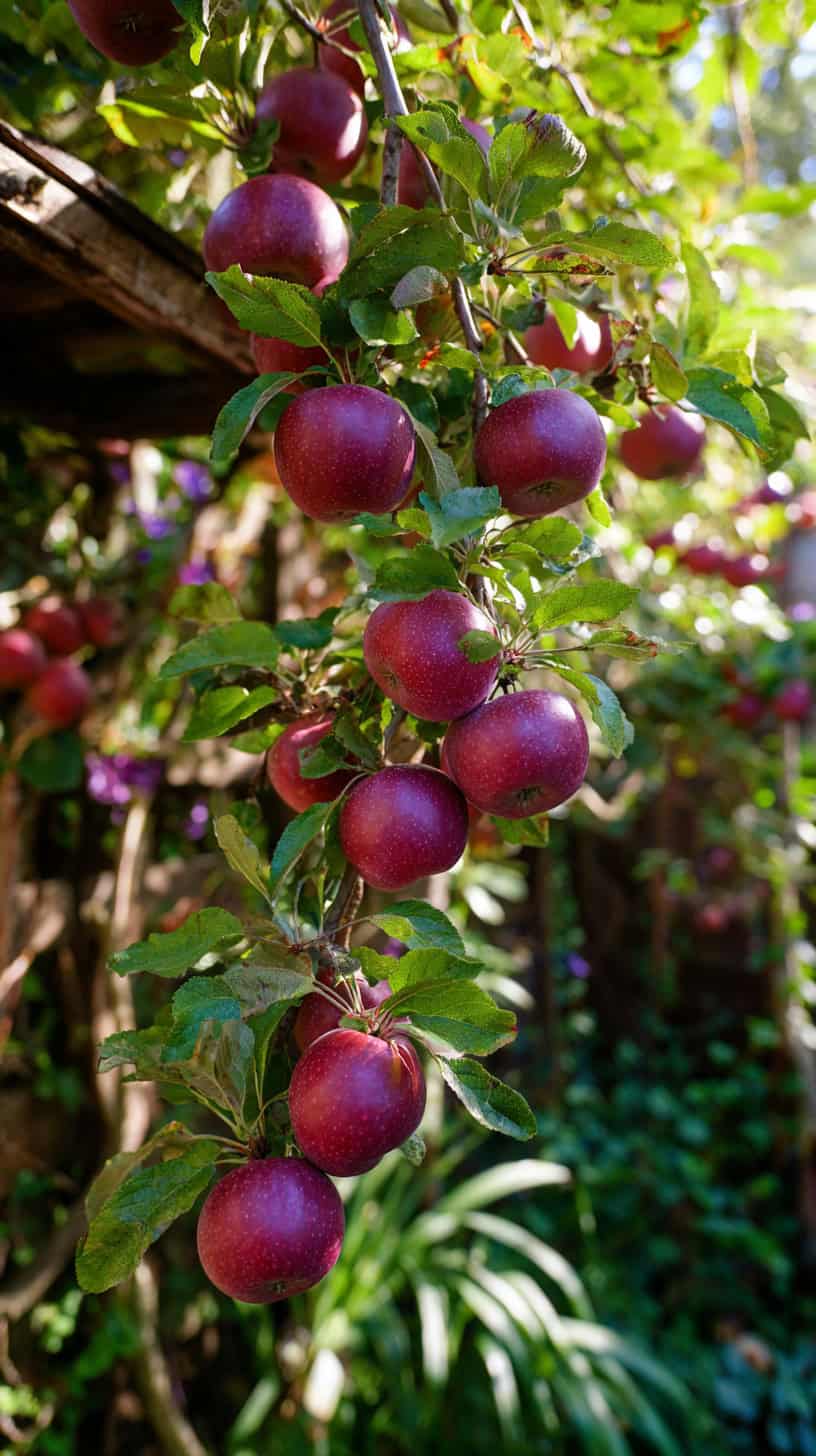
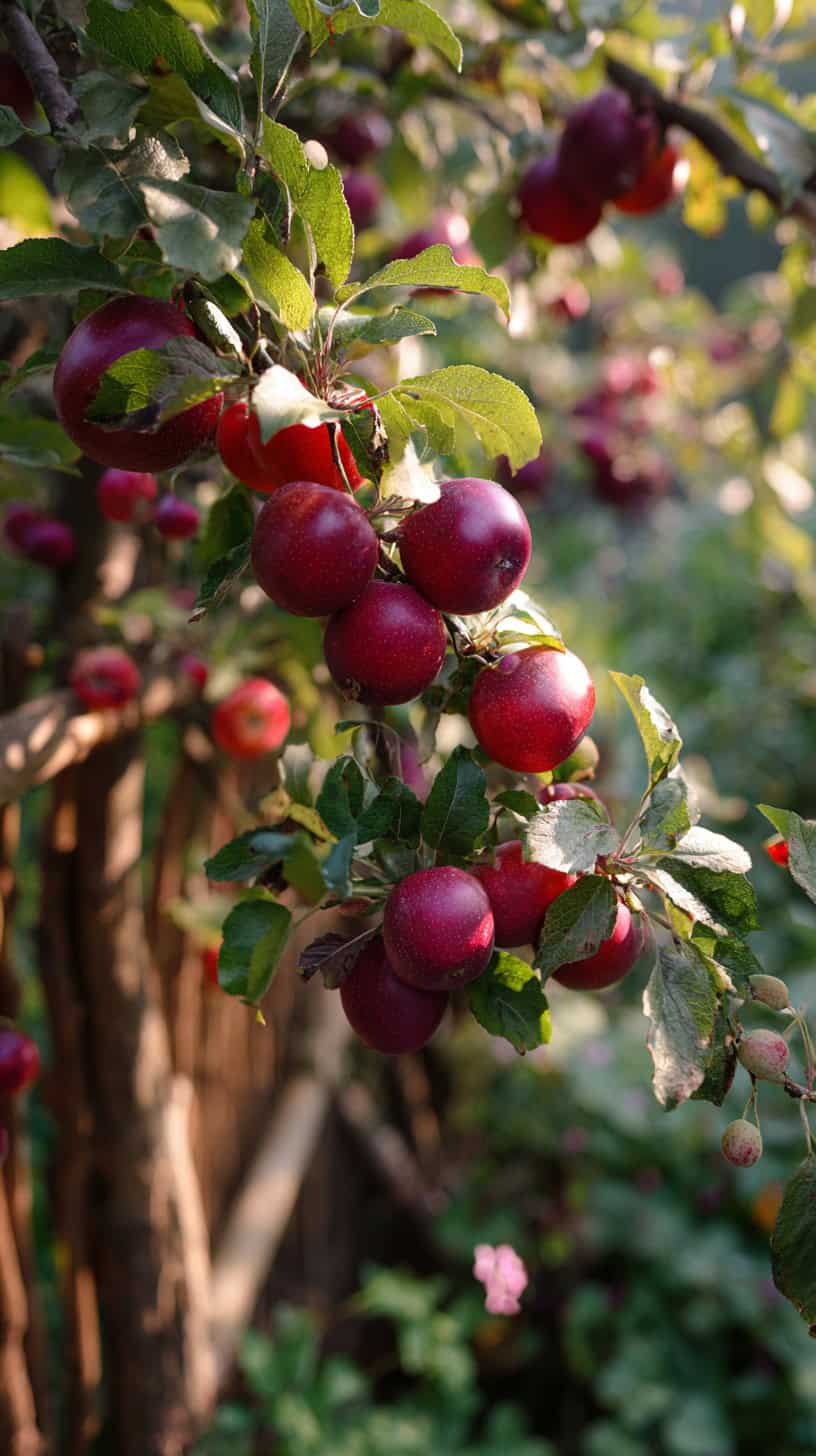
Choosing plants for your enchanted garden backyard is where the real fun begins! I always tell people to pick plants that do double duty, serving both beauty and function.
For the canopy and understory, fruit and nut trees are absolute winners. Apple trees, pear trees, and hazelnut bushes give you harvests while creating that woodland feel. We planted a cherry tree three years ago, and now the kids race outside every June to pick fruit. It’s become a family tradition that cost us practically nothing after that initial investment.
Berry bushes are non-negotiable in my book. Blueberries, blackberries, and currants handle shade beautifully and produce loads of fruit. I planted thornless blackberries along our fence line, and they’ve created this gorgeous living wall that gives us buckets of berries every summer. The kids eat them faster than I can pick them, which is hard to believe!
For the herbaceous layer, try these family favorites:
- Wild garlic: Spreads like crazy and tastes amazing in spring dishes
- Hostas: Gorgeous foliage that handles deep shade
- Ferns: Create that magical woodland vibe instantly
- Lemon balm: Smells wonderful and makes great tea
- Violets: Pretty flowers that are actually edible
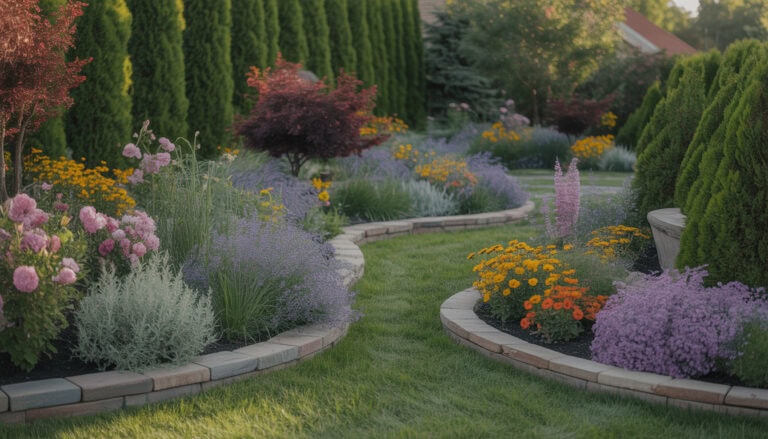
Ground covers are where you can get really creative with your wild garden landscaping. We use creeping Jenny, wild strawberries, and clover instead of traditional grass. The kids can run barefoot, the bees love it, and I never have to mow. Win, win, win!
Don’t forget native plants. They’re adapted to your climate, require less water, and support local wildlife. Check with your local extension office for recommendations specific to your area. We added native woodland asters and Solomon’s seal, and they’ve absolutely thrived with zero fussing from me.
Woodland Garden Design: Paths, Hides, and Enchanted Spots
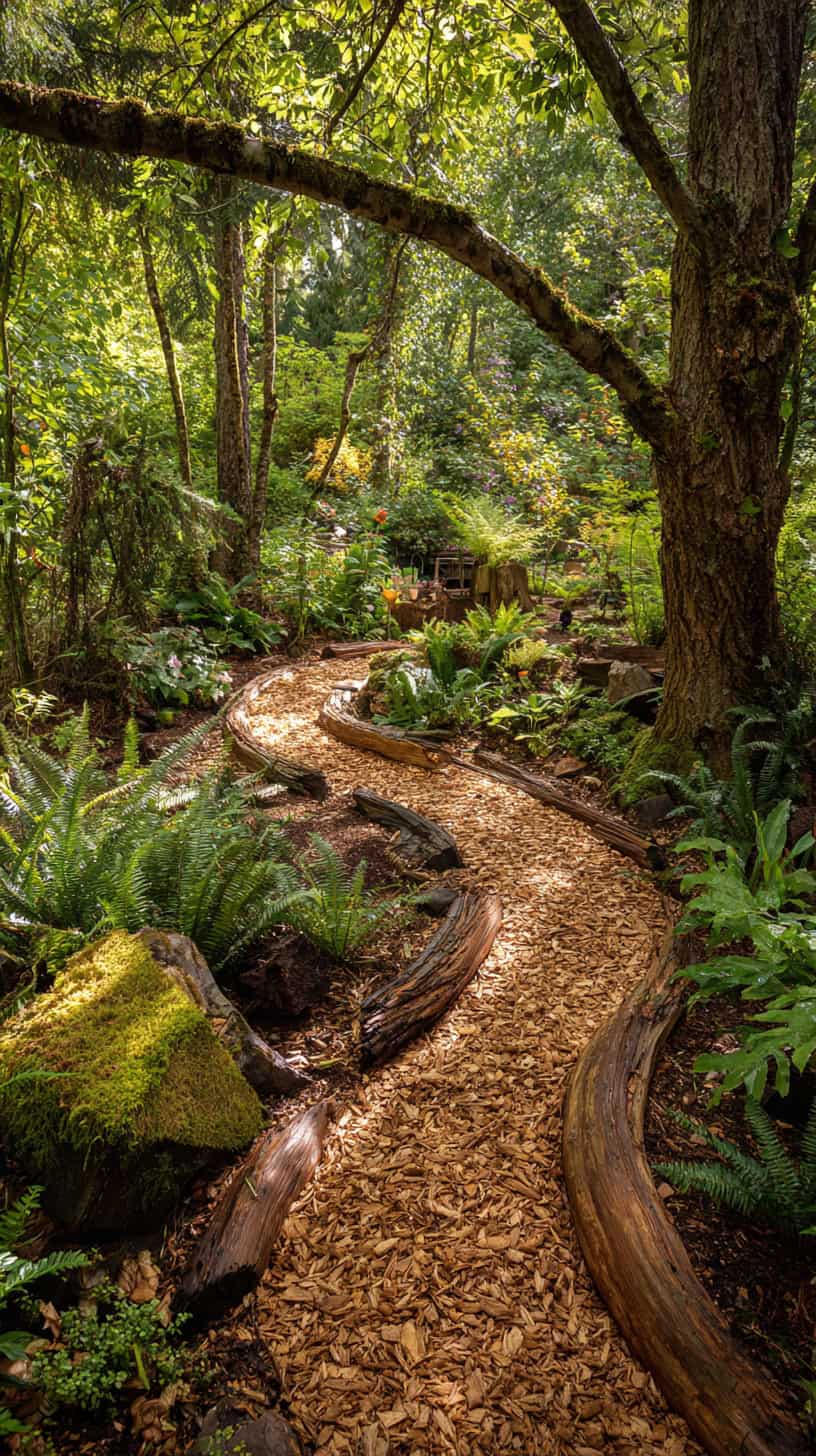
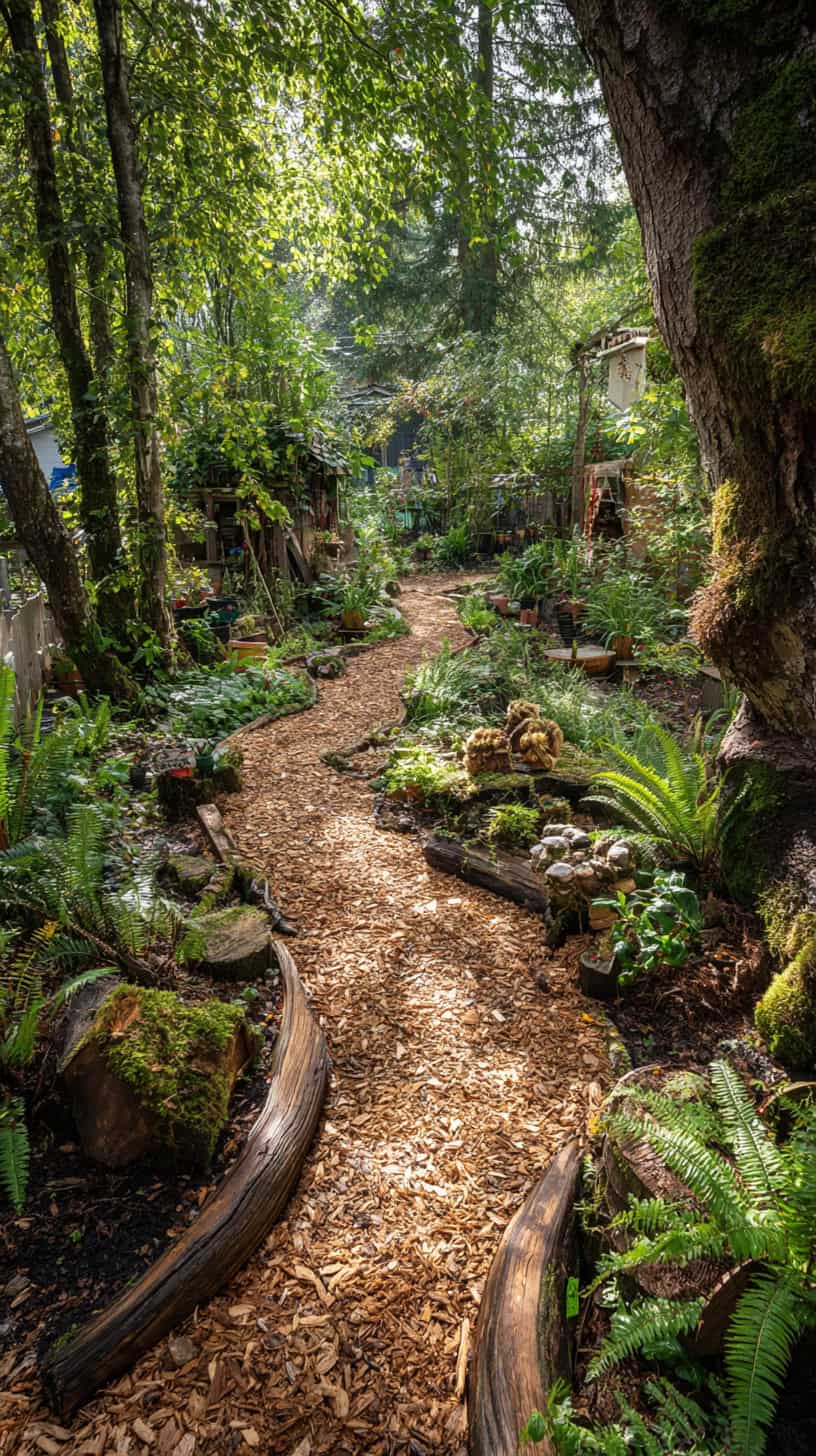
Creating pathways through your backyard forest garden turns it from ordinary to absolutely magical. My kids call our main path “the secret trail,” and they’ve worn it smooth from countless adventures.
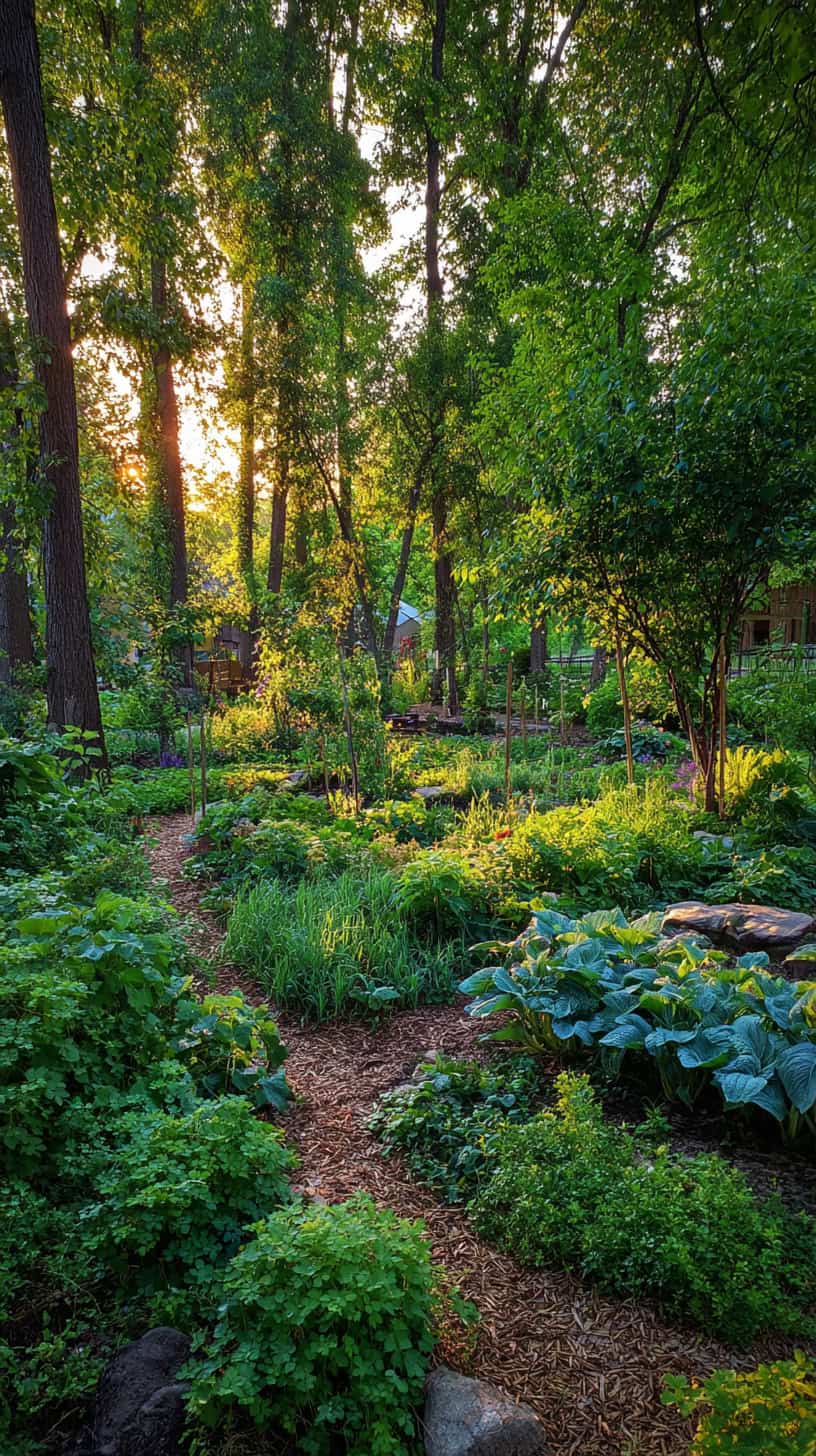
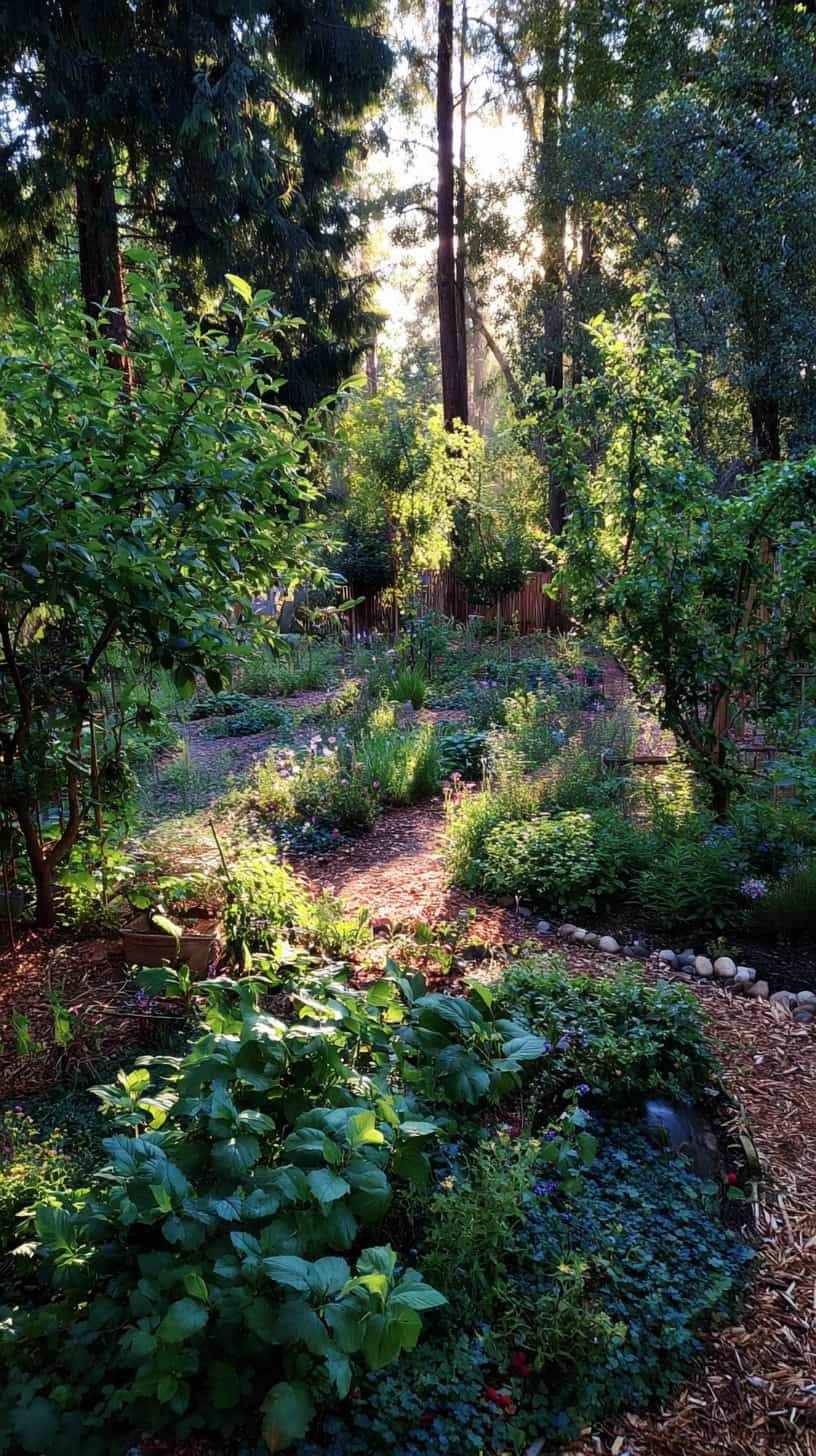
For paths, keep it natural and budget-friendly. We used wood chips for our main walkways, and they’ve held up beautifully. They’re soft underfoot, suppress weeds, and eventually break down to feed the soil. Some people use fallen logs as edging, which adds to that authentic woodland garden design feel.
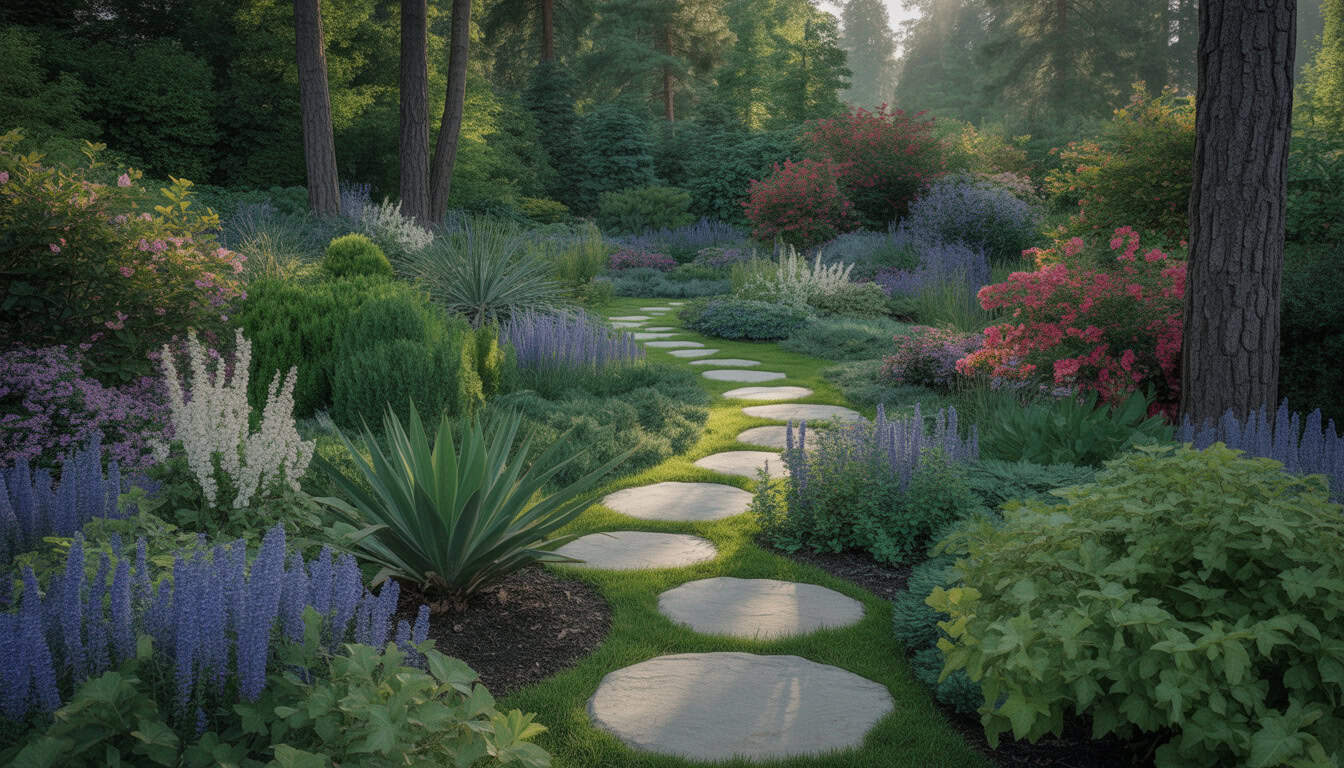
Stepping stones work wonderfully for lighter-traffic areas. We made a winding path using flat rocks we collected from a local quarry. The kids helped place them, which meant the path got a little wonky, but that imperfection makes it even more charming. Place stones close enough for little legs to step comfortably.
Create hiding spots and secret garden ideas throughout your space. A simple teepee made from branches becomes an enchanted fort. We have a “reading nook” under our largest tree with weatherproof cushions stored in a deck box. The kids drag books out there constantly, and honestly, so do I.
Water features add incredible atmosphere to woodland garden ideas. We installed a small bubbling fountain using a recycled ceramic pot and a simple pump. The sound of trickling water makes the whole space feel like a retreat. Birds flock to it, and the kids love watching dragonflies visit in summer.
Seating areas scattered throughout your natural garden design encourage people to slow down and actually enjoy the space. We have an old bench tucked beside the berry patch and a couple of tree stumps positioned as natural stools. Nothing fancy, everything functional.
Don’t forget about sight lines and mystery. Plant denser areas to block views and create anticipation about what’s around the corner. Our wooded backyard landscape has several “rooms” separated by shrubs, and each area feels like a new discovery. The kids never get bored because there’s always another spot to explore.
Wild Garden Landscaping on a Mom’s Budget

Here’s the truth: creating a forest garden doesn’t require a huge budget. In fact, it’s one of the most affordable landscaping styles you can choose. Let me share my best money-saving tricks.
Start with free plants whenever possible. Join local gardening groups online where people constantly give away divisions, seeds, and cuttings. I’ve scored hostas, daylilies, ferns, and berry starts without spending a dime. People are incredibly generous when they’re dividing perennials.
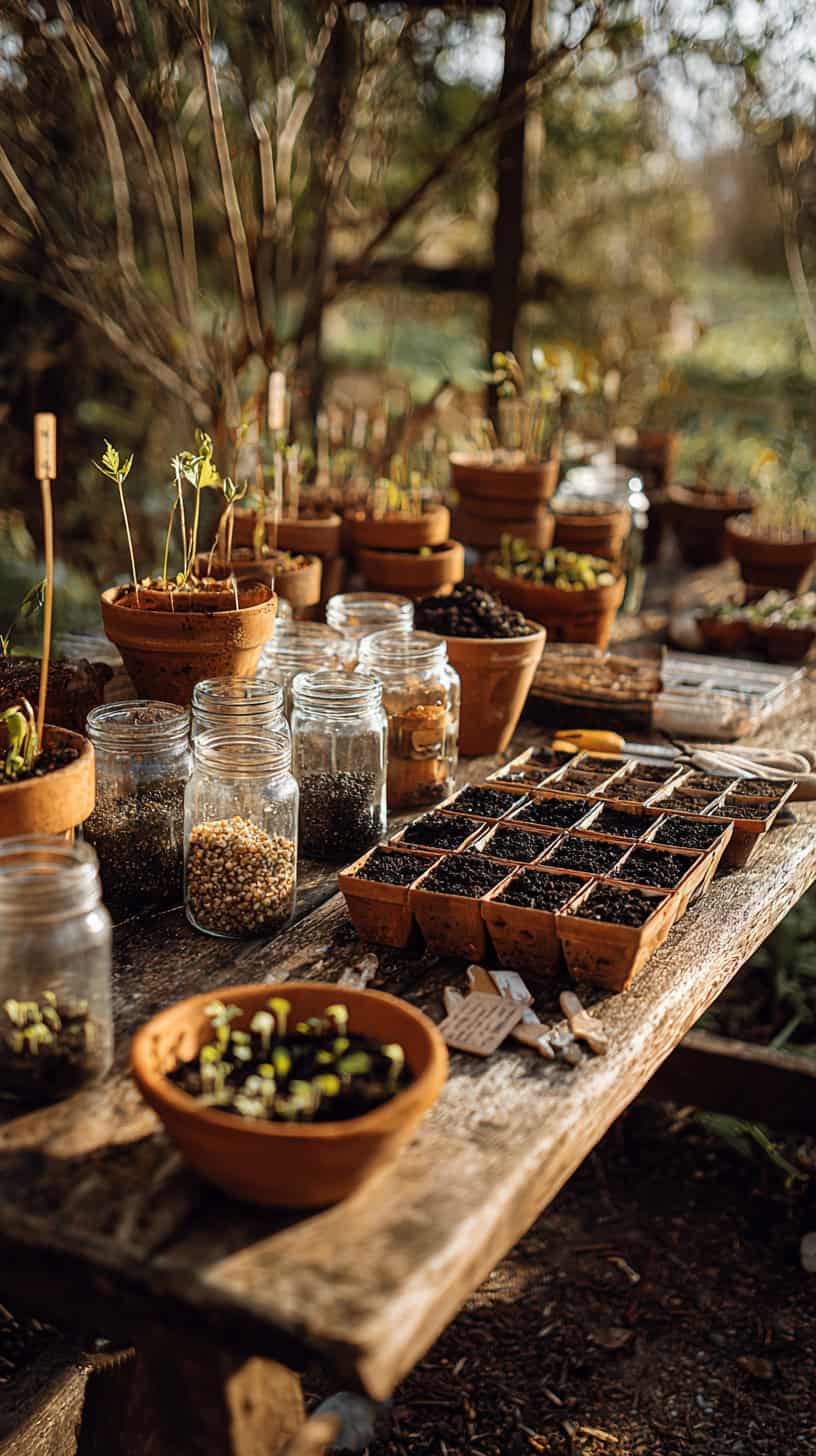
Grow from seed when you can wait. Many woodland plants germinate easily from seed. We started probably half our garden this way, and while it takes patience, the cost savings are huge. A packet of seeds costs a few dollars versus twenty or thirty for established plants.
Use what you already have. Got leaves? They’re free mulch and soil amendment. Fallen branches? Perfect for creating natural borders or supports for climbing plants. We’ve built entire garden beds using nothing but sticks, leaves, and cardboard we got from the recycling center.
The lasagna gardening method is perfect for wild garden landscaping on a budget. Layer cardboard, leaves, grass clippings, and compost right on top of grass. No tilling, no expensive soil, just free materials stacked up. Plants grow beautifully in these beds, and you’re building incredible soil over time.
Shop end-of-season sales at nurseries. We’ve bought fruit trees for half price in late fall. They might look a little sad, but planted properly, they bounce back beautifully come spring. Perennials marked down in September still have years of growth ahead of them.
Propagate your own plants. Many woodland favorites root easily from cuttings. We’ve created entire hedges of currant bushes from a single plant by taking cuttings. There are tons of free tutorials online, and it’s honestly easier than you’d think.
Trade with neighbors and friends. Someone wants your extra hostas; you want their berry divisions. Swapping creates variety without spending money, and you build community connections. Our best plants came from a neighbor who was redesigning her backyard forest garden.
Natural Garden Design Trends Hot in 2026
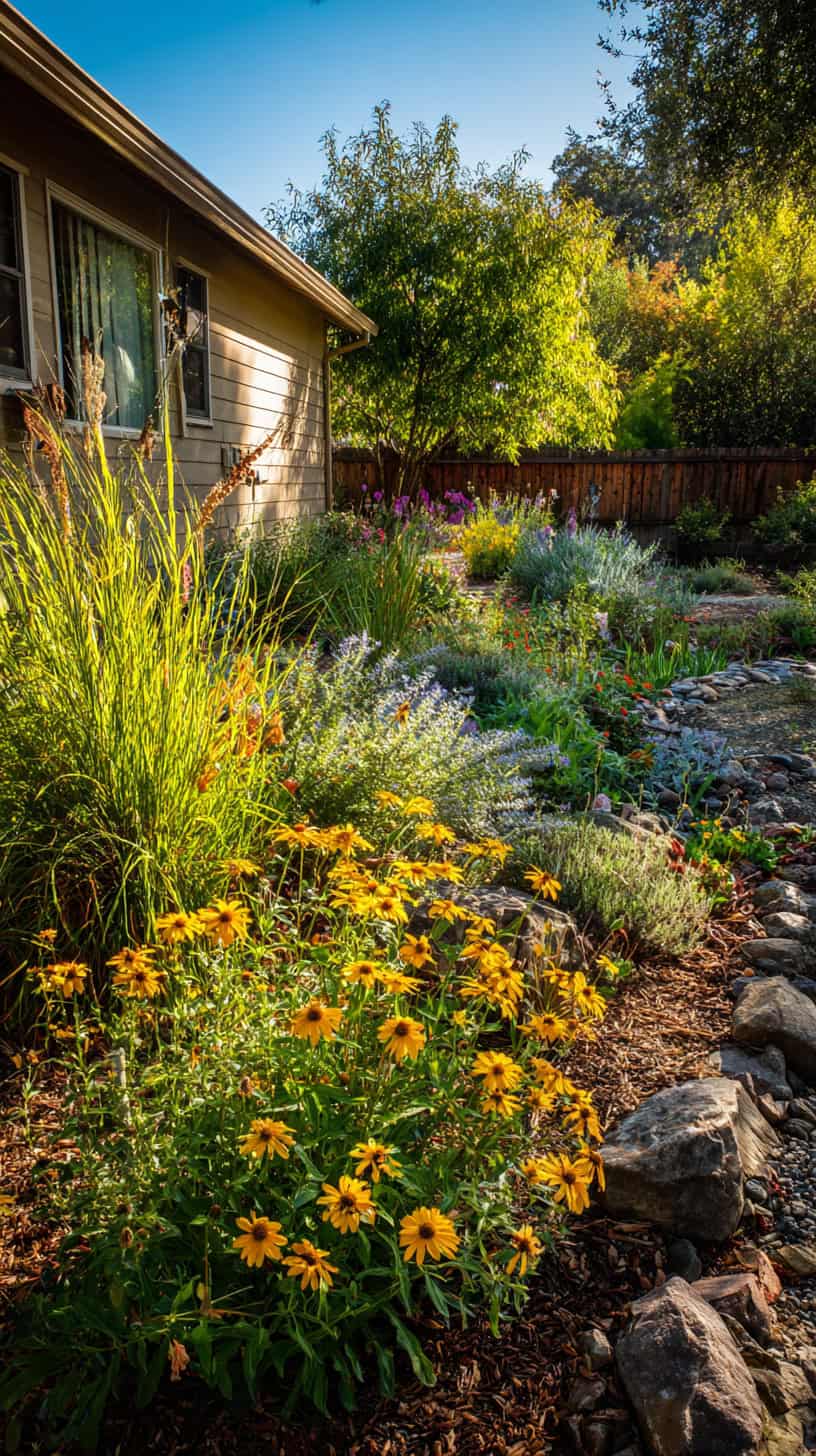
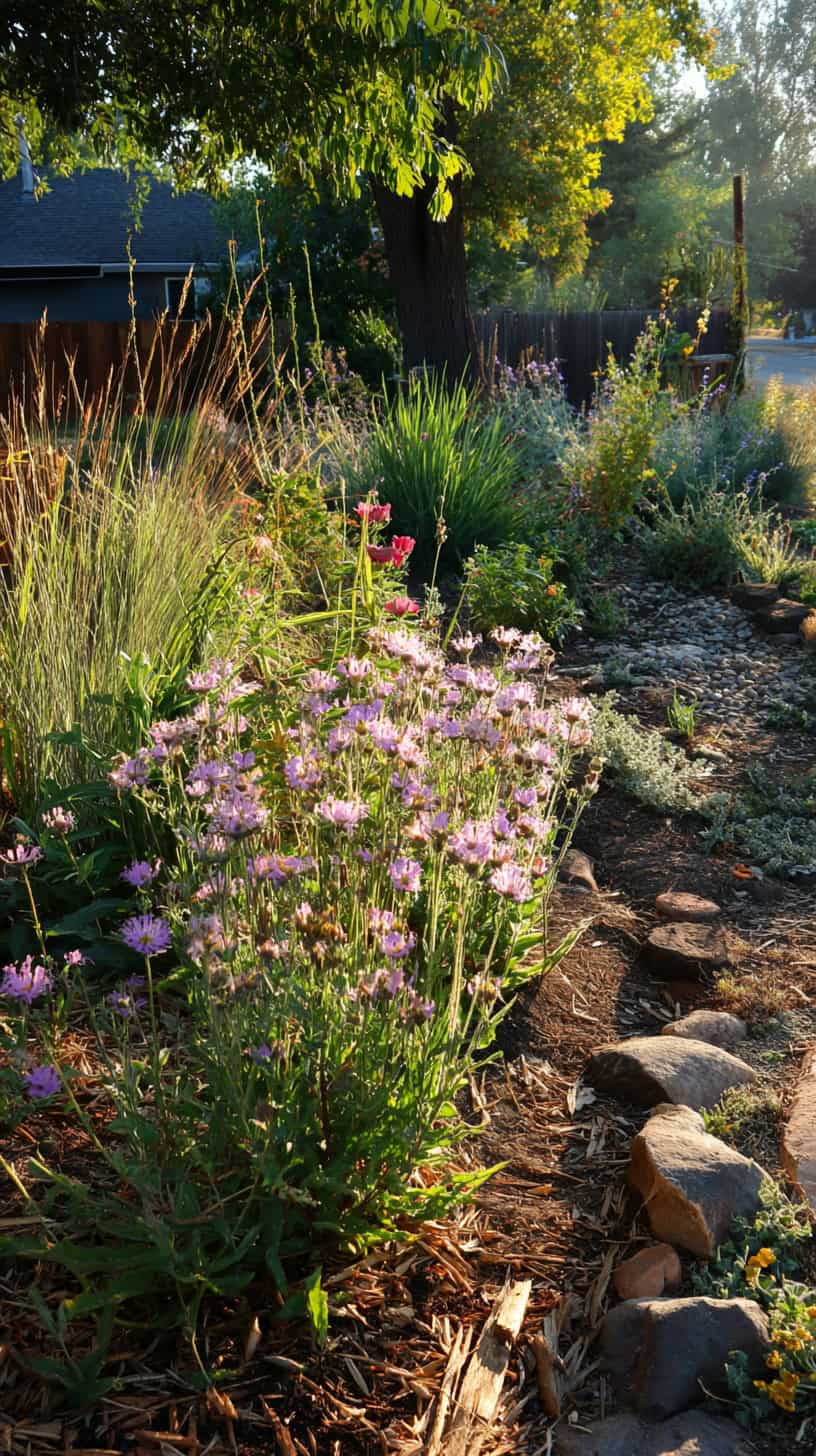
Natural garden design is having a major moment right now, and I’m here for it! The trends for 2026 focus on sustainability, native plants, and creating spaces that support both people and wildlife.
Rewilding is huge. More families are letting portions of their yards return to a more natural state. This doesn’t mean messy or neglected; it means intentionally choosing native plants and allowing natural processes to happen. Our secret garden backyard has a completely wild corner where we just let nature do its thing, and it’s become the richest area for butterflies and birds.
Climate-resilient gardens are trending big time. People are choosing plants that handle temperature extremes and irregular rainfall. Forest gardens naturally fit this trend because layered planting creates microclimates that protect plants from harsh conditions. Our woodland garden ideas focus heavily on drought-tolerant natives that don’t need babying.
Edible landscaping continues to grow in popularity. Why plant ornamentals when you can grow food that’s also beautiful? Our berry bushes provide stunning fall color, spring flowers, and summer fruit. They work harder than any purely decorative shrub ever could.
Pollinator gardens are everywhere, and naturalistic garden designs support this perfectly. Native plants attract native pollinators, creating thriving ecosystems. We’ve seen our butterfly population explode since transitioning to a more natural approach. The kids keep a butterfly journal now, tracking species they spot.
Low-mow and no-mow lawns are replacing traditional grass. Ground covers, clover, and wildflower meadows create that enchanted garden backyard feel while supporting biodiversity. We still have a small mowed area for the kids to play, but we’ve reduced our lawn by about 70 percent. Less mowing, more living.
Embracing imperfection is the trend I love most. Perfect, manicured landscapes are out; slightly wild, lived-in gardens are in. Dead wood stays in place to provide habitat. Leaf litter remains to feed soil. Everything serves a purpose, even decay. This philosophy makes gardening so much more relaxing.
Secret Garden Ideas: Make Your Backyard Forest Magical
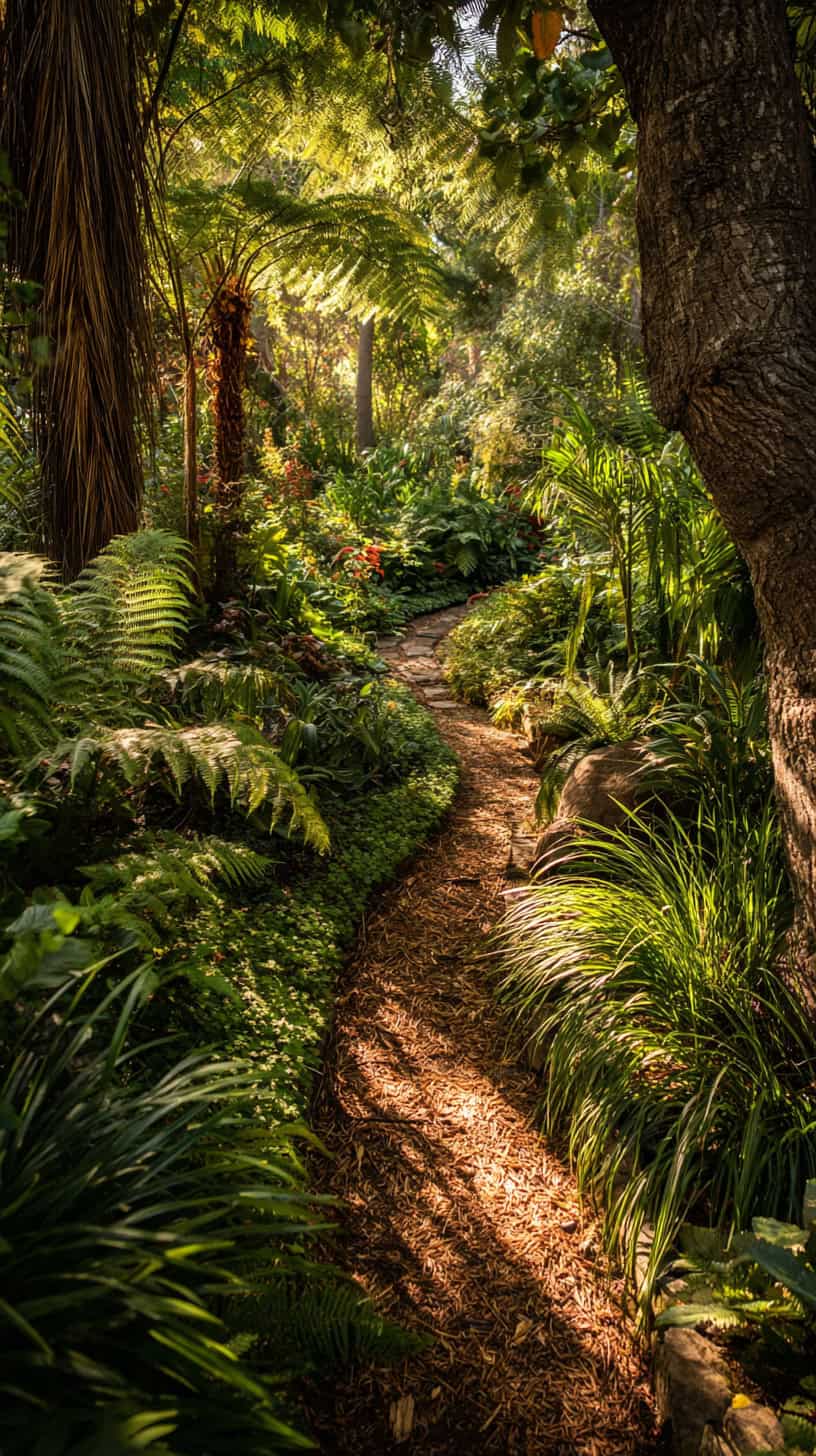
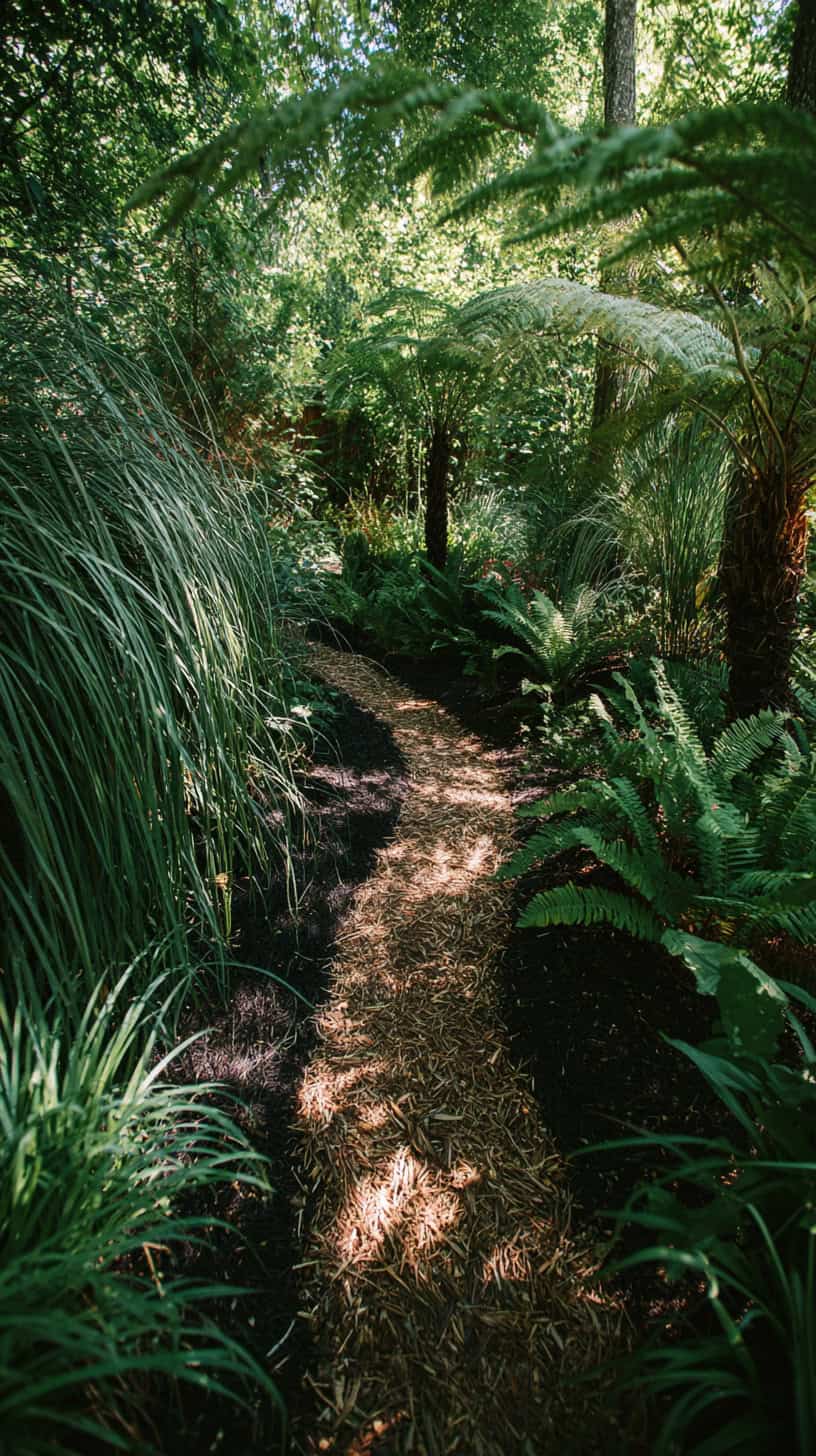
The magic in secret garden ideas comes from creating spaces that spark imagination and wonder. These elements transform a basic wooded backyard landscape into something truly special for your family.
Hidden pathways are essential. Create trails that wind and curve rather than going straight. Use plants to partially obscure the path ahead so you can’t see where it leads. We planted taller grasses and ferns along our main trail, and walking through feels like entering another world. The kids invite friends over just to show them “the maze.”
Install a fairy door or gnome home at the base of a large tree. This costs almost nothing but sparks endless imagination. Our fairy door appeared three years ago, and the kids still leave tiny notes and acorns as “gifts.” They check it daily to see if anything magical happened overnight.
String lights create instant enchantment. We hung solar-powered fairy lights through the trees, and they transform the space at dusk. Family dinners outside feel like celebrations when those little lights twinkle overhead. The investment was minimal, but the ambiance is priceless.
Add unexpected seating in hidden spots. A swing hanging from a sturdy branch becomes a destination. We have a hammock strung between two trees in the deepest part of our backyard forest garden, and it’s everyone’s favorite reading spot. Tuck a bench behind a large shrub for a private retreat.
Create a “treasure map” of your garden with your kids. Mark special plants, hiding spots, and seasonal highlights. Laminate it so it’s weatherproof, and hang it near your back door. Guests love following it, and it helps kids learn plant names and locations.
Plant night-blooming or fragrant flowers for sensory magic. Evening primrose, night phlox, and moonflower open as the sun sets, creating a completely different garden experience after dark. We do twilight garden walks in summer, and the kids think it’s the coolest thing ever.
Incorporate found objects as garden art. Interesting rocks, driftwood, or vintage tools can become focal points. We have an old watering can that’s now a planter, and a weathered ladder leaning against a tree provides vertical growing space for vining plants. These elements add character without looking like you tried too hard.
Getting Started: Your Naturalistic Garden Action Plan
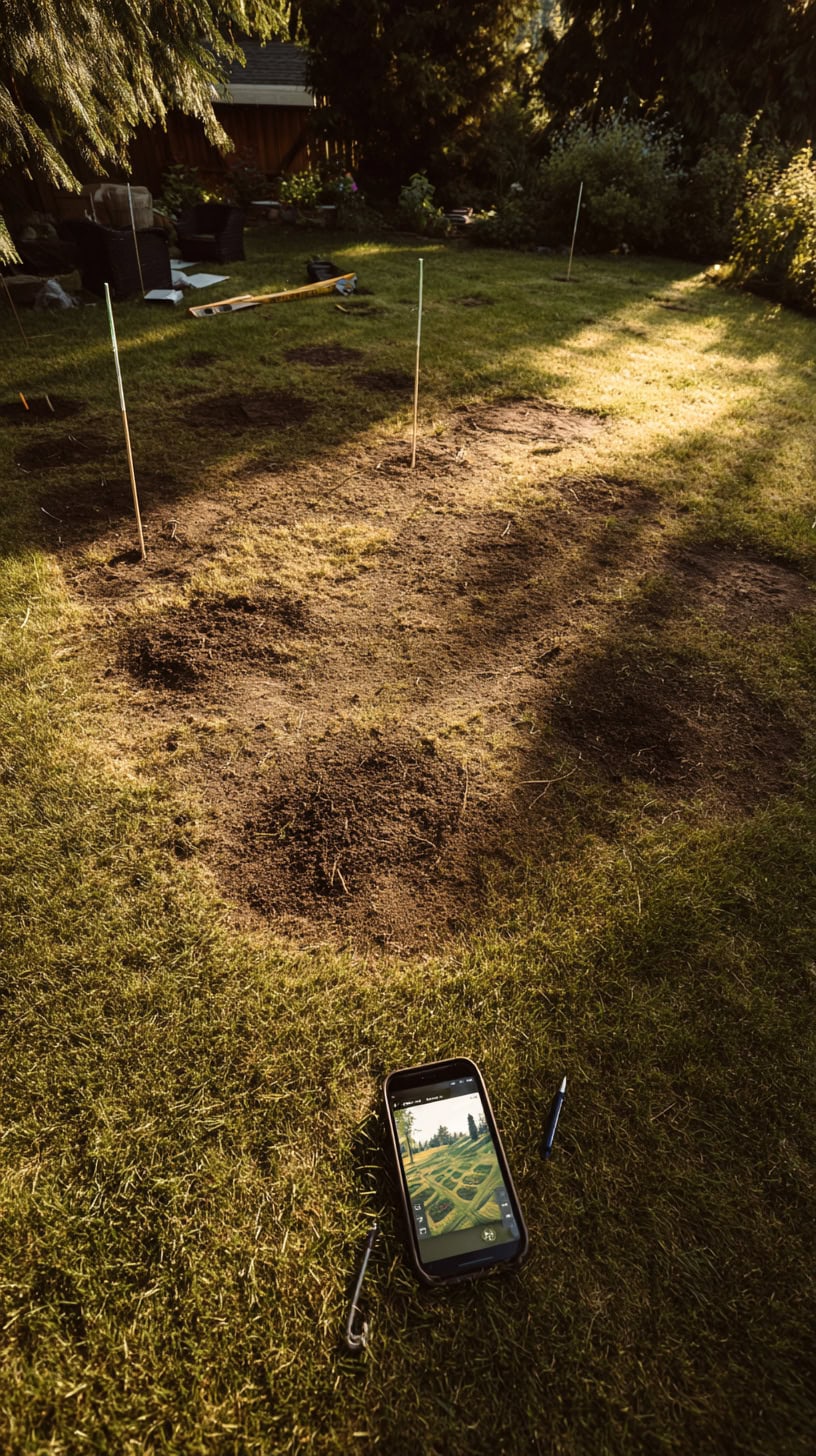
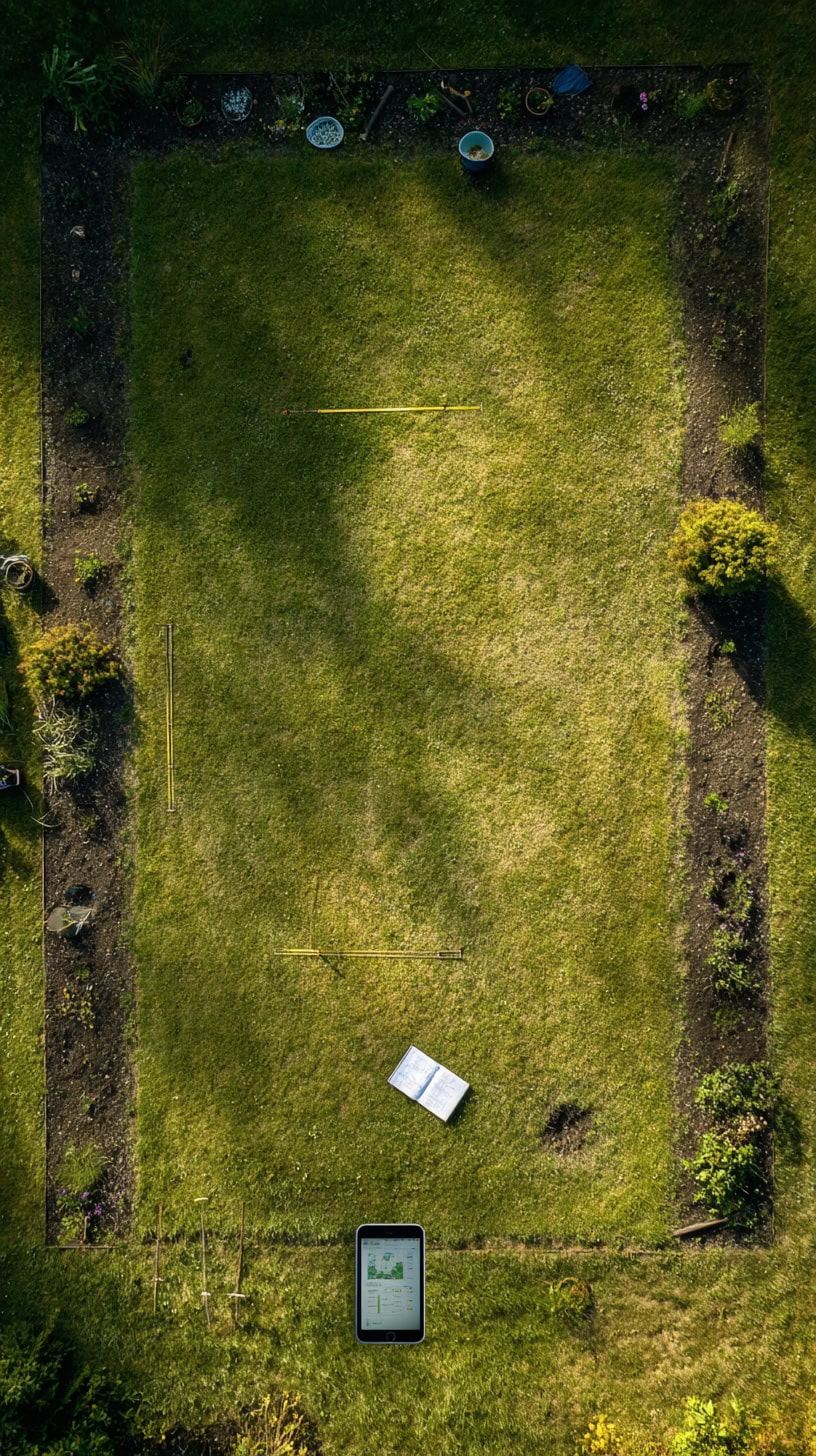
Ready to create your own forest garden? Here’s exactly how to start, even if you’re feeling overwhelmed right now. I promise it’s simpler than it looks.
First, observe your space for a full year if possible. Notice where sun and shade fall throughout the day and across seasons. Track where water pools and where it drains quickly. Understanding your microclimate helps you place plants where they’ll actually thrive. We took photos monthly, and those pictures were incredibly helpful when planning.
Start small with one area rather than tackling your entire yard at once. We began with a 10-by-10 space under an existing tree. That first little woodland garden ideas section taught us so much, and it became our model for expanding. Success in a small area builds confidence for bigger projects.
Test your soil or at least observe what’s already growing. Certain weeds indicate soil conditions. Lots of clover? Your nitrogen is probably low. Moss everywhere? You’ve got acidic, compacted soil. Understanding your starting point helps you choose appropriate plants and amendments.
Create planting zones based on your observations. Map out which areas get full sun, partial shade, and deep shade. Note wet spots and dry spots. This becomes your blueprint for plant selection. We drew ours on graph paper, but a simple sketch works perfectly.
Choose your anchor plants first. These are typically your larger shrubs and small trees that create structure. Plant them before filling in smaller layers. We started with three blueberry bushes and a serviceberry tree, then built around those anchors over the next two years.
Build your soil before or while you plant. Add compost, use mulch generously, and consider cover crops if you’re starting from lawn. Healthy soil creates healthy plants, and in a naturalistic garden, you’re building an ecosystem that depends on rich, living soil.
Plant in groups rather than scattering individual plants randomly. Three or five of the same plant creates visual impact and looks more natural than one of everything. We learned this the hard way after our first year looked a bit chaotic. Grouping plants also makes maintenance easier.
Mulch heavily to suppress weeds and retain moisture. We use wood chips, leaves, and pine needles depending on what’s available. A good 3-4 inch layer makes such a difference in reducing maintenance. Your forest garden should work for you, not create endless chores.
Connect with other forest gardeners online or in person. Join social media groups, attend workshops, or visit public woodland gardens for inspiration. The community around wild garden landscaping is incredibly supportive and full of people happy to share knowledge and plants.
Be patient and enjoy the process. Forest gardens develop over years, not weeks. Some of our favorite plants didn’t really take off until year three. The waiting is part of the magic, watching your enchanted garden backyard slowly transform into the space you envisioned. Trust me, it’s worth every minute.
Remember that your backyard forest garden will never be truly “finished,” and that’s the beauty of it. Plants grow, spread, and evolve. Your family’s needs change as kids get older. The garden adapts with you, creating new magic every single season. Our woodland garden design looks completely different than it did three years ago, and I can’t wait to see where it goes next. Start today with one small step, and before you know it, you’ll have your own secret garden backyard where memories grow as abundantly as the plants.
This post may contain affiliate links. Read the full disclosure here.